 Ferndale
 Sumas Sits in a Tougher Weather Pocket Than Most People Realize
Sumas is tucked into the Nooksack River valley at the base of Sumas Mountain, right against the Canadian border. It's inland from the water, but it still sits inside the same marine-influenced weather system that soaks the rest of Whatcom County. What that means for siding is simple: long stretches of driving rain, valley fog that lingers in the low ground, and enough shade and humidity in the tree-lined lots around town to keep moss and algae active for most of the year. Add in the colder overnight temperatures that settle into the valley compared to the coast, and you get more freeze-thaw cycling on exterior materials than homeowners closer to Bellingham Bay typically deal with.
None of that is exotic weather. It's just persistent. Siding in Sumas doesn't fail from one big storm — it fails from years of moisture sitting against a wall that can't dry out, or from a coating that can't hold its color and seal against repeated wet-dry cycling. That's the standard we install to.
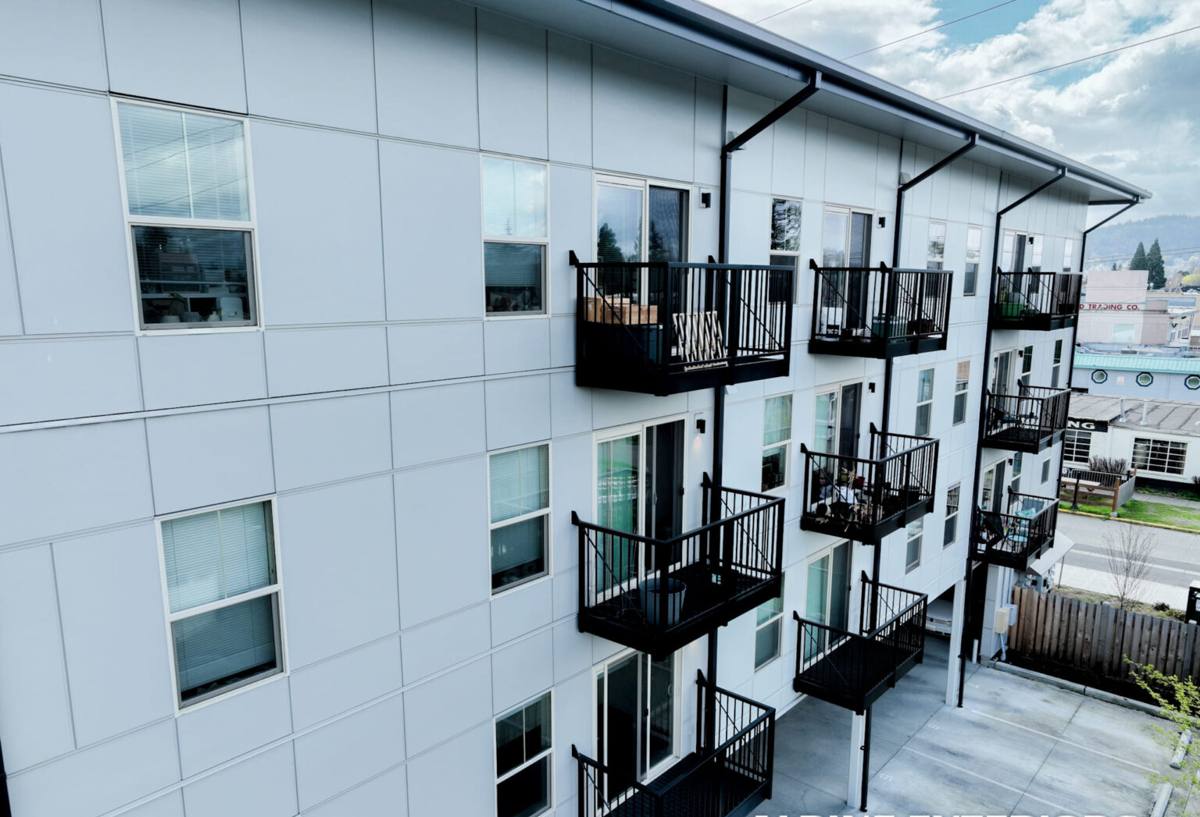
What "Correct" James Hardie Installation Actually Involves
James Hardie fiber cement siding is a good product on paper, but it only performs like the engineering promises if it's installed to spec. Most of the problems we get called out to fix on Hardie siding aren't product failures — they're installation shortcuts. Getting it right in a climate like ours means paying attention to the details that don't show up until year three or four:
Clearances and Gapping
Hardie siding needs proper clearance from the ground, roofing, decks, and any hard surface — typically a minimum of a few inches depending on the assembly. In a valley that holds moisture and fog longer than the coastline, skipping this clearance is one of the fastest ways to get wicking at the bottom edge of a board.
Fastener Pattern and Flashing
Every seam, window, and door opening needs correct flashing and house wrap integration before a single board goes up. Fasteners have to land in the right zone on the board with the right spacing — not just "close enough." A missed flashing detail is invisible on installation day and shows up as a water stain or rot two winters later.
Caulking and Sealant Joints
Butt joints, trim intersections, and penetrations need the right sealant, applied correctly, not just a bead run down every seam out of habit. Over-caulking can trap moisture as easily as under-caulking lets it in.
Painting and Touch-Up
Factory-finished ColorPlus boards should need very little field touch-up, but any cut edges do need to be sealed with the matching touch-up product. Field-painted Hardie (primed, not ColorPlus) needs a proper primer and paint system rated for fiber cement, applied at the right coverage — not whatever happened to be in the truck.
Why HZ5 Matters for This Part of Whatcom County
James Hardie engineers its siding by climate zone, and the Pacific Northwest falls into the HZ5 category — the line built specifically for wet, moderate-freeze climates like ours. That's not a marketing label; it changes the actual formulation and moisture resistance of the board. Installing a climate-matched product is one of the reasons we standardized on James Hardie rather than mixing in other fiber cement brands or wood-based alternatives.
| Product Line | Best Use on a Sumas Home | What It Handles Well |
|---|---|---|
| HardiePlank lap siding | Full re-side, most common choice on single-family homes | Traditional lap look, strong moisture resistance, wide color range |
| HardiePanel vertical siding | Accent walls, gables, modern or farmhouse styling | Clean vertical lines, pairs well with board-and-batten trim |
| HardieShingle siding | Accent gables, dormers, cottage-style homes | Cedar-shake look without the maintenance cedar requires |
| HardieTrim boards | Corners, window and door trim, fascia | Won't rot or split like wood trim exposed to constant damp |
Most Sumas projects use a combination — lap siding as the field material with trim boards and an accent line like panel or shingle on gables or entry features. We spec the combination based on the home's exposure, not just what looks good in a brochure.
Moss, Moisture, and What Actually Changes With Hardie
Moss doesn't rot fiber cement the way it slowly degrades wood or compromises the seams on vinyl. But moss and algae growth still matters cosmetically, and how a siding surface handles that growth over time is a real difference between products. James Hardie's ColorPlus finish is baked on at the factory and holds up to washing far better than field-applied paint on wood siding or the printed color layer on some composite products. That means the periodic soft-wash most homes in this area need to knock back moss and grime doesn't strip or fade the finish the way it can on lower-grade materials.
This is also where correct installation pays off long after the crew leaves. Siding that's properly gapped, flashed, and ventilated dries out between rain events instead of staying damp against the wall assembly. Damp-against-the-wall is exactly the condition that lets moss, mildew, and eventually rot get a foothold — regardless of what material is on the surface.
Our Process for a Sumas Siding Project
- On-site assessment. We walk the home, check the current siding and sheathing condition, note drainage issues, roofline interactions, and sun/shade exposure on each wall.
- Product and color plan. We recommend the HardiePlank/panel/trim combination and ColorPlus color that fits the home and holds up to this valley's weather pattern.
- Removal and inspection. Old siding comes off and we inspect the sheathing underneath for hidden moisture damage before anything new goes up — this step catches problems a lot of quotes skip past.
- Weather barrier and flashing. House wrap, window and door flashing, and drainage details get installed correctly the first time, since this layer is what actually keeps water out long-term.
- Installation to Hardie spec. Proper clearances, fastener pattern, and joint treatment, following James Hardie's published installation requirements — which is also what keeps the manufacturer's warranty valid.
- Final detailing. Caulking, touch-up, trim, and a walkthrough so you know what maintenance (if any) to expect going forward.
Cost Factors on a Sumas Siding Project
Every home is different, but the same handful of factors drive the price on most projects in this area. This isn't a quote — it's what to expect when you're budgeting.
| Factor | Why It Moves the Price |
|---|---|
| Home size and wall complexity | More corners, gables, and dormers mean more cutting, trim, and labor time |
| Current siding removal | Tear-off and disposal of old siding adds cost versus a bare-sheathing new build |
| Sheathing repair | Rot or moisture damage found underneath the old siding needs to be repaired before new siding goes up |
| Product mix | Straight lap siding costs less than a job combining lap, panel, shingle accents, and custom trim |
| Color | Factory ColorPlus finishes vary slightly by color and line; primed-for-paint is a different cost structure |
| Access and site conditions | Steep grades, tight lot lines, and limited staging space near the mountain or riverside lots add labor time |
Why the Crew Matters as Much as the Product
James Hardie siding is only as good as the hands installing it. A crew that regularly works Sumas and the surrounding Whatcom County towns already knows how the valley's fog and rain patterns behave against a wall, what clearance details actually matter on this terrain, and how the local permitting and inspection process runs. That's not something you get from a crew that installs siding everywhere and anywhere with no regional pattern to draw on.
It also matters for accountability. A local, established crew is still around in five or ten years if a caulk joint needs attention or a question comes up about the warranty — which matters a lot more than it sounds like it should, because siding problems from bad installation often don't show up until well after a traveling crew has moved on.
Signs Your Current Siding Is Already Past the Point of Patching
- Soft or spongy spots when you press on the siding, especially near the bottom courses
- Paint that's peeling or bubbling repeatedly in the same spots year after year
- Persistent moss or dark staining that comes right back within weeks of cleaning
- Visible gaps, warping, or cupping in wood or composite boards
- Higher heating bills that coincide with visible siding gaps or missing caulk
- Any water staining or musty smell on interior walls that back up to exterior siding
Common Problems We Find Re-Siding Sumas Homes
Because a lot of homes in this area were sided decades ago with materials that weren't built for this level of sustained moisture, we regularly find the same handful of issues when we start a project: rot at the bottom of walls where clearance was never maintained, sheathing damage hidden behind siding that looked fine from the street, and trim that's been repainted so many times it's lost its original profile. Fiber cement doesn't eliminate every one of these risks automatically, but installed correctly, it removes the material itself as the weak point — the wall assembly underneath becomes the thing that determines how the siding performs, and that's something we control at the install stage, not something left to chance after the fact.
If you're planning a siding project in Sumas, we're happy to take a look at your home, walk you through what James Hardie would involve for your specific walls and exposure, and put together a straightforward, no-pressure estimate. There's a form below — reach out and we'll get you scheduled.