 Ferndale
 Board & Batten Siding in Sumas: Built for This Corner of Whatcom County
Sumas homes sit close enough to the water and the foothills that they get a mix of weather most siding manufacturers don't design for on paper: salt-laden air moving in off the coast, driving rain that hits walls sideways instead of straight down, and a moss season that can run most of the year in shaded yards. Board and batten siding — with its vertical lines and strong shadow reveal — is a good fit for the farmhouse and craftsman-style homes common in this part of Ferndale, but the look only holds up if the material and the installation both account for what this climate actually does to a wall over ten, twenty, and thirty years.
This page is about that one job, done right, in this one area. We're a Ferndale-based crew that already works in Sumas regularly, so the notes below come from what we see on tear-offs here, not a generic national description of the product.
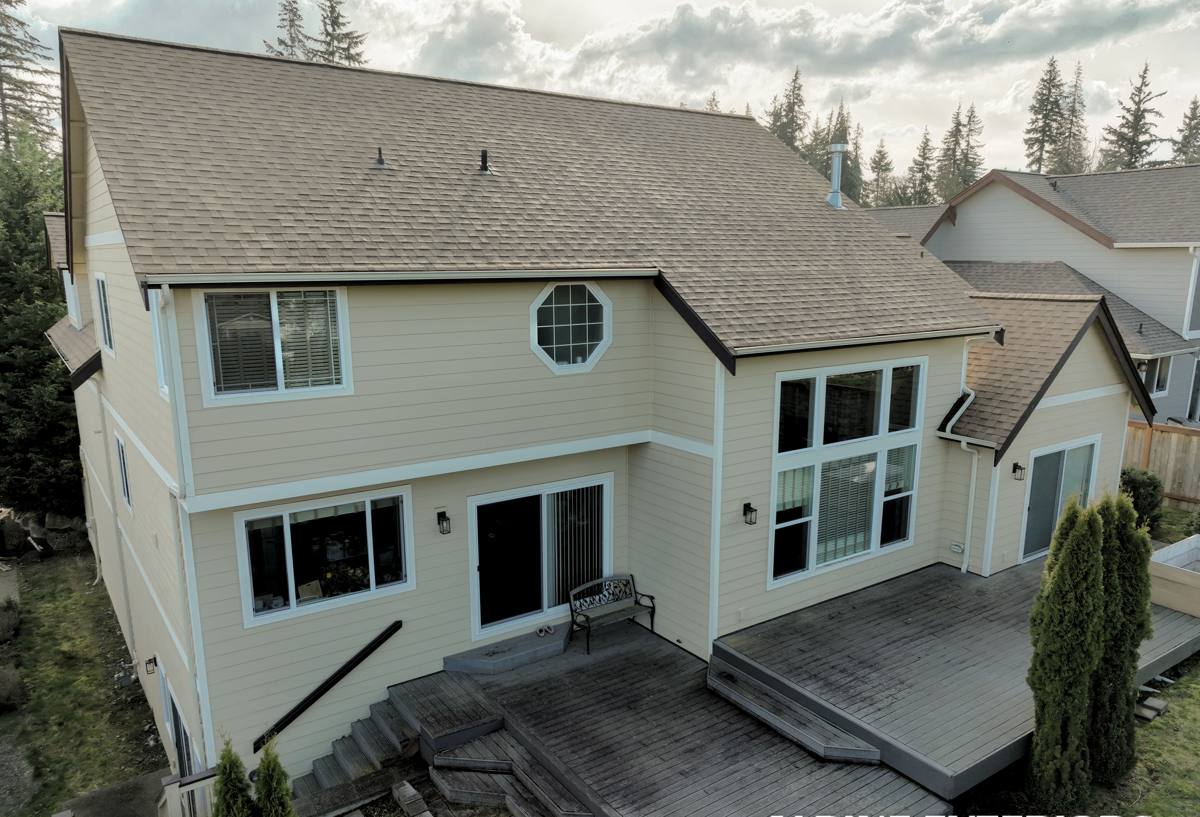
What Sumas Homes Actually Need From a Board and Batten Wall
Driving Rain and Wind-Driven Moisture
Whatcom County's rain doesn't just fall — a lot of it comes in at an angle, pushed by wind off the water. Board and batten's vertical joints, if they're not detailed correctly, give that wind-driven rain a straight path behind the cladding. The batten strips have to be fastened and gapped so water sheds outward instead of wicking sideways into the seam, and the wall behind the siding needs a drainage plane that can move any moisture that does get past the surface back out and down, not trap it against the sheathing.
Salt Air and Corrosion
Proximity to salt air accelerates corrosion on fasteners, flashing, and any exposed metal trim. It also degrades paint film and raw wood fiber faster than it would further inland. A siding material that absorbs moisture and swells, or a fastener that isn't rated for a coastal-adjacent environment, will show fatigue years before it would in a drier part of the state.
A Long Moss and Algae Season
Shaded north-facing walls, mature trees, and persistent damp air add up to a moss and algae season that can run nine or ten months a year in the wrong exposure. Vertical board and batten actually sheds surface water a little better than some horizontal profiles, but the boards still need a finish that resists organic growth — otherwise you're pressure-washing dark streaks off the wall every year or two.
Board and Batten Is a System, Not Just a Profile
It's easy to think of board and batten as "wide boards with narrow strips over the seams," but the visual profile is the least important part of whether it performs. What actually determines whether a board and batten wall lasts is what's behind it and how it's fastened:
- A weather-resistive barrier (housewrap or building paper) installed shingle-fashion, lapped correctly at every seam and penetration
- A drainage gap or rainscreen strategy, especially on walls with heavy rain exposure or limited overhangs
- Correct flashing at every window, door, and horizontal transition — not just caulk standing in for flashing
- A fastening pattern that hits framing at the manufacturer's specified spacing, not just "close enough"
- Batten strips fastened independently of the board beneath them where the spec calls for it, so the two pieces can move without binding
- Sealed, primed, or factory-finished cut ends — every field cut is a place moisture can enter if it's left raw
Skip any one of those steps and the siding can look correct for a few years while moisture works in behind it. On a home this close to the water, that's not a hypothetical — it's the most common failure we find on tear-offs.
Why We Only Install James Hardie Board and Batten
We get asked why we don't offer board and batten in engineered wood, cedar, or vinyl. The honest answer is that we made a standard for ourselves and we stick to it: James Hardie fiber cement, installed to spec, is the only board and batten product we put our name behind in this climate.
That's not a knock on every alternative in every situation — cedar has real appearance appeal, engineered wood has a lower material cost, and vinyl board and batten is inexpensive and low-maintenance in the right setting. But each of those trades something away in a market with this much rain and salt air:
| Material | How it handles this climate | Maintenance burden | Where it falls short |
|---|---|---|---|
| James Hardie fiber cement | Non-combustible, dimensionally stable, engineered moisture resistance (HZ product lines) | Low — factory finish holds color and resists moss/algae | Heavier material, requires correct fastening and cutting technique |
| Cedar / primed spruce | Attractive but absorbs moisture; prone to swelling, cupping, and rot in sustained damp exposure | High — repainting, caulk maintenance, moisture monitoring | Real wood movement in a wet climate; shorter service life without diligent upkeep |
| Engineered wood (LP-type) | Better than raw wood but still wood-fiber based; edge swelling risk if end cuts aren't sealed | Moderate — depends heavily on installer discipline at every cut and joint | Performance is very installation-sensitive in high-moisture zones |
| Vinyl board and batten | Won't rot, but expands/contracts with temperature and can distort or gap over time | Low, but limited repair options if a panel is damaged | Combustible, less rigid, appearance and color options are more limited long-term |
James Hardie's HZ5 formulation is engineered specifically for climates with more moisture cycling, which describes western Washington well. Combined with the factory-applied ColorPlus finish — baked on before the boards ever reach the jobsite — you get color and moss/algae resistance that isn't dependent on field-applied paint holding up against salt air and rain. It's also non-combustible, which matters more every wildfire season, even on the wet side of the state. The trade-off is that fiber cement is heavier and less forgiving to install than vinyl or engineered wood — it has to be cut, fastened, and flashed correctly, every time, or you lose the advantage the material gives you.
What a Correct Board and Batten Installation Involves
Tear-Off and Substrate Check
We don't install over a wall we haven't looked at. Old siding comes off, and we check the sheathing underneath for soft spots, existing moisture damage, or improperly lapped house wrap before anything new goes up. This is the step that gets skipped when a job is priced too low, and it's the step that determines whether the new siding lasts.
Weather Barrier and Flashing
Housewrap gets lapped correctly, every window and door gets proper flashing integration, and any horizontal transition (like a water table or belly band) gets flashed so water is directed out and away from the wall, not into it.
Fastening and Batten Spacing
Boards and battens get fastened per James Hardie's published spec for this climate zone — correct fastener type, correct penetration into framing, correct spacing. This is also where an installer's experience with the product matters: fiber cement has a right way to be scored, cut, and nailed, and it's not the same as framing lumber or engineered wood.
Finish Details
Cut ends get sealed. Caulk joints get done with a product rated for the exposure, not just whatever's on the truck. Trim and corner details get finished so there's no exposed raw edge left to absorb moisture over a Whatcom County winter.
Quick Checklist: What to Ask Any Contractor Bidding a Board and Batten Job in Sumas
- Will you inspect and, if needed, repair the sheathing before new siding goes on?
- What weather-resistive barrier are you using, and how is it lapped at seams and penetrations?
- What is your fastening pattern, and does it match the manufacturer's spec for this climate zone?
- How are cut ends and field cuts sealed?
- What's the manufacturer's warranty, and is it transferable if the home sells?
Working With a Crew That Already Knows Sumas
A lot of what determines a good outcome here isn't exotic — it's local familiarity. Knowing which walls in Sumas take the worst of the wind-driven rain, which sides of a home stay shaded and damp long enough to grow moss, and what Whatcom County's permitting and inspection process expects on an exterior job all shave real risk off the project. We're not learning this climate on your house; we're applying what we've already seen on homes near yours.
Living With Board and Batten Through a Long Moss Season
Even correctly installed, no siding is maintenance-free in this climate — but the maintenance should be light. A yearly rinse to clear pollen, dust, and early moss growth from shaded walls, a look at gutters and downspouts to make sure water isn't sheeting down the siding face, and periodic checks of caulk joints at trim and penetrations is about all a Hardie board and batten wall should need. Compare that to repainting cycles or swelling repairs on wood-based products, and the lower long-term burden is a big part of why we standardized on it.
What This Typically Involves Cost-Wise
Board and batten pricing depends on wall square footage, how much tear-off and substrate repair is needed, trim complexity, and color selection, so we don't quote firm numbers without seeing the house. What we can say is that the material cost difference between Hardie and cheaper alternatives is usually a smaller share of the total project than most homeowners expect — labor, prep, and correct detailing make up the bulk of the investment, and that's true regardless of which siding brand goes on the wall.
If you're weighing board and batten for a home in Sumas or elsewhere around Ferndale, we're happy to take a look and walk through what your specific walls need — no pressure, no obligation. Use the form below to request a free estimate.