 Ferndale
 Why Siding Wears Out Faster on Nooksack Homes
Nooksack sits in one of the wetter, greyer corners of Whatcom County, and that has a direct effect on how long exterior siding lasts. Homes here deal with three things at once: salt-tinged marine air drifting in off the Puget Sound region, long stretches of driving rain that hits walls sideways rather than falling straight down, and a moss season that can stretch from October well into spring on any wall or roof edge that doesn't get much sun. None of these are dramatic events. They're slow, constant conditions, and slow constant conditions are exactly what wear siding down before its time — not one bad storm, but ten years of small ones.
A siding system that's rated for a mild, dry climate and gets away with it in other parts of the country will not perform the same way on a Nooksack house. That's the whole reason a "siding replacement" job here needs to be planned differently than the same job would be in, say, eastern Washington.
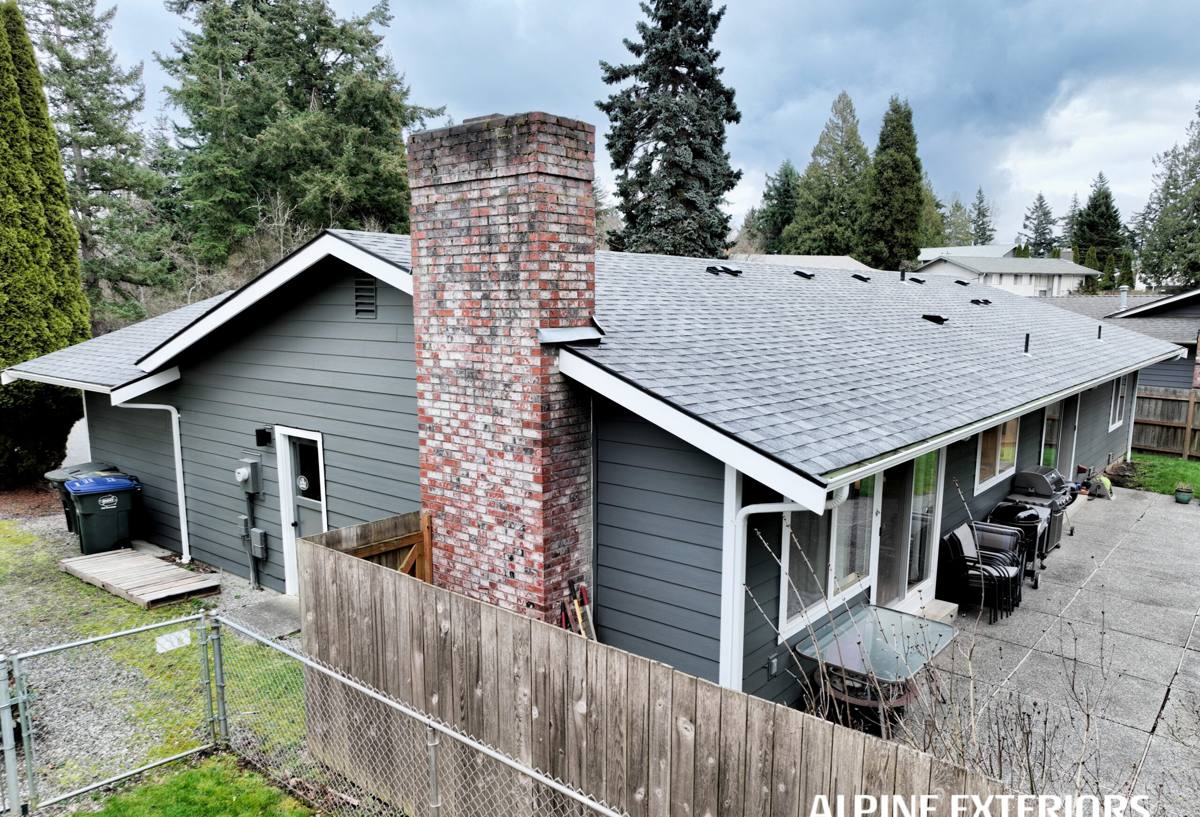
What Salt Air, Rain, and Moss Actually Do to a Wall
Salt-laden air
Airborne salt is corrosive to metal and accelerates the breakdown of some paints and coatings. Fasteners, flashing, and trim pieces that aren't rated for a coastal-influenced climate corrode faster here than they would inland, and once a fastener starts to rust, the finish around it stains and the hole it sits in gets a path for moisture to follow.
Driving rain
Wind-driven rain doesn't just wet the surface of a wall — it gets pushed up and under laps, seams, and trim edges that were designed for rain falling straight down. Over years, that's how water finds its way behind siding that looks fine from the driveway. The damage shows up as rot in the sheathing, not as a visible flaw in the siding itself, which is why so many failures go unnoticed until they're expensive.
Moss and constant shade
Whatcom County's tree cover and long overcast stretches mean north-facing and shaded walls stay damp for days at a time. Moss and algae take hold on surfaces that hold moisture, and once established, they trap even more water against the wall behind them. On some siding materials this is cosmetic. On others, it's the beginning of a moisture problem that works its way into the substrate.
Signs a Nooksack Home Needs Replacement, Not Another Patch
Repairing a section of siding makes sense when the damage is isolated and the rest of the wall is sound. Full replacement is the right call when the problems are systemic — which, on older homes in this area, they usually are by the time anyone calls a contractor. Look for:
- Soft or spongy spots when you press on the siding, especially near the bottom courses and around window and door trim
- Paint that won't hold — you repaint and it fails again within a year or two in the same spots
- Persistent moss or dark staining that comes back within months of being cleaned
- Visible warping, buckling, or panels pulling away from the wall
- Rust streaks below nail heads or fasteners
- A musty smell in an interior room that backs up to an exterior wall
- Siding that's simply original to a 25-30+ year old house and has never been replaced
If two or more of these show up on the same house, patch repairs are usually a short-term fix for what's actually a whole-wall moisture and material problem.
Why We Install Only James Hardie Fiber Cement
We don't install vinyl, LP SmartSide, primed wood, or the other fiber cement brands, and that's a deliberate standard, not an oversight. In a climate defined by salt air, sustained rain, and moss, the material matters more than it does in a drier region. Vinyl expands and contracts with temperature and can warp or crack over time; wood and wood-composite products need consistent paint maintenance to keep moisture out and are more vulnerable to the kind of rot that shows up in wet, shaded conditions. James Hardie fiber cement is non-combustible, dimensionally stable in wet climates, and comes with a factory-applied ColorPlus finish that's baked on rather than sprayed on site, which holds up better against the freeze-thaw and constant damp cycle this area sees.
Hardie also builds region-specific product engineering into its lineup — HZ5 for northern, wetter climates like ours versus HZ10 for hot, dry regions — so the product itself is formulated for the moisture load Whatcom County actually delivers, rather than a generic national spec. Combined with a strong transferable warranty, it's the system we're willing to stand behind on a house that's going to face 20+ more years of this weather.
What a Correct Installation Actually Involves
Fiber cement siding is only as good as the wall assembly underneath it. A correct tear-off and replacement on a Nooksack home includes:
- Full removal of old siding down to the sheathing, not installation over existing material
- Inspection and repair of any rotted sheathing or framing found underneath — this is common on older homes and needs to be dealt with before new siding goes on, not hidden behind it
- A correctly lapped weather-resistant barrier (housewrap) installed shingle-style so water sheds outward, not inward
- Proper flashing at every window, door, and penetration — the single most common failure point on poorly installed siding jobs
- Manufacturer-specified fastening (corrosion-resistant fasteners, correct nail placement and depth) rather than whatever's fastest for the crew
- Correct clearances at grade, decks, and roof lines so siding isn't sitting in standing water or snow load
- Factory-finished panels and trim installed per Hardie's published install specs, which is what keeps the transferable warranty valid
Every one of these steps is invisible once the job is done. That's exactly why they matter — a bad installer and a good one can produce a wall that looks identical on day one and behaves completely differently five years later.
Our Process for a Nooksack Siding Replacement
- On-site assessment. We walk the exterior, check for soft spots and existing moisture damage, and look at trim, flashing, and grade conditions before quoting anything.
- Written scope and product selection. You get a clear plan of what's being torn off, what's being repaired underneath, and which Hardie products and colors fit the house.
- Tear-off and substrate repair. Old siding comes off, damaged sheathing or framing gets replaced, and the wall is brought back to a sound base before anything new goes on.
- Weather barrier and flashing. Housewrap and flashing go in correctly lapped, sealed, and detailed at every penetration.
- Hardie installation. Panels, trim, and accessories go on to manufacturer spec, with correct fastening and clearances.
- Final walkthrough. We go over the finished work with you before calling the job done, and register the warranty paperwork.
What Drives the Cost of a Siding Replacement
Every house is different, so exact pricing has to come from an on-site look. But the same factors move the number up or down on most Whatcom County homes:
| Factor | Why It Matters |
|---|---|
| Condition of the sheathing underneath | Hidden rot from years of driving rain often isn't visible until tear-off, and repair adds material and labor |
| Home size and wall complexity | More corners, gables, and trim detail mean more cutting, fitting, and flashing work |
| Siding profile chosen | Lap width, shingle-style panels, and board-and-batten each carry different material and labor costs |
| Trim and accent work | Window trim, fascia, and soffit work is often bundled into a full replacement and adds scope |
| Access and site conditions | Tight lots, mature landscaping, or multi-story walls affect staging and labor time |
As a rough range, most full-house fiber cement replacements in this area land in the mid five figures, with the final number shaped heavily by the sheathing condition once the old siding comes off.
Why Hiring a Crew That Already Works in This Area Matters
Siding installation isn't the same job everywhere. A crew that mostly works dry, sheltered climates can do technically fine work and still under-detail flashing or skip a weather barrier lap that would never cause a problem where they normally work — but will on a wall that takes driving rain off the Sound for half the year. A crew that already works Whatcom County jobs knows to plan for the moss line, knows which details actually matter in this rainfall pattern, and isn't learning the region on your house. That local pattern-recognition is worth more than it sounds like on paper, because the failures it prevents are the slow, hidden kind that don't show up for years.
Caring for Hardie Siding After It's Installed
One advantage of switching to fiber cement in this climate is how little ongoing maintenance it asks for compared to wood or vinyl. Still, a few habits help it perform the way it's designed to:
- Rinse the exterior occasionally, especially shaded and north-facing walls where moss and algae take hold first
- Keep gutters clear so water isn't overflowing directly onto siding runs
- Trim back vegetation that keeps a wall section shaded and damp
- Have caulking at trim joints and penetrations checked every few years, since sealant wears out well before the siding does
If you're seeing soft spots, recurring moss, or paint that won't hold on a home in or around Nooksack, it's worth having someone look at it before those problems reach the sheathing. We're happy to walk your property, give you a straight read on whether you're looking at repair or replacement, and put together a written estimate — no pressure, no obligation.