 Ferndale
 What Cordata's Climate Actually Does to Siding
Homes in and around Cordata sit in a stretch of Whatcom County where three things work on exterior walls year-round: salt-laden air moving in off Bellingham Bay and the Strait of Georgia, long stretches of driving, wind-pushed rain, and a moss season that can run eight months or longer in shaded, north-facing exposures. None of these are dramatic on their own. The damage they do is cumulative, and it shows up in the products least equipped to handle it.
Salt air accelerates corrosion on fasteners, trim caps, and any exposed metal flashing that wasn't detailed correctly. Driving rain doesn't just wet the surface of a wall — wind pressure pushes water sideways and upward behind laps and around penetrations, which is why lap orientation, fastener placement, and weather-resistive barrier detailing matter more here than in drier climates. And moss, once established on a north wall or under tree cover, holds moisture against the siding surface for weeks at a time, which is exactly the condition that rots wood-based products and delaminates poorly-sealed engineered wood siding.
A siding installation in this neighborhood isn't just about picking a product and nailing it up. It's about installing something built to shed water under wind pressure, resist the freeze-thaw and moisture cycling typical of the Pacific Northwest, and hold a factory finish through a long wet season without the substrate itself breaking down.
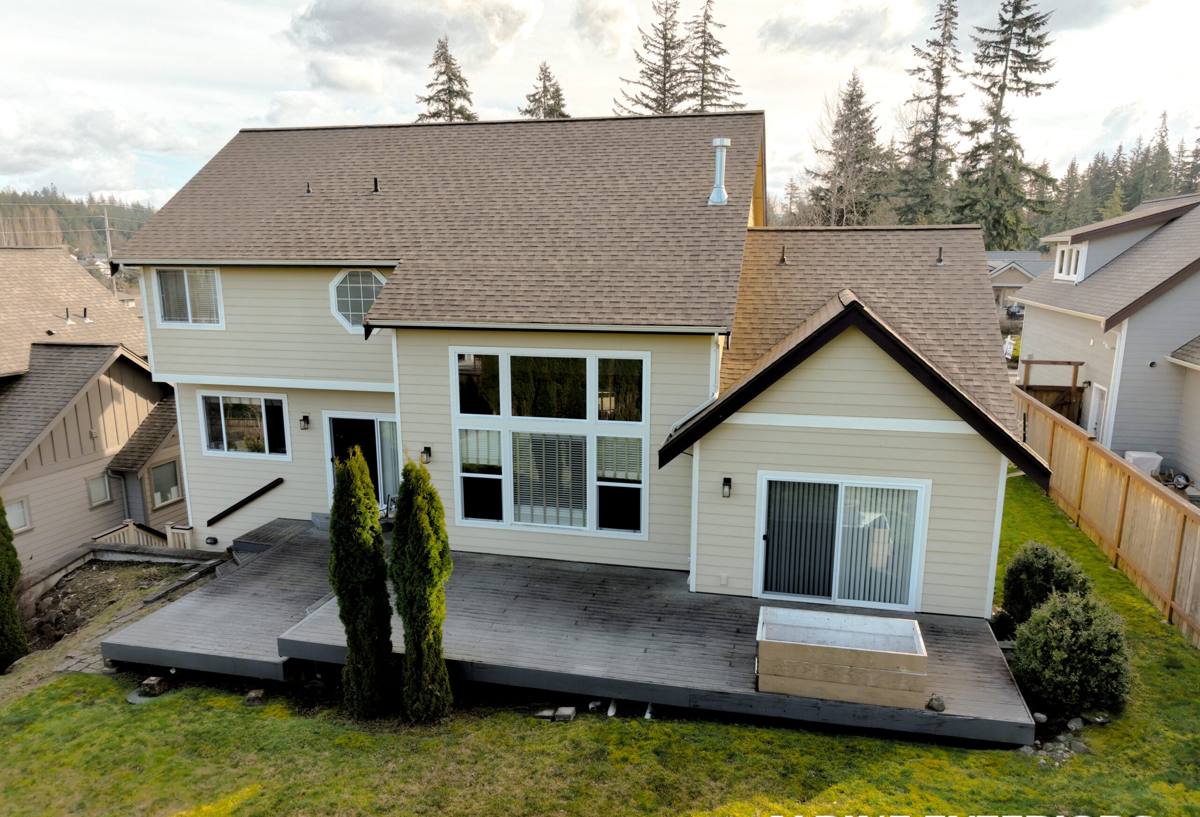
What a Correct Siding Installation Involves
Most siding failures we get called out to inspect in this area aren't product failures — they're installation failures. The product held up; the details around it didn't. A correct job addresses each of these before the first course of siding ever goes up:
The Weather-Resistive Barrier
Everything starts with the barrier underneath the siding, not the siding itself. Seams need to be lapped correctly (upper courses over lower, always shedding down and out), taped where the manufacturer specifies, and integrated with window and door flashing so water that gets past the cladding has a continuous path back outside — never behind the barrier, never into the wall assembly.
Flashing and Penetrations
Every window head, every deck ledger, every pipe or vent penetration is a spot where water pressure concentrates during a wind-driven rain event. Flashing has to be installed in the correct shingle-lap order and sealed with compatible materials — mixing incompatible sealants and metals is a common source of long-term failure we see on older homes in this area.
Fastening and Clearances
Fiber cement siding has manufacturer-specified fastener types, spacing, and penetration depth. Get it wrong and you either void the warranty or create stress points that crack panels over time. Ground clearance, deck clearance, and roof-to-wall clearance all matter too — siding installed too close to grade or a roofline wicks moisture and stays wet longer than it should, which is a direct invitation to moss and mildew growth in a climate like ours.
Why We Install James Hardie — and Nothing Else
We install James Hardie fiber cement siding exclusively. We don't install vinyl, LP SmartSide, Cemplank, Allura, or primed wood species like spruce or cedar. That's a deliberate standard, not a sales preference, and it's worth explaining honestly.
Vinyl siding expands and contracts significantly with temperature swings, can warp or deform under enough heat, and its long-term color relies on integral pigment that can fade unevenly over decades of UV exposure. Wood-based engineered siding products (LP SmartSide, and similar strand-based systems) perform well when every edge and cut is perfectly sealed, but any breach — a missed caulk joint, a cut end left unsealed, prolonged moss coverage holding moisture against a seam — lets water into the wood fiber core, and once that starts, it doesn't reverse. Cemplank and Allura are themselves fiber cement products and reasonable in principle, but we've standardized on one manufacturer, one factory finish process, and one warranty structure so every job we do meets the same bar, rather than juggling different product specs and different fastening rules across brands.
James Hardie fiber cement is non-combustible, dimensionally stable across our temperature range, and finished at the factory with ColorPlus Technology — a baked-on finish that resists fading and chipping far better than field-applied paint, and comes with its own finish warranty separate from the product warranty. It doesn't rot, and it isn't a food source for moss or mildew the way wood-based products can be. That combination is why it's the only product we put on homes.
Choosing the Right Hardie Line for This Area
James Hardie makes climate-specific product lines, engineered with different formulations for different regions — a recognition that a house in Arizona and a house in coastal Washington face completely different moisture loads. For Cordata and the surrounding Ferndale area, we install Hardie's HZ5 line, engineered for regions with significant moisture exposure and freeze-thaw cycling, which describes our winters here reasonably well.
| Product Type | Best Use on a Cordata Home | Notes |
|---|---|---|
| HardiePlank lap siding | Primary wall cladding, most common choice | Available in several exposure widths and smooth or cedar-textured finishes |
| HardiePanel vertical siding | Accent walls, gable ends, modern facades | Often paired with battens for a board-and-batten look |
| HardieShingle siding | Accent areas, gables, dormers | Staggered or straight-edge panels for a shingle appearance without wood's moisture sensitivity |
| HardieTrim boards | Corners, window and door casing, fascia | Matched ColorPlus finish for a consistent factory-finished look |
Color selection matters here too. Homes with heavy tree cover or north-facing walls that stay shaded longer will show any moss growth more visibly on lighter, flatter-sheen colors. It's not a reason to avoid a color you want, but it's worth knowing going in — regular gentle washing keeps any color looking right regardless of exposure.
Our Installation Process
- On-site assessment: We walk the exterior, check existing sheathing and framing condition where accessible, note drainage patterns, roofline interactions, and areas with heavy moss or moisture history.
- Tear-off and substrate inspection: Existing siding comes off and we inspect the sheathing underneath for rot or damage before anything new goes on — covering up a compromised substrate just delays a bigger repair.
- Weather-resistive barrier installation: New barrier installed and lapped correctly, integrated with window and door flashing.
- Flashing detail work: Head flashing, kickout flashing at roof-wall intersections, and penetration flashing installed before siding starts.
- Hardie siding installation: Installed to manufacturer fastening specifications, correct exposure, correct clearances from grade, roofline, and decks.
- Trim and caulking: HardieTrim installed at corners and openings, sealed with compatible sealants at the joints the manufacturer specifies — not everywhere, since Hardie siding is designed to breathe at certain joints.
- Final walkthrough: We review the finished job with you, including what maintenance to expect and what's covered under warranty.
Installation Mistakes We Commonly Correct in This Area
- Siding installed tight to grade or a concrete walkway, with no clearance for splash-back and drainage
- Missing or incorrectly lapped kickout flashing where a roofline meets a wall, sending roof runoff behind the siding instead of away from it
- Face-nailing or over-driven fasteners that crack panels or void manufacturer warranty coverage
- Caulk used at butt joints that should have been left to move, trapping moisture instead of shedding it
- Weather barrier seams lapped backward, or not integrated with window flashing at all
Every one of these is invisible from the street the day the job is finished. They surface two, five, or ten years later as staining, soft spots, or paint failure — which is exactly why hiring based on installation quality, not just the product on the invoice, matters as much here as anywhere.
What Affects the Cost of a Siding Installation
| Factor | Why It Matters |
|---|---|
| Home size and wall complexity | More corners, gables, and dormers mean more cutting, flashing, and trim work |
| Substrate condition | Rotted sheathing found during tear-off adds repair scope before new siding can go on |
| Product mix | Plank-only jobs cost less than jobs combining plank, panel accents, and shingle detail areas |
| Trim scope | Full HardieTrim replacement at all corners and openings versus reusing sound existing trim |
| Site access | Tree cover, fencing, and tight lot lines around Cordata properties can add labor time |
| Moisture-related repairs | Areas with a history of moss coverage sometimes hide sheathing damage that needs addressing |
We give a firm, itemized quote after the on-site assessment, not a rough number over the phone — the substrate condition and site access are things you can't accurately price without actually looking at the house.
Maintaining Hardie Siding After Installation
One advantage of fiber cement in this climate is how little ongoing maintenance it actually needs compared to wood-based alternatives, but "little" isn't "none." A short annual routine keeps it performing and looking right through Whatcom County's wet season:
- Rinse the exterior with a garden hose and soft brush once or twice a year — more often on shaded, moss-prone walls
- Avoid pressure washers directly against siding joints and caulk lines; use low pressure and a wide fan tip if you use one at all
- Check caulk at trim joints and window surrounds annually and re-caulk any cracked or separated sections promptly
- Trim back vegetation and tree branches that keep a wall section shaded and damp longer than the rest of the house
- Watch gutters and downspouts near the siding — overflow during heavy rain is a common source of localized staining and moss growth
Why Local Installation Experience Matters in Cordata
A siding crew that works this specific area regularly already knows how wind-driven rain moves across a typical Whatcom County lot, which wall orientations hold moss longest, and which flashing details actually hold up through a full Pacific Northwest winter rather than just looking right on installation day. That's not something you can fully substitute with a manufacturer's general installation manual, even a good one. It shows up in the small decisions — where to add extra flashing that isn't strictly required, which wall to prioritize for ventilation clearance, how to sequence a tear-off around our rain patterns instead of the manufacturer's generic timeline.
If you're planning a siding installation for a home in or near Cordata, we're happy to walk the property, look at what's there now, and give you a straight assessment of what a correct installation would involve — no pressure, no inflated scope. Reach out for a free estimate using the form below.