 Ferndale
 Roof Replacement on Semiahmoo: A Different Job Than Most of Whatcom County
Semiahmoo sits out on a narrow spit between Semiahmoo Bay and Drayton Harbor, right at the edge of Blaine near the Canadian border. It's one of the more exposed residential settings in Whatcom County — water on more than one side, very little natural windbreak, and a marine climate that doesn't ease up for long stretches of the year. A roof out here takes a harder, more constant beating than a roof a few miles inland, and that difference shows up in how fast materials wear, how often flashing needs attention, and how a replacement needs to be detailed to actually hold up.
This page is specifically about full roof replacement on Semiahmoo properties — not a general roofing overview. If you're trying to figure out whether your roof is at the point of replacement, what a correct job involves out here, and why hiring a crew that already works this stretch of coastline matters, this is written for that decision.
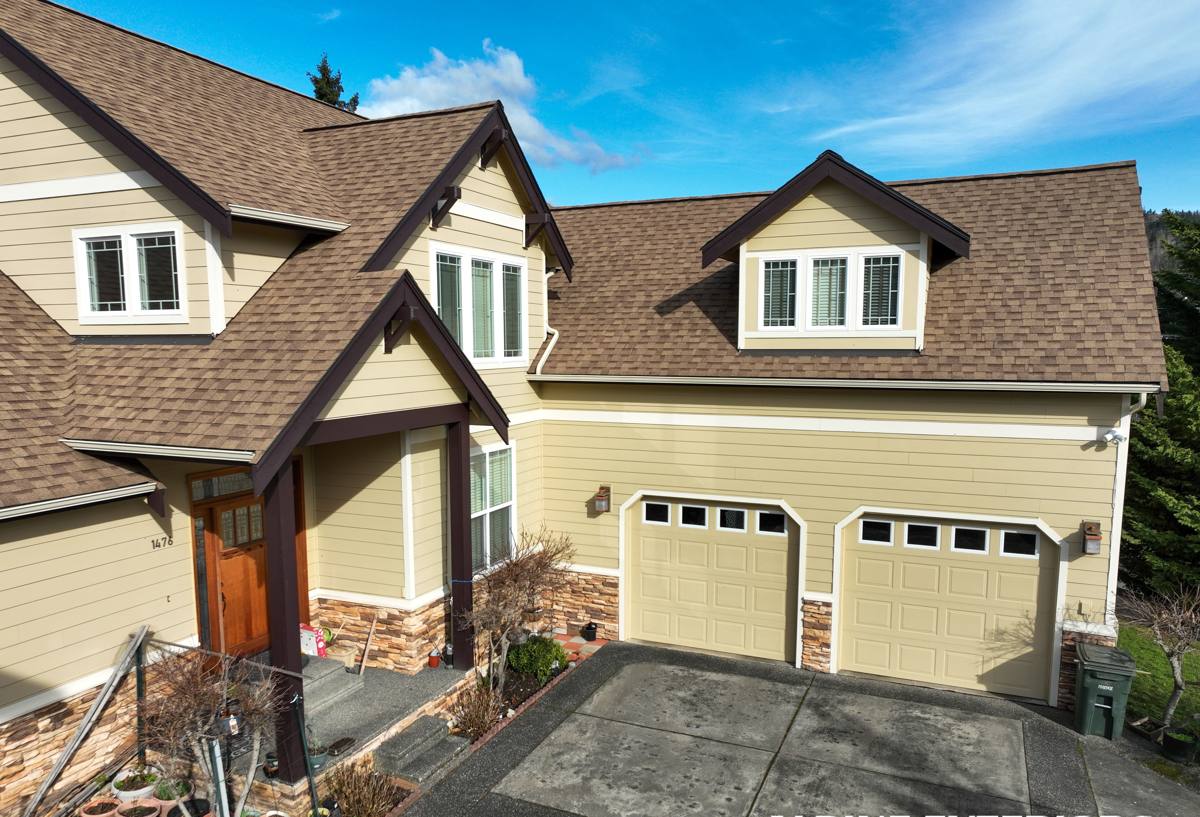
What Semiahmoo's Climate Does to a Roof
Salt Air From More Than One Direction
Because the spit has water on multiple sides, homes here get salt-laden air moving in from more than one prevailing direction instead of a single exposure most inland properties deal with. Salt accelerates corrosion in exposed fasteners, flashing, and any metal roofing component, and it breaks down lower-grade coatings and sealants faster than a sheltered site would. On a roof, that shows up first at fastener heads, flashing seams, and any metal ridge or valley detail — the places corrosion gets a foothold and starts working outward.
Wind-Driven Rain and Open Exposure
With almost nothing to break the wind, rain on the spit rarely falls straight down. It gets pushed sideways into roof-to-wall transitions, valleys, and penetrations with more force than a typical inland Whatcom County roof ever sees. That matters because most roofing details are designed primarily to shed water moving downward — driving rain tests laps, flashing, and underlayment overlaps in a way calmer sites don't. A roof that would perform fine set back from the water can develop leaks here specifically because water is finding its way in sideways.
A Moss Season That Runs Most of the Year
Mild temperatures and near-constant humidity add up to a moss and algae season that stretches across most of the year in this part of the county, and Semiahmoo's waterfront location doesn't shorten it. North-facing slopes, valleys, and anywhere debris collects tend to hold moisture longest, and moss left unchecked works its way under shingle edges and holds water against the roof deck far longer than the roof was ever meant to stay wet.
Signs a Semiahmoo Roof Has Moved Past Repair
Not every roofing problem means a full replacement. But on an exposed property like this, several of the following together — especially on a roof already near the end of its expected life — usually mean it's time to stop patching and start planning a replacement.
- Granule loss heavy enough to show bald patches or collect in gutters and downspouts
- Shingles curling, cupping, or cracking across multiple slopes rather than one isolated area
- Flashing at chimneys, vents, skylights, or wall transitions that's lifted, rusted through, or has been caulked over more than once
- Moss or algae that returns quickly after cleaning, especially in valleys or on shaded slopes
- Soft or spongy spots underfoot, or visible sagging along the roofline instead of a straight plane
- Daylight, water staining, or a musty smell in the attic, particularly near roof-to-wall transitions
- Repeated leak repairs in different spots over the past few years rather than one recurring issue
Any single item on that list can often be addressed with a targeted repair. A pattern across several of them, on a roof that's already carried more than its share of salt air and driving rain, is usually a sign the underlying materials and flashing system are wearing out faster than they can be chased with patches.
Roofing Materials That Actually Hold Up on the Spit
Manufacturer lifespan ratings assume a moderate climate and ideal installation. Semiahmoo's combination of salt air, wind-driven rain, and a long moss season shortens the practical end of most of those ranges, and it also changes which materials make the most sense here in the first place.
| Roofing Material | Typical Lifespan (National) | Realistic Fit for Semiahmoo Exposure |
|---|---|---|
| 3-tab asphalt shingles | 15-20 years | Lower cost, but the least wind and moisture resistance of the common options — usually not our first recommendation on the spit |
| Architectural (laminate) asphalt shingles | 25-30 years | Solid mid-range choice with better wind ratings than 3-tab; performance depends heavily on underlayment and flashing detail |
| Standing seam metal | 40-60 years | Strong fit for open, high-wind waterfront exposure when fasteners and flashing are corrosion-rated; higher upfront cost |
| Composite/synthetic shingle | 30-50 years | Good middle ground — better wind and moisture performance than asphalt, lighter and often less expensive than metal |
None of these are automatically wrong for a Semiahmoo property — the right choice depends on budget, roof pitch and complexity, and how much wind exposure a specific lot actually has. What matters more than the material label is whether the fasteners, flashing, and underlayment underneath it are specified for a corrosive, high-wind coastal setting rather than a standard inland install.
What a Correct Roof Replacement Actually Involves
Tear-Off and Deck Inspection
A full replacement starts with removing the existing roofing down to the deck, not roofing over what's there. That step matters more on Semiahmoo than it does inland, because it's the only point where you can actually see whether driving rain has gotten past the old roofing and softened the sheathing underneath. Any soft, delaminated, or water-stained decking gets replaced before anything new goes down — installing new roofing over a compromised deck just hides the problem for a few more years.
Underlayment Built for This Exposure
Underlayment is the roof's second line of defense, and on a wind-exposed waterfront property it earns its keep. We use self-adhered ice-and-water shield at eaves, valleys, and around penetrations — the spots most likely to see wind-driven water pushed backward under the roofing — and a synthetic underlayment across the rest of the deck for its tear resistance and moisture performance compared to older felt products.
Flashing and Fastening for Open Wind Exposure
Every chimney, vent, skylight, and roof-to-wall transition gets new flashing, installed in the correct sequence with the underlayment so water is always directed outward and down, never trapped behind a lap. Fastener count and placement matter more here than on a sheltered inland roof — we follow fastening patterns rated for higher wind exposure, and we use corrosion-resistant fasteners and flashing metal given how much salt air this property is going to see over the life of the roof.
Ventilation That Lets the Roof Dry Out
A roof deck that can't dry between storms stays wet longer than it should, which is exactly what accelerates rot and moss growth. Balanced intake and exhaust ventilation — enough low, soffit-level intake to match the exhaust at the ridge or through roof vents — keeps air moving through the attic space so the underside of the deck actually gets a chance to dry out between the wet stretches this climate throws at it.
Cost Factors for a Semiahmoo Roof Replacement
We don't publish fixed prices because every roof is different, but the factors that move the number are consistent. Knowing them ahead of time makes it easier to understand a quote and compare it honestly against another one.
| Factor | Why It Moves the Price |
|---|---|
| Roof size and pitch | More square footage and steeper pitches both increase material and labor time |
| Number of existing layers | Tear-off of multiple old layers takes longer and adds disposal cost |
| Decking condition | Any sheathing replacement found during tear-off is additional material and labor |
| Material choice | Asphalt, composite, and metal have different material costs and installation labor |
| Roof complexity | Valleys, dormers, skylights, and multiple penetrations all add flashing labor |
| Access and staging | Spit and waterfront lots can have tighter access for equipment and material delivery than a standard inland lot |
A written estimate should break these out clearly enough that you can see where the number is coming from, not just a single lump sum.
Our Process for a Semiahmoo Roof Replacement
- On-site inspection of the current roof, deck, and attic, with specific attention to how the existing system has handled salt air, wind exposure, and moss on this particular property
- A clear, written scope covering materials, underlayment, flashing details, and ventilation plan before any contract is signed
- Tear-off to the deck, with any soft or damaged sheathing identified and replaced before new roofing goes down
- Underlayment, flashing, and roofing installed in the correct sequence, with fastening specified for this property's wind exposure
- Ventilation checked and balanced as part of the install, not treated as a separate add-on
- Full site cleanup, including a magnetic sweep for stray fasteners, and a final walkthrough before we consider the job done
Why a Crew That Already Works Semiahmoo Matters
Semiahmoo isn't a typical suburban roofing job. Access on parts of the spit can be tighter than a standard lot, weather windows for tear-off need to be judged more carefully given how exposed the site is, and a number of homes and condos out here are part of an HOA or association with its own requirements around exterior materials, colors, or contractor coordination. A crew that has already worked properties on the spit knows to check for those requirements up front, plans around the wind and tide conditions that affect staging, and isn't learning the corrosion and flashing lessons of this specific microclimate on your roof for the first time.
That local familiarity doesn't replace good fundamentals — a correct tear-off, proper underlayment, and well-sequenced flashing matter everywhere. But on a property this exposed, knowing the site before the crew shows up is part of what keeps a replacement from turning into a longer, more disruptive project than it needs to be.
Getting Started
If you're weighing repair against replacement, or you already know your Semiahmoo roof is due, we're happy to walk it with you and give a straight read on what it actually needs. Reach out below for a free, no-pressure estimate.