 Ferndale
 Point Roberts Is Its Own Climate Zone
Point Roberts sits out on its own peninsula, cut off from the rest of Whatcom County by water and the Canadian border, and that geography matters more for siding than most homeowners realize. The exposure out there is different from Ferndale proper or Bellingham — you're closer to open water on multiple sides, which means more direct salt-laden wind, more driving rain off the Strait, and a longer stretch of damp, shaded moss season on north- and west-facing walls. Siding that performs fine a few miles inland can struggle on a Point Roberts lot that catches wind and spray year-round.
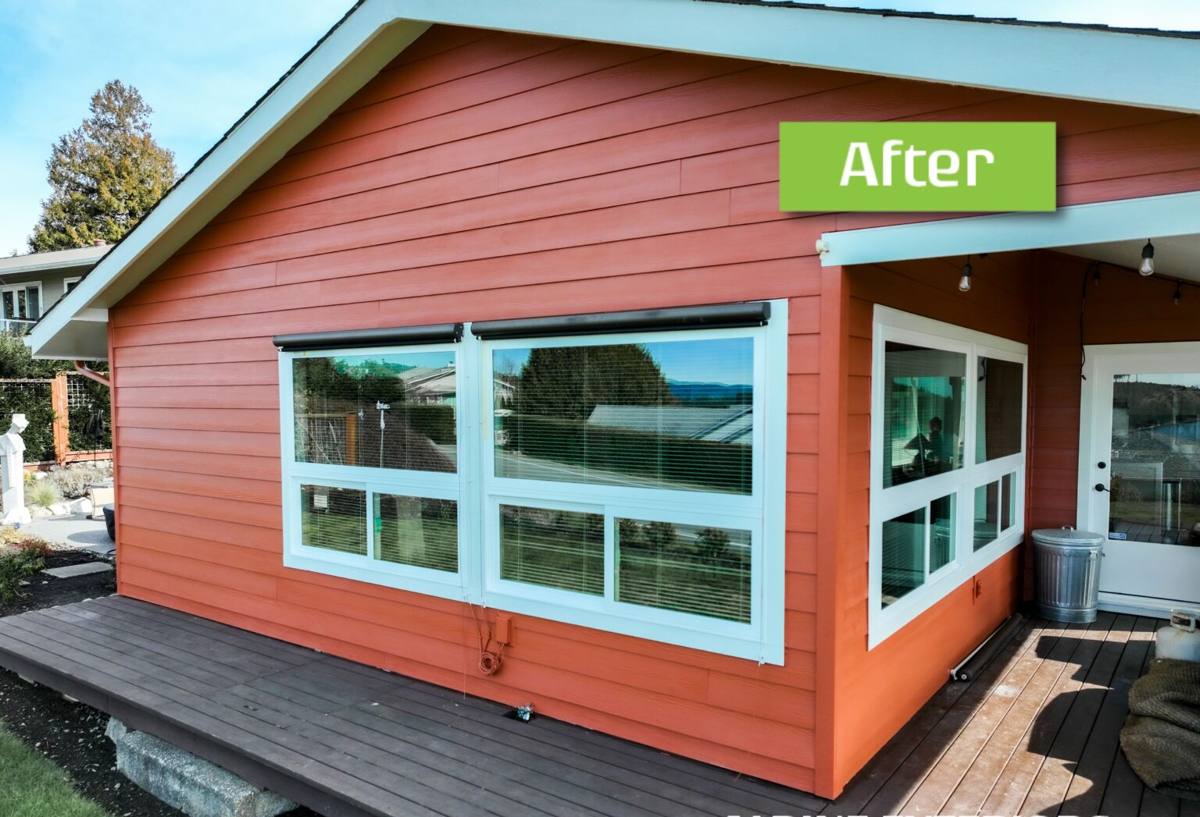
We install James Hardie fiber cement exclusively, and Point Roberts is one of the clearer examples of why. This page walks through what the salt air, rain, and moss exposure actually does to siding over time, what a correct Hardie installation looks like for this specific environment, and how our process is built around jobs in this area.
What Salt Air, Driving Rain, and Moss Actually Do to Siding
Salt Air
Airborne salt is corrosive to fasteners and hardware, and it accelerates the breakdown of finishes that aren't formulated to resist it. On wood-based products, salt exposure combined with moisture speeds up surface checking and paint failure. Fiber cement doesn't corrode, and James Hardie's ColorPlus factory finish is baked on with a process designed to hold up under UV and weather exposure better than field-applied paint — which matters a lot when your siding is getting hit with salt spray on a regular basis.
Driving Rain
Point Roberts gets wind-driven rain that hits siding at an angle rather than falling straight down, which pushes water into laps, seams, and penetrations that a calmer climate wouldn't stress as hard. This is a water-management problem as much as a materials problem — it's about flashing, lap spacing, and how the whole wall assembly sheds water, not just what the siding panel is made of.
Moss and Prolonged Dampness
Shaded, north-facing walls near tree lines or close to the water stay damp longer between rain events. Over years, that supports moss and algae growth on surfaces that hold moisture. Wood and engineered-wood sidings are especially vulnerable here because sustained dampness is exactly what leads to rot at their core. Fiber cement is inorganic — it doesn't feed rot the way wood-based products can — but it still needs to be installed with the right clearances and drainage so water doesn't sit against it.
Why We Don't Install Wood-Based or Vinyl Siding Out Here
We get asked occasionally about cedar, primed spruce, LP SmartSide, or vinyl for Point Roberts properties, and we're upfront about why we don't offer them. Cedar and primed spruce are wood — they can look great, but they depend on an intact paint or stain film to keep moisture out, and that film is exactly what salt air and prolonged dampness wear down fastest. Once moisture gets past the finish and into the wood, rot follows, and re-coating on a schedule is a real, recurring cost most owners underestimate going in.
Engineered wood products like LP SmartSide use a resin-treated strand substrate that resists moisture better than raw wood, but it's still wood-based at its core — cut edges and any breach in the coating are vulnerable points, and a peninsula exposure like this one is a tough proving ground for that weakness.
Vinyl siding doesn't rot, but it's a thin, flexible plastic panel that expands and contracts with temperature and can distort or crack under wind-driven debris and cold snaps — and it has no fire resistance to speak of. Given the exposure Point Roberts homes deal with, we'd rather put on a product that doesn't ask an owner to gamble on a coating holding up.
What Correct James Hardie Installation Looks Like Here
Hardie siding is only as good as the installation behind it. For Point Roberts specifically, a handful of details matter more than they would on a sheltered inland lot:
- Rainscreen or proper drainage plane: a gap behind the siding lets any water that gets past the cladding drain and dry instead of sitting against the wall.
- Correct fastener spec: stainless or hot-dip galvanized fasteners rated for coastal-adjacent exposure, placed per Hardie's fastening schedule — not whatever happens to be in the nail gun.
- Flashing at every penetration: windows, doors, hose bibs, light fixtures — every point that breaks the wall plane needs flashing detail, since driving rain finds these spots first.
- Proper lap and clearance: minimum clearance from grade, decks, and roof lines so water sheds away from the bottom edge of the siding instead of wicking into it.
- Factory-cut and factory-primed edges wherever possible: field cuts get sealed per Hardie spec so raw edges aren't left exposed to salt-laden moisture.
- Caulking and joint treatment matched to Hardie's published details — not generic sealant applied wherever it looks like it should go.
None of this is exotic. It's the difference between following Hardie's installation manual closely versus loosely, and on an exposed peninsula that difference shows up years earlier than it would somewhere sheltered.
Choosing the Right Hardie Product Line and Finish
James Hardie makes climate-engineered product lines, and for an exposure like Point Roberts we lean toward their HZ5 formulation, engineered for wetter, harsher climates, paired with a ColorPlus finish rather than field-painted primed panels. ColorPlus resists fading and chipping better than site-applied paint and carries its own finish warranty, which matters when a home is taking regular salt exposure and won't get repainted every few years without real cost and hassle.
| Factor | Why It Matters at Point Roberts |
|---|---|
| HZ5 climate-engineered formulation | Built for wetter, harsher exposure than standard lines |
| ColorPlus factory finish | Resists salt-air fading/chipping better than field-painted primed panels |
| Panel profile (lap, shingle, board & batten) | Affects water shedding and how laps handle driving rain |
| Fastener material | Stainless/hot-dip galvanized resists salt-air corrosion |
| Trim and flashing details | Determines how well penetrations resist wind-driven rain |
Our Process for a Point Roberts Job
1. On-Site Assessment
We look at wall exposure, shading, existing moisture or moss patterns, and current siding condition before recommending anything. A wall facing open water gets different attention than one tucked against a garage.
2. Product and Detail Plan
We spec the Hardie product line, profile, and color, and map out flashing and drainage details for the specific trouble spots on that home — window heads, deck ledgers, roof-to-wall transitions.
3. Tear-Off and Substrate Check
Once old siding comes off, we check the sheathing and framing underneath for hidden moisture damage, which is common on homes that have had a failing wood or vinyl exterior for years. Any rot gets addressed before new siding goes on — covering damaged substrate with new siding just hides the problem.
4. Installation to Spec
Fastening, flashing, clearances, and caulking all follow Hardie's published installation guidelines, not shortcuts. This is where most of the long-term performance difference actually comes from.
5. Final Walkthrough
We walk the finished job with the owner, confirm the details, and go over basic care specific to this exposure — what to watch for on shaded walls, how to keep gutters and downspouts clear so water isn't dumping against the siding.
Why a Crew That Already Works This Area Matters
Point Roberts' geography — the border crossing, the ferry-adjacent logistics of getting materials and crews out there, the specific wind and rain exposure — is different enough from the rest of Whatcom County that experience out there actually counts for something. A crew that's planned around the crossing logistics and knows what this peninsula's weather does to a wall assembly makes fewer assumptions and catches more problems before they become callbacks. That's not a knock on any other contractor — it's just what repetition on a specific exposure buys you.
What a Homeowner Should Expect to See on the Quote
- Which Hardie product line (HZ5 vs. standard) and why, given the wall's exposure
- Specific flashing and drainage plan for problem areas — not just "we'll flash it"
- Fastener type called out by name
- Whether a rainscreen/drainage gap is included
- Clear scope on substrate repair if rot is found during tear-off
Cost Factors Specific to This Exposure
| Factor | Impact on Cost |
|---|---|
| Substrate repair from prior moisture/rot damage | Common on aging wood/vinyl homes here; adds cost but is not optional to skip |
| Rainscreen/drainage gap installation | Modest added labor and material, meaningful long-term payoff |
| HZ5 vs. standard Hardie formulation | Small price difference, better match for this exposure |
| Complexity of flashing at windows, decks, roof lines | More penetrations and transitions mean more detail work |
| Access and logistics getting materials to the site | Peninsula location adds some scheduling and delivery consideration |
If you own a home in Point Roberts and your siding is showing moss buildup, chalking, soft spots, or failing paint, we're happy to come take a look and give you a straight, no-pressure estimate on what a correctly installed James Hardie system would look like for your specific exposure.