 Ferndale
 Building Decks for Nooksack's Particular Weather
Nooksack sits in a part of Whatcom County where the weather doesn't do a deck any favors. You get long stretches of driving rain off the water, salt-laden air that works its way inland on the wind, and a moss season that can run from fall clear through spring. A deck built to a generic spec — the kind you'd see in a catalog plan for a dry climate — will look fine for a year or two and then start showing problems: soft spots near the house, green film on every horizontal surface, fasteners bleeding rust streaks down the boards. We build decks specifically for this kind of climate, which changes real decisions about materials, fasteners, drainage, and structure, not just the finish coat.
A well-built deck in this area isn't dramatically more expensive than a poorly built one — the difference is mostly in choices that don't cost much extra but matter a lot over ten or twenty years: flashing detail at the house, fastener grade, gap spacing, and how water is encouraged to leave rather than sit.
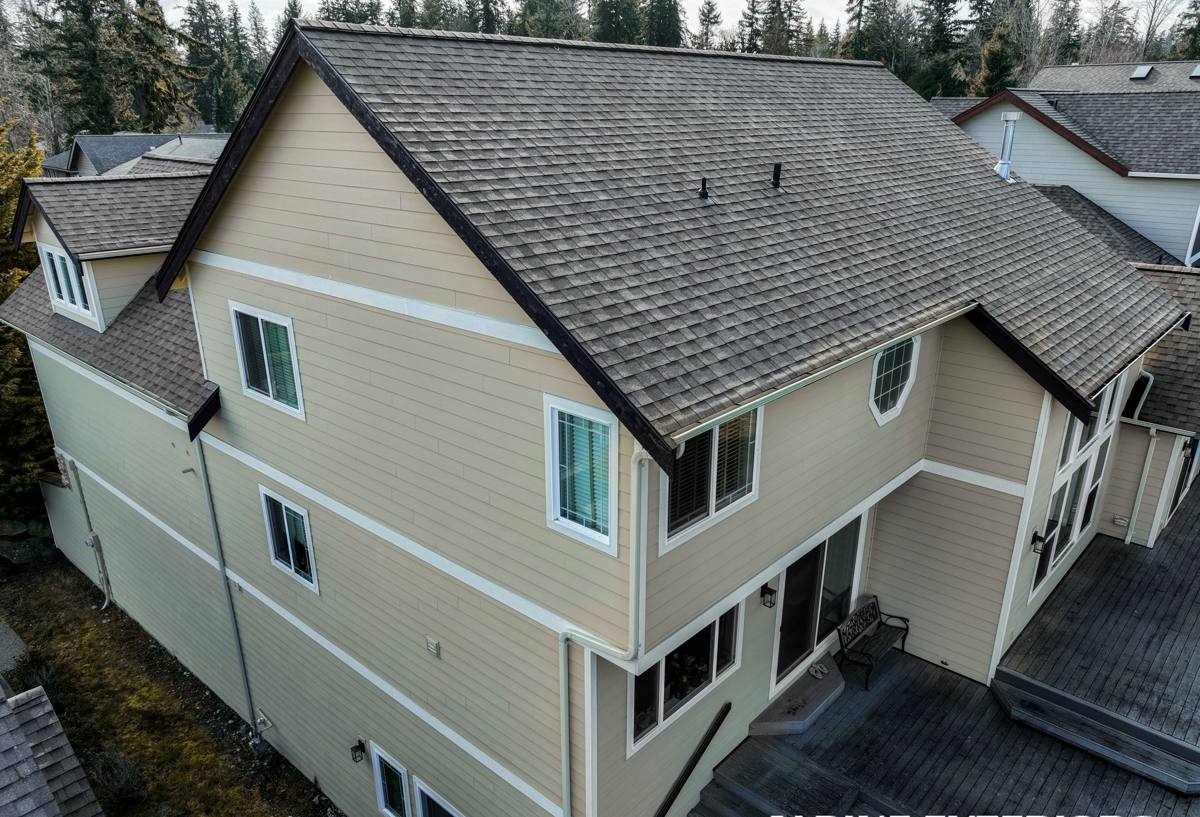
What "Custom" Should Mean Here
We hear "custom deck" used loosely to mean anything not off a shelf. For us it means the deck is designed around the actual lot — slope, tree cover, sun exposure, and how the household actually wants to use the space — rather than a standard rectangle bolted to the back of the house.
Site Conditions We Design Around
- Grade and drainage — where does water go once it leaves the deck, and does the current site slope carry it away from the foundation or toward it
- Tree cover and shade — heavy shade slows drying after rain and speeds up moss and algae growth, which affects both material choice and board spacing
- Wind and rain exposure — sides of the house facing prevailing weather need different flashing and fastening attention than a sheltered side
- How the space will actually be used — a grilling and dining deck has different layout needs than one built mainly for a hot tub or a quiet sitting area
None of that changes the basic engineering, but it does change footing placement, board orientation, railing style, and where we put stairs — decisions that are hard to undo later.
Decking Material: What Holds Up and What Doesn't
Every decking material has trade-offs in a wet, moss-prone climate. We're upfront about them instead of pushing whatever's easiest to install.
Pressure-Treated Wood
Still the most affordable option and perfectly serviceable if maintained. It needs regular cleaning and periodic sealing to resist moss and moisture wicking, and it will show wear faster than composite in a shaded, damp yard. Good choice for homeowners who don't mind a maintenance routine and want to keep upfront cost down.
Cedar
Naturally more rot- and insect-resistant than most softwoods and it looks the part, but it's not maintenance-free here. Left unsealed, cedar grays and can develop surface moss just like any other wood in a shady, rain-heavy spot. It's a good fit when appearance matters as much as low upkeep, paired with a realistic sealing schedule.
Composite and PVC Decking
Composite doesn't absorb moisture the way wood does, so it resists rot and cups less, and most modern composites shed algae and moss more easily than wood — though "resists" isn't "immune," and shaded composite boards still need occasional cleaning. It costs more upfront and installation is less forgiving of mistakes: gapping, fastening, and substructure venting all have to be right or the warranty and the performance both suffer. We install it carefully, following manufacturer spacing and fastening specs to the letter, because composite is one of those products where a small install shortcut shows up as a real problem years down the road.
| Material | Moss/Moisture Resistance | Maintenance | Typical Lifespan |
|---|---|---|---|
| Pressure-Treated Wood | Moderate — needs sealing | Annual cleaning, periodic sealing | 15–20 years with upkeep |
| Cedar | Moderate — naturally resistant, still needs sealing | Annual cleaning, sealing every 2–3 years | 20+ years with upkeep |
| Composite/PVC | High | Occasional washing, no sealing | 25–30 years |
Where Decks Actually Fail in This Climate
Most deck failures we see aren't about the decking boards themselves — they're about the structure underneath and the connection to the house, both of which take the brunt of Whatcom County's wet-weather cycle.
Ledger Flashing
The ledger board — where the deck attaches to the house — is the single most common failure point on older decks in this region. Without proper flashing and a waterproof membrane behind it, water works its way behind the ledger and into the house rim joist, which is a rot problem you don't see until it's serious. We flash every ledger connection correctly, every time, regardless of what the original build looked like.
Fasteners and Hardware
Salt-influenced air corrodes standard fasteners faster than people expect, especially anything closer to the water. We use corrosion-resistant, code-rated fasteners and structural hardware rated for exterior and coastal-influenced exposure, not the cheapest box off the shelf.
Joist Protection and Airflow
Unprotected joist tops trap moisture under the decking and rot from the inside out, often invisibly, for years. We tape or cap joists and make sure there's enough airflow underneath the deck so it can actually dry out between rain events instead of staying damp for weeks at a time.
Footings
Whatcom County soil and frost conditions call for footings sized and set to code depth, not guessed at. We pour footings to spec so the structure doesn't shift or heave over time.
Railings, Stairs, and Finish Details
Railings and stairs see as much weather exposure as decking, sometimes more, since they're vertical and catch driving rain directly. Wood railings need the same sealing discipline as wood decking. Metal or composite railing systems hold up with less upkeep but cost more upfront. Stair treads need enough grip and drainage that they don't turn slick with algae during the wet months — something we plan for at the design stage, not as an afterthought.
Our Process for a Nooksack Deck Build
- Site visit and consultation — we walk the actual lot, look at drainage, sun exposure, and how the space connects to the house, and talk through how the household wants to use it.
- Design and material selection — we lay out size, footprint, and material options with honest trade-offs, not just the upsell.
- Permitting — most decks above a certain height or attached to the house require a permit; we handle the paperwork and inspections so it's not on you to figure out.
- Footings and framing — footings poured to code depth, framing built with corrosion-resistant hardware and proper ledger flashing.
- Decking, railing, and finish work — installed to manufacturer spec with attention to gapping, fastening, and drainage.
- Final walkthrough — we go over the finished deck with you, including what maintenance it will actually need.
Maintenance Through Moss Season
Even the right materials and the best build won't eliminate maintenance entirely — this climate doesn't allow for that. What changes is how much maintenance and how urgent it is.
- Sweep debris and standing leaves off the deck regularly through fall, when moss and algae get the moisture and shade they need to take hold
- Wash the deck surface at least once a year with a deck-safe cleaner, more often on shaded sections
- Reseal wood decking on the manufacturer's recommended schedule — skipping a cycle is when moisture problems start
- Keep gutters and downspouts near the deck clear so runoff isn't dumping extra water onto or under the structure
- Check railings and stair treads each fall for slickness before the wet season sets in
- Look underneath the deck once a year for standing water or signs of joist moisture
Cost Factors to Expect
We don't quote a number without seeing the site, but a few factors consistently move the price more than others.
| Factor | Impact on Cost |
|---|---|
| Decking material (wood vs. composite/PVC) | Composite/PVC typically costs more upfront, less over the deck's life |
| Deck height and stair count | Elevated decks need more structure, footings, and stair framing |
| Railing style | Metal and composite railing systems cost more than basic wood |
| Site access and slope | Difficult access or steep grade adds labor and equipment time |
| Permit requirements | Larger or attached decks typically require permitting and inspection |
Why Hire a Crew That Already Works This Area
A deck built to a generic national spec will get through a dry summer looking fine. It's the second and third winter — with Whatcom County's driving rain, salt air, and the moss that follows both — that separates a properly built deck from one that just looks properly built. Working in and around Ferndale and Nooksack regularly means we're not guessing at how local weather treats a structure over time; we're seeing it on decks we and others have built here, and adjusting our approach accordingly. We also know the local permitting process, which keeps a deck project from stalling out on paperwork.
If you're planning a new deck or replacing one that's showing its age, we're happy to come take a look at your property and talk through what makes sense for your site and budget. Reach out for a free, no-pressure estimate using the form below.