 Ferndale
 Why Bellingham Roofs Wear Differently Than Roofs Inland
Bellingham sits close enough to Bellingham Bay and the Salish Sea that salt-laden air is a real factor for anything metal on your roof — fasteners, flashing, vents, gutters. Add Whatcom County's long, wet fall-through-spring stretch of driving rain off the water, plus tree cover that keeps roofs shaded and damp for days after a storm, and you get a climate that's genuinely harder on a roof than a lot of homeowners realize until they're dealing with soft decking or a moss mat that's lifted their shingles at the edges.
None of this means Bellingham homes need exotic materials. It means the install has to account for moisture that lingers, not moisture that falls and drains off in an afternoon. A roof put on the same way you'd do it in a drier climate will show problems years sooner here — usually starting at the north-facing slopes and valleys that never fully dry out between rains.
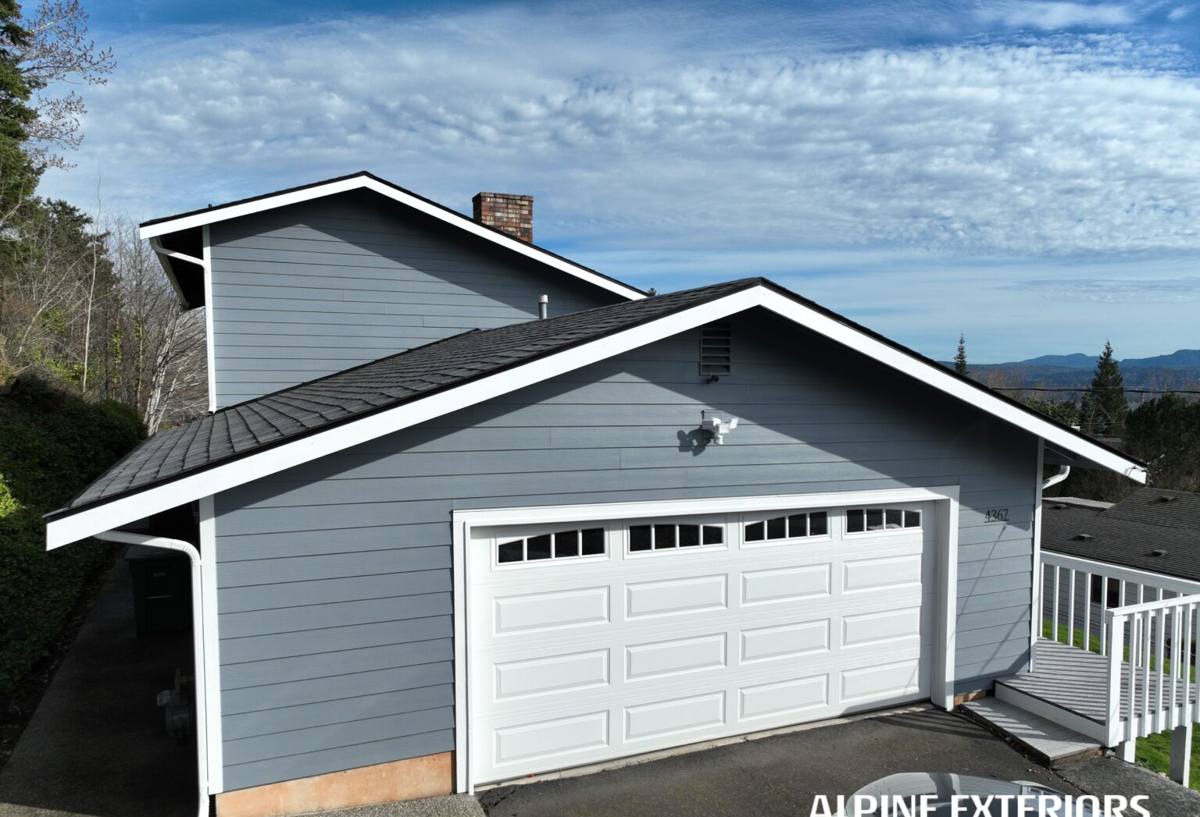
What "Correct" Actually Means for a New Roof Install
The Deck Comes First
Before any new material goes down, the roof deck underneath has to be sound. On a tear-off, this is where problems from years of trapped moisture usually show up — soft spots, delaminated plywood, or old leaks that were never fully dried out. Skipping a real deck inspection to save a day is the single most common shortcut that causes early failures on the coast, and it's not visible once the new roof is on, which is exactly why it matters that whoever you hire actually checks.
Underlayment and Ice/Water Protection
Bellingham doesn't get heavy ice-damming the way colder inland climates do, but wind-driven rain can push water sideways under shingles at eaves, valleys, and around any roof penetration. A synthetic underlayment with self-adhering ice-and-water membrane at the vulnerable spots — eaves, valleys, chimneys, skylights — is standard practice for this climate, not an upgrade.
Ventilation
A roof that can't breathe traps moisture in the attic, which shortens the life of the decking and the shingles from underneath — invisibly, until you have a sagging ridge or moldy sheathing. Balanced intake (soffit vents) and exhaust (ridge vent) is part of a correct install, not an afterthought bolted on later.
Flashing and Fasteners
Given the salt air, we pay attention to what metal goes on the roof. Corrosion-resistant flashing and fasteners cost a little more up front and save you a re-flash job in ten years. Cheap galvanized fasteners near the coast are a false economy — they're the first thing to fail, and when a fastener lets go, the shingle around it lets go too.
Moss: The Slow Damage Most Homeowners Underestimate
Whatcom County's moss season runs long — shaded, north-facing roofs in Ferndale, Bellingham, and the surrounding towns can stay damp enough for moss to establish itself almost year-round. Moss isn't just cosmetic. It holds water against the roofing material, works its way under shingle tabs as it grows, and accelerates granule loss on asphalt shingles. A new roof done right starts with material and detailing choices — plus, where it makes sense, zinc or copper strips near the ridge — that slow moss establishment rather than pretending it won't happen.
Choosing a Roofing Material for This Climate
There's no single "best" roofing material for Bellingham — it depends on your budget, how long you plan to stay in the home, and how much maintenance you're willing to keep up with. Here's how the common options actually compare for a wet, coastal, moss-prone climate:
| Material | Moisture/Moss Behavior | Maintenance | Typical Lifespan |
|---|---|---|---|
| Architectural asphalt shingle | Good when properly ventilated; moss-resistant granule options available | Periodic moss/debris removal | 25–30 years |
| Standing seam metal | Sheds water fast; sheds moss growth better than shingle on most slopes | Low; watch fastener/coating condition near salt air | 40–50+ years |
| Cedar shake | Attractive but holds moisture longer; needs active moss/mold management | Higher; regular treatment and inspection | 20–30 years with upkeep |
| Synthetic composite (shake/slate look) | Doesn't absorb moisture like wood; performs well in damp climates | Low | 40–50 years |
We'll walk you through what makes sense for your specific roof — slope, sun exposure, tree cover, and budget all factor in. Our own professional standard on cedar shake is to be upfront about the added upkeep it takes to keep it performing well in a climate this wet, so you're choosing it with eyes open, not finding out later.
Our New Roof Installation Process
- Inspection and estimate — we look at the existing roof, deck condition (where visible), ventilation setup, and any problem areas like valleys or skylights, and give you a written estimate with the material and labor spelled out.
- Tear-off and deck check — old roofing comes off down to the deck, and we inspect and replace any damaged sheathing before anything new goes down.
- Underlayment and flashing — synthetic underlayment plus ice-and-water membrane at eaves, valleys, and penetrations; new flashing at chimneys, walls, and skylights.
- Ventilation check — intake and exhaust venting evaluated and corrected as part of the job, not priced as a surprise add-on later.
- Material installation — installed to manufacturer spec, with attention to nailing pattern and exposure, since both affect wind and wet-weather performance.
- Cleanup and magnetic sweep — old material, debris, and stray fasteners cleared from the yard and driveway.
- Final walkthrough — we go over the finished roof with you, explain the warranty coverage, and answer questions before we consider the job done.
What Affects Timeline
Most single-family roofs in this area take one to a few days once work starts, weather permitting. Whatcom County's rainy stretches are the biggest scheduling variable — we don't tear off a roof into an open forecast, and we'll be straight with you about weather delays rather than rushing a job to hit a date.
What Drives the Cost of a New Roof
| Factor | Why It Matters |
|---|---|
| Roof size and slope | More surface area and steeper pitches mean more material and labor time |
| Number of layers to remove | Tearing off multiple old layers adds disposal cost and labor |
| Deck repairs | Rot or soft spots found during tear-off require replacement sheathing |
| Material choice | Asphalt, metal, cedar, and composite all sit at different price points |
| Roof complexity | Valleys, dormers, skylights, and chimneys add flashing detail and time |
| Access | Steep sites or limited driveway/yard access can affect equipment and labor |
We won't quote you a number without seeing the roof — anyone who does is guessing, and guesses on roofing jobs tend to turn into change orders. Expect a real number after a real inspection.
What to Look for When Hiring a Roofing Crew Here
- Willing to do a hands-on inspection before quoting, not just a drive-by or a satellite estimate
- Explains what they're finding on your deck and ventilation, not just quoting a material and price
- Uses corrosion-resistant flashing and fasteners appropriate for a coastal climate
- Can explain their moss-prevention approach, not just "shingles are shingles"
- Provides a written warranty on both materials and workmanship, and explains the difference
- Licensed and insured in Washington, with proof available on request
- Familiar with local permitting — Bellingham and Whatcom County have their own requirements
- Gives you a straight answer about weather-related scheduling instead of overpromising a date
Why a Crew That Already Works Bellingham Matters
A roofing crew based in Ferndale that regularly works Bellingham and the surrounding Whatcom County area has already seen how local homes age — which slopes hold moss, which older neighborhoods tend to have deck issues under certain roofing types, and how wind off the bay behaves on exposed sites. That's not something you can fully substitute with a crew driving up from out of the area for a one-off job. It also means we're a short drive away if a warranty question or a storm-related concern comes up after the job is done — we're not disappearing once the truck pulls out.
Signs Your Current Roof May Be Ready for Replacement
- Granule loss showing up in gutters or at the base of downspouts
- Shingles that are curling, cracking, or lifting at the edges
- Moss buildup that keeps returning despite cleaning
- Daylight visible through the attic sheathing, or damp insulation
- A roof approaching or past the manufacturer's expected lifespan for its material
- Multiple past repairs in different spots rather than one contained issue
If you're seeing more than one of these, it's worth getting an honest inspection before you're dealing with an active leak.
If you're weighing a new roof for a Bellingham home, we're happy to take a look and give you a straightforward, no-pressure estimate — just fill out the form below and we'll go from there.