 Ferndale
 Roof Repair on Lummi Island: Why It's Not the Same Job as Inland
A roof on Lummi Island works harder than a roof ten miles inland in Ferndale or Bellingham. It sits closer to open water, gets more direct wind off the Sound, and often lives under a canopy of fir and madrona that keeps it damp long after the rain stops. None of that means island roofs need exotic materials or gimmicks — it means the ordinary parts of a repair (flashing, fasteners, ventilation, moss control) matter more here than they do elsewhere in Whatcom County, and skipping any of them shows up faster in a marine environment than it would in a drier inland yard.
This page is about roof repair specifically — patching, flashing work, leak tracing, moss and debris remediation, and targeted section replacement. It's not a full re-roof pitch. Most roofs we look at on the island don't need a full replacement; they need the right repair done correctly, with materials and details chosen for where the house actually sits.
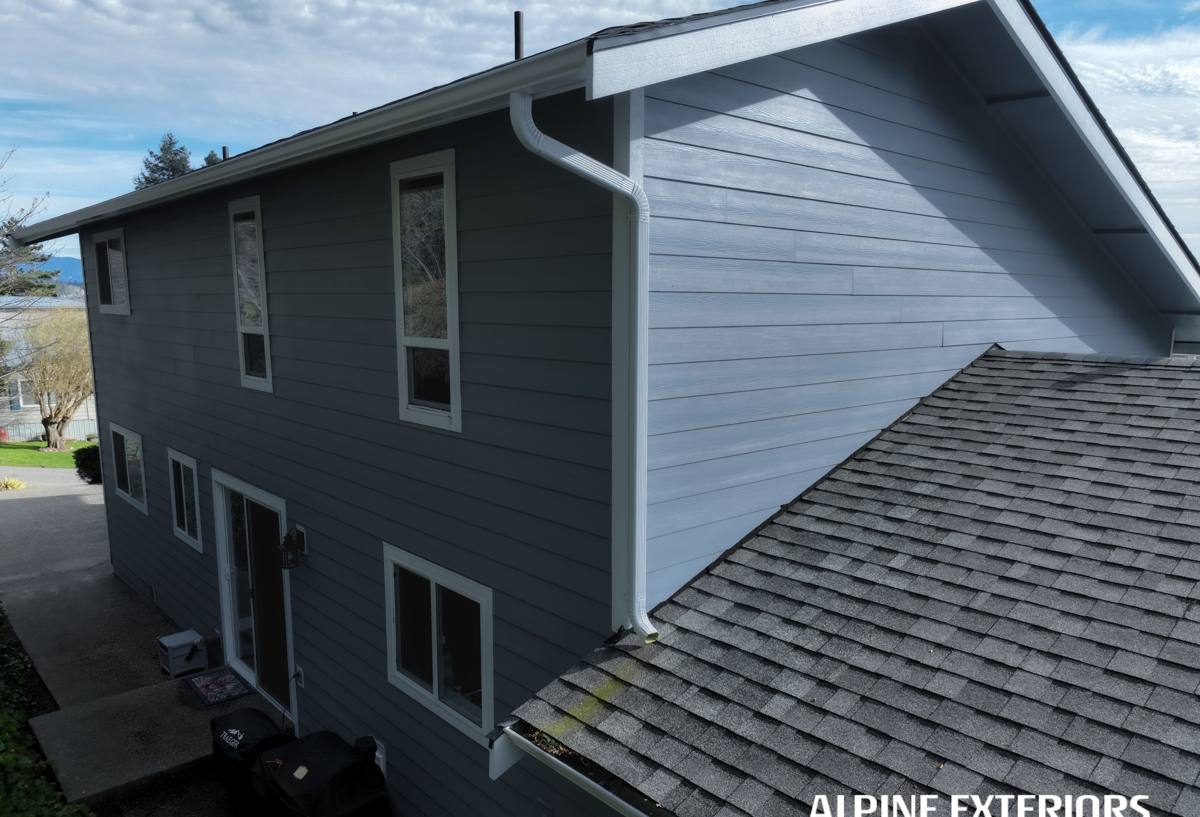
What Salt Air Actually Does to a Roof
Salt-laden air doesn't rot shingles the way people assume — the bigger issue is what it does to metal. Exposed fasteners, flashing, drip edge, and any galvanized hardware corrode noticeably faster near the water than they would a few miles inland. Once a fastener starts to rust, it loses its grip on the shingle or panel around it, and that's how small leaks start — not from the shingle field failing, but from the metal details around penetrations and edges giving out first.
This is why we pay close attention to metal quality and fastener choice on island jobs specifically. It's not about using something unusual; it's about not cutting corners on flashing and hardware that would be forgivable on a house set back from the water.
Where Salt Air Shows Up First
- Nail heads and exposed fasteners along ridge caps and hip lines
- Flashing around chimneys, skylights, and plumbing vents
- Gutter hangers and drip edge, especially on the water-facing side of the roof
- Any older galvanized (non-stainless, non-coated) hardware from a prior repair
Moss, Shade, and Whatcom County's Long Wet Season
Whatcom County's wet season runs long, and on a shaded, tree-covered lot — which describes a lot of Lummi Island properties — a roof can stay damp for days after the rest of the county has dried out. That combination of shade and moisture is exactly what moss needs, and moss is more than a cosmetic problem. It holds water against the shingle surface, works its way under tabs and laps, and over a few seasons it lifts material enough to let water find a path underneath.
North-facing slopes, roof valleys, and anything under overhanging branches are where we expect to find the heaviest moss growth. A repair that removes the moss but doesn't address why that section stays wet — poor airflow, overhanging limbs, a valley that's collecting debris — is a repair that will need doing again in a couple of years.
The Repairs We See Most Often on Lummi Island
Every roof is different, but certain failure points come up again and again on island homes:
- Flashing failures at chimneys, skylights, and vent pipes — usually the actual leak source even when the visible damage is somewhere else
- Moss-lifted shingles on shaded or north-facing slopes, sometimes with granule loss underneath once the moss is cleared
- Valley wear from concentrated runoff and needle/debris buildup that traps moisture
- Corroded fasteners and drip edge from long-term salt air exposure, particularly on older or previously repaired roofs
- Wind-lifted or missing shingles along ridges and edges after a storm off the water
- Blocked or undersized ventilation that keeps the underside of the deck damp and accelerates moss and rot from below
What a Correct Repair Actually Involves
A patch and a repair aren't always the same thing. A patch covers the visible damage. A proper repair figures out why that spot failed and fixes the cause, not just the symptom — otherwise you're paying for the same fix again in two or three years.
| Factor | Why It Matters on Lummi Island | What We Check |
|---|---|---|
| Fastener and flashing material | Salt air corrodes standard galvanized hardware faster than inland | Condition of existing metal; whether it needs full replacement, not just resealing |
| Shade and tree cover | Keeps roof sections wet longer, driving moss regrowth | Airflow, overhanging limbs, whether the same spot will just moss over again |
| Underlayment condition | A leak often travels before it shows up on the ceiling | Deck moisture and staining beyond the visible entry point |
| Access and site conditions | Steep pitches, tree cover, and ferry logistics affect scheduling | Safe access, staging area, and realistic timeline before we quote |
| Repair vs. replace threshold | Repeated repairs in the same area cost more over time than one correct fix | Overall roof age and how many prior patches are already on it |
Repair vs. Replacement: How We Actually Decide
Most calls we get are for repair, and most of the time that's the right call — a roof with isolated flashing failure or moss damage on one slope doesn't need a full tear-off. We recommend replacement instead of repair only when the damage is spread across multiple sections, when the deck itself has soft spots from long-term moisture, or when a roof already has several past patches and is clearly at the end of its service life. We'll tell you plainly which situation you're in — there's no upside for us in talking a homeowner into more work than the roof needs, and no upside in a repair that won't hold.
Our Process for Lummi Island Jobs
Working on the island means planning around the ferry, not around convenience, and we build that into how we schedule and quote. A few things we do differently for island jobs:
- We scope the job fully on the first visit — including a look at the attic or roof deck from inside if there's an active leak — so the ferry trip isn't wasted chasing a repair that turns out to be bigger than expected.
- We stage materials in advance rather than making return trips for parts, since an extra ferry crossing adds real time to a repair day.
- We check the whole roof, not just the leak — since salt air and moss tend to affect similar areas across a roof, we flag other trouble spots while we're already up there.
- We give you options with real trade-offs, not just one price — what a patch buys you, what a fuller repair buys you, and how long each is realistically good for given the site's exposure and shade.
Choosing a Roofer for an Island Property
Anyone can quote a roof repair from a driveway inland. Fewer contractors are set up to actually work efficiently on Lummi Island, where ferry timing, tree access, and marine exposure all factor into the job. Before hiring, it's worth asking a few direct questions:
- Have they worked on the island before, and do they understand the ferry schedule's effect on timing?
- Will they use stainless or coated fasteners and flashing near the water, or standard galvanized hardware?
- Do they inspect for the cause of a leak (flashing, ventilation, deck moisture) or just patch the visible spot?
- Are they licensed and insured to work in Washington, and will they put the scope of repair in writing?
- Do they address moss and shade conditions, or just clean the surface and move on?
Between-Repair Maintenance Checklist
A repair holds longer with a little ongoing attention, especially on a shaded, salt-exposed roof. Homeowners can handle most of this themselves or have it done during a routine gutter cleaning:
- Clear valleys and gutters of needles and debris at least twice a year — more often under heavy tree cover
- Trim back branches that overhang the roofline to cut down on shade and debris buildup
- Look for moss regrowth on north-facing slopes each fall and address it early, before it lifts shingles
- After any significant windstorm, do a visual check from the ground for lifted or missing shingles
- Watch for staining on interior ceilings near chimneys, skylights, or vent pipes — early signs of flashing failure
If you've got a leak, missing shingles, or a mossy patch that's been bothering you on your Lummi Island roof, we're happy to take a look and give you a straight answer — repair, not repair, or something bigger. Fill out the form below for a free, no-pressure estimate.