 Ferndale
 Why Siding Wears Faster in Everson Than Homeowners Expect
Everson sits inland from the Georgia Strait, but that doesn't mean the house is spared from the weather patterns that define this corner of Whatcom County. Marine air still pushes up the Nooksack valley, rain falls on more days than it doesn't through the fall and winter, and shaded north-facing walls stay damp long after a storm has passed. Homeowners who move here from drier parts of the state are often surprised at how quickly siding that looked fine at ten years starts showing real problems by year fifteen or twenty. It isn't bad luck — it's the climate doing exactly what it does here every year, and siding that wasn't built or installed for it simply can't keep up.
A siding replacement in this area isn't just a cosmetic project. Done right, it's the thing standing between your framing and a wet, mossy, salt-tinged climate that doesn't let up for months at a time. Done wrong — or with the wrong material — and you're back to dealing with the same problems in half the time.
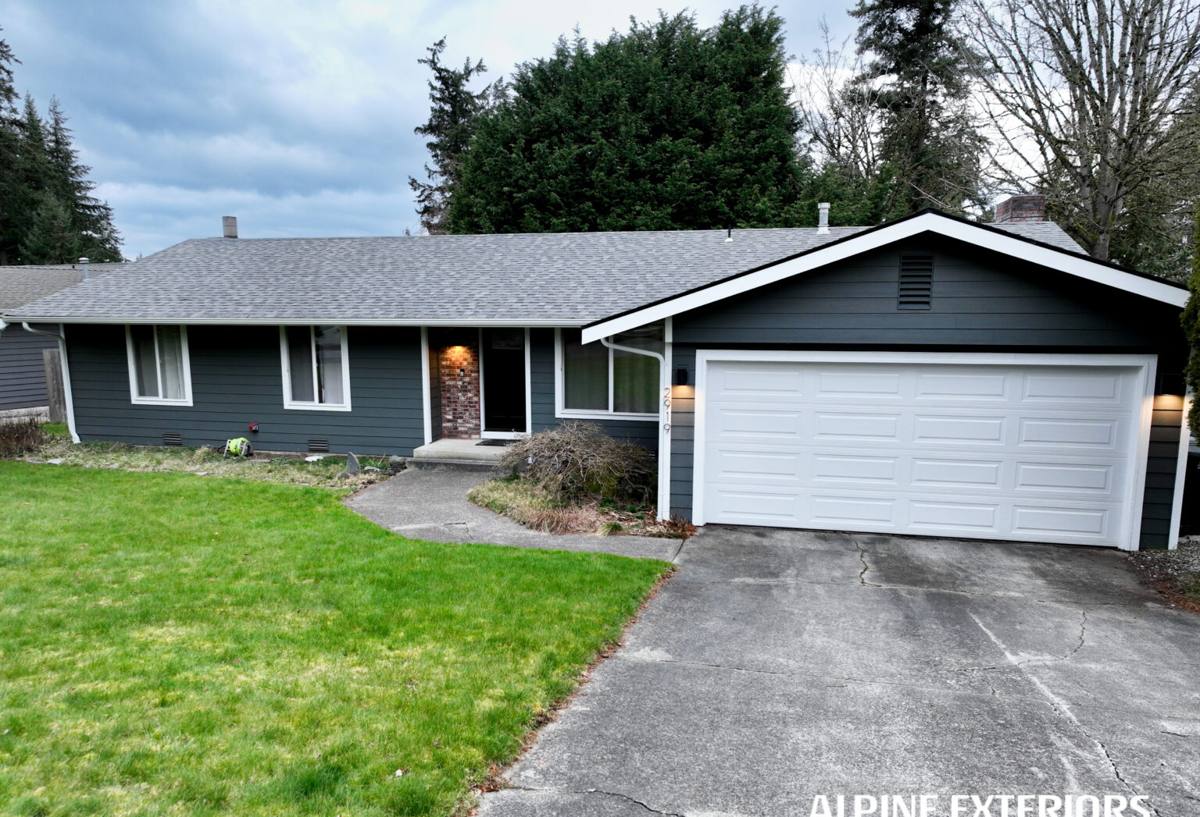
What Whatcom County's Climate Actually Does to Siding
Three things drive most of the siding failures we see on Everson and Ferndale homes:
Driving Rain
This isn't gentle, vertical rainfall. Wind off the strait pushes moisture sideways into wall assemblies, which means seams, laps, and trim joints take on water that a calmer climate would never test. Any gap in the weather barrier or any siding product that swells or wicks moisture at a cut edge becomes a slow leak point.
A Long Moss Season
Whatcom County's moss and algae season runs long — realistically most of the year on shaded or north-facing walls. Moss holds moisture directly against the siding surface, and on the wrong substrate that constant dampness accelerates rot, delamination, or paint failure. It also means siding color and factory finish quality matter more here than in drier climates, because a coating that chalks or fades gives moss and mildew more texture to grip.
Salt-Influenced Air
Even set back from the water, homes throughout this part of Whatcom County get some exposure to salt-laden marine air, particularly on west and south-facing elevations that catch the prevailing wind. Salt accelerates corrosion on fasteners and trim, and it's another reason why the materials and hardware behind the siding matter as much as the siding itself.
Signs Your Everson Home Needs Replacement, Not Repair
Not every siding problem calls for a full tear-off. But there's a point where patching stops making financial sense and replacement becomes the honest recommendation. Watch for:
- Soft, spongy, or crumbling spots when you press on the siding, especially near the bottom courses and around windows
- Persistent moss or dark staining that comes back within weeks of cleaning
- Paint that's peeling or bubbling rather than just fading — a sign moisture is trapped underneath
- Visible gaps, warping, or cupping in individual boards or panels
- A musty smell or soft drywall on interior walls that back up to exterior siding
- Siding that's original to a home built more than 20-25 years ago, especially if it's wood-based or an older composite product
One or two of these in isolation might mean a repair. Several at once, especially combined with age, usually means the underlying material has reached the end of what it can handle in this climate.
What a Correct Siding Replacement Actually Involves
A siding replacement is only as good as what happens before the new material goes up. The visible siding is the last five percent of the job; the water management underneath is the part that determines whether it lasts.
Tear-Off and Inspection
Removing the old siding down to the sheathing lets us see what's actually happening behind it — rot, mold, damaged framing, or areas where a previous installer cut corners. This is the point where problems get fixed instead of covered up.
Weather-Resistant Barrier
A properly lapped, sealed weather barrier goes over the sheathing before any siding touches the wall. In a climate with this much driving rain, gaps or shortcuts here are exactly what lead to hidden water damage years down the road.
Flashing at Every Penetration
Windows, doors, vents, and any other wall penetration need flashing detailed to shed water outward, not trap it. This is one of the most common places corners get cut on lower-quality installs, and it's usually the source of the leak when a homeowner calls us about a wall that's failing years after a previous replacement.
Manufacturer-Spec Installation
Fastener type, spacing, gapping at butt joints, clearance from grade and roofing — every one of these details is specified for a reason, and every one of them affects whether the product performs the way it's warrantied to. Installing siding "close enough" to spec is the single biggest reason good materials fail early.
Comparing Siding Materials for This Climate
Homeowners in Everson often ask us to weigh in on vinyl, LP SmartSide, or cedar against fiber cement. Here's an honest comparison based on how each performs under the conditions this area actually sees:
| Material | Moisture & Moss Behavior | Maintenance | Typical Lifespan Here |
|---|---|---|---|
| Vinyl | Doesn't rot, but can warp or crack in wind and temperature swings; seams and moss buildup can trap grime | Low, but limited touch-up options if damaged | Variable; often replaced for appearance before it fails structurally |
| LP SmartSide (engineered wood) | Wood-based core is vulnerable at cut edges and joints if moisture gets in | Moderate; edge sealing and caulking need to be maintained | Depends heavily on installation quality and upkeep |
| Cedar / primed spruce | Natural material, attractive, but absorbs moisture and is a food source for moss and rot without diligent upkeep | High; regular refinishing and moss treatment required | Shortest of the group without aggressive maintenance |
| James Hardie fiber cement | Non-combustible, dimensionally stable, engineered specifically for wet climates | Low; factory ColorPlus finish resists fading and doesn't need repainting on the same schedule | Longest of the group when installed to spec |
Every one of these products has a place somewhere in the country. What we're weighing here is specifically how each behaves under Whatcom County's rain load, moss pressure, and marine air — and that's the lens that led us to standardize on one material.
Why We Install Only James Hardie Fiber Cement
We don't install vinyl, LP SmartSide, Cemplank, Allura, primed spruce, or cedar. That's not a knock on any of those products in the abstract — vinyl is inexpensive and low-maintenance, engineered wood has a warmer look at a lower cost than fiber cement, and cedar is genuinely beautiful. But we've made a professional call that for the climate we work in, those trade-offs aren't ones we want to put our name behind.
James Hardie fiber cement is non-combustible, holds its shape in the temperature and moisture swings this region sees, and comes with a factory-applied ColorPlus finish engineered to resist the fading and chalking that gives moss and mildew something to grab onto. Hardie's HZ5 product line is specifically engineered for climates like ours — freeze-thaw cycles, sustained moisture, and coastal-influenced air. It also carries a strong, transferable limited warranty, which matters to a lot of homeowners planning to sell within the product's lifespan.
None of that replaces good installation. Even the best siding on the market will underperform if it's hung without proper flashing, clearance, and fastening. That's why we treat the product and the installation as one package, not two separate decisions.
How Our Process Works for Everson Homeowners
- Walkthrough and assessment — we look at your current siding, trim, and any visible trouble spots, and talk through what's driving the need for replacement
- Written estimate — scope, material, and timeline laid out clearly, with no pressure to sign on the spot
- Tear-off and sheathing inspection — old material comes off and we address anything we find underneath before covering it back up
- Weather barrier and flashing — installed and detailed around every window, door, and penetration
- Hardie installation to manufacturer spec — correct fastening, gapping, and clearance throughout
- Final walkthrough — we go over the finished job with you before we consider it done
Why It Matters That a Crew Already Works This Area
Everson and Ferndale don't see identical conditions on every wall of every house — a home tucked into a tree line handles moss pressure differently than one standing open to west wind, and a crew that only occasionally works in Whatcom County can miss those differences. A contractor who works this region regularly already knows where driving rain hits hardest, which elevations need extra attention to flashing, and how the local building department expects the work detailed. That's not something you can shortcut with a generic install approach borrowed from a drier climate.
It also matters for accountability. A crew based in and around Ferndale isn't disappearing after the invoice clears — if something needs a look years later, we're still local and still reachable.
Questions Worth Asking Any Siding Contractor
- Are you licensed and insured in Washington, and can you provide proof?
- What weather barrier and flashing details do you use, specifically, around windows and doors?
- Do you install to the manufacturer's written installation instructions, and will the warranty be honored if you do?
- Who's actually on the crew doing the work — subcontracted labor or your own team?
- What does your workmanship warranty cover, separate from the manufacturer's product warranty?
Caring for Your Siding After Replacement
Fiber cement is low-maintenance, not no-maintenance. A little seasonal attention goes a long way in this climate:
- Rinse siding annually with a garden hose to clear pollen, dust, and early moss growth before it takes hold
- Keep gutters clear so overflow doesn't run down the siding face
- Trim back vegetation and tree limbs that keep walls shaded and damp
- Recaulk trim joints and penetrations if you notice cracking or gaps
- Address any impact damage promptly rather than letting it sit exposed
If you're weighing a siding replacement for your Everson or Ferndale home, we're happy to take a look and put together a straightforward, no-pressure estimate — no guesswork about what your walls actually need, just an honest read on the condition they're in and what it'll take to fix them right.