 Ferndale
 Siding Repair Built for Everson Homes
Everson sits along the Nooksack River in eastern Whatcom County, surrounded by farmland and a bit further from the coastline than Ferndale itself, but the exterior of a home here still takes a steady beating from the same regional weather pattern: salt-tinged marine air moving inland off the Sound, driving rain that comes in at an angle more often than straight down, and a moss season that runs long into the year on shaded and north-facing walls. River-valley humidity adds its own wrinkle on top of that, keeping ground-level moisture around longer after a storm than you'd see on higher, drier ground. None of that means an Everson home needs different siding than the rest of the county — it means the repair work has to account for how long these houses stay damp, not just how hard it rains on any given day.
We install and repair James Hardie fiber cement siding exclusively, and Everson's mix of steady rain, shaded lots, and valley moisture is exactly the kind of exposure that product line was engineered to handle. This page is specifically about siding repair for homes in and around Everson — what typically goes wrong here, what a repair actually needs to include to hold up, and how we approach the job.
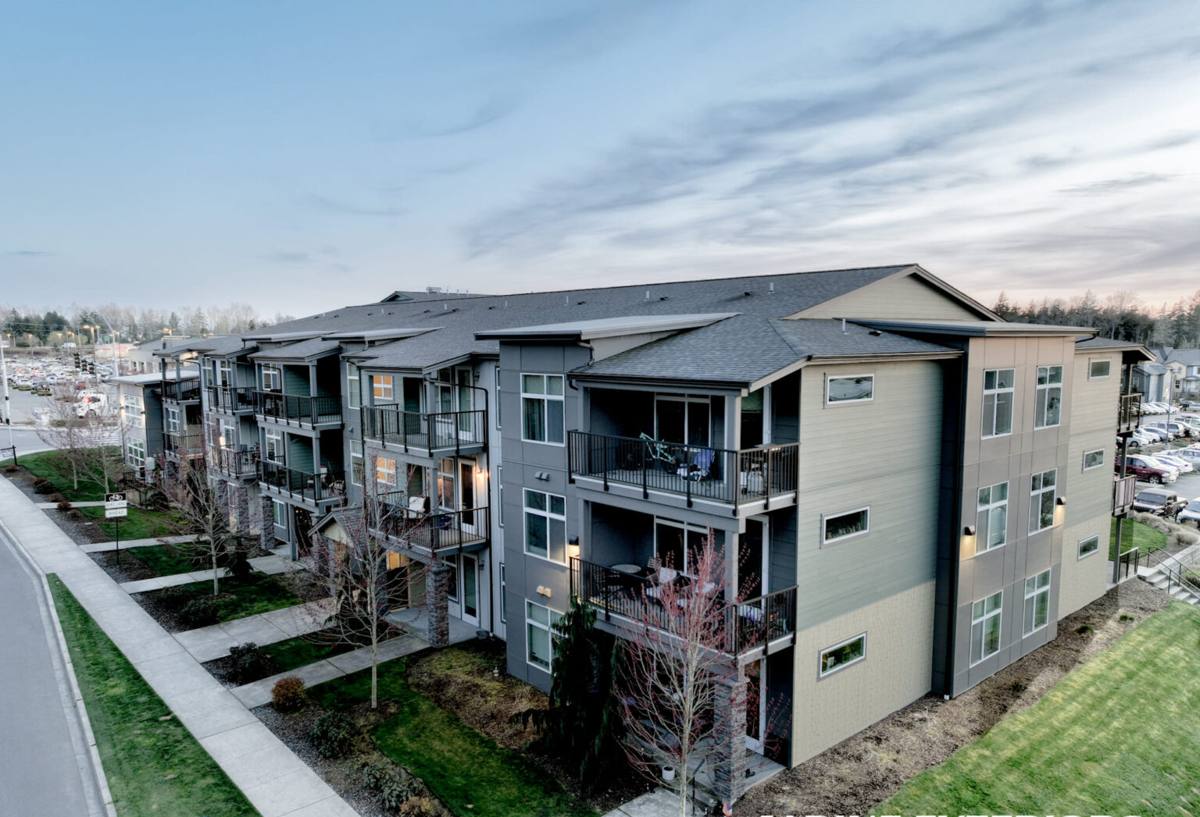
What Everson's Climate Does to Siding Over Time
Driving Rain and Saturated Ground
Wind-driven rain doesn't just fall on a wall, it gets pushed into lap joints, trim seams, and any gap where flashing isn't doing its job. In a river valley, saturated ground and higher ambient humidity after a storm mean the lower courses of siding and the trim near grade often stay wet longer than they would on a well-drained, elevated lot. That extended dampness is what turns a small gap into a rot problem instead of just a cosmetic one.
A Long Moss and Mildew Season
Shade from mature trees and the general dampness of the valley keep moss and mildew active on north- and east-facing walls for much of the year in this part of the county. Left alone, sustained growth holds moisture against the wall assembly behind it, which is one of the more common reasons we find soft or delaminated siding when we finally pull a damaged section off a home.
Temperature Swings and Seasonal Cycling
Whatcom County sees real freeze-thaw cycling in the colder months, and inland valley locations like Everson can run a few degrees colder overnight than homes right on the water. Materials that absorb moisture expand and contract with those swings, and repeated cycling is what turns a hairline crack in a poorly matched patch into a visible failure a year or two later.
Signs an Everson Home Needs Siding Repair
Most siding damage doesn't show up as an obvious hole. It shows up as small, easy-to-dismiss changes that add up over a wet season or two. Worth checking for:
- Soft spots or slight give when you press on a section of siding, especially near the bottom courses or under windows
- Visible cracking, chipping, or bubbling paint on any single section while the rest of the wall looks fine
- Persistent moss or dark streaking that comes back within weeks of being cleaned
- Gaps opening up at seams, corners, or where siding meets trim, window casings, or the foundation
- Warping, buckling, or a section that no longer sits flat against the wall
- Peeling or blistering paint concentrated around one area rather than spread evenly across the house
- Interior warning signs on the same wall: a musty smell, a discolored patch on drywall, or peeling interior paint
Any one of these on its own might be minor. Several of them clustered on the same wall, or showing up on a north-facing elevation that stays shaded most of the day, usually means water has been getting behind the siding for a while.
What a Correct Siding Repair Actually Involves
A siding repair that just covers the visible damage tends to fail again within a season or two, especially in a climate that keeps testing the same weak point. A repair done right addresses what let the water in, not just what the water damaged.
| Step | What It Involves | Why It Matters Here |
|---|---|---|
| Diagnose the source | Trace the damage back to its actual entry point — a failed seal, a flashing gap, a caulk joint, or a section that was never properly lapped | Patching the visible damage without finding the entry point means the same spot fails again next wet season |
| Check for hidden rot | Inspect the sheathing and framing behind the damaged siding before closing anything back up | Everson's extended damp periods give hidden rot more time to spread before it's visible from outside |
| Remove and replace correctly | Cut back to sound material, replace with matching James Hardie product, and reinstall with proper fastening and clearances | Undersized or rushed patches are a common source of repeat callbacks |
| Restore flashing and house wrap | Reinstall or repair the water-resistive barrier and flashing details disturbed during the repair | A repair that skips this step just recreates the original leak path |
| Match the finish | Use ColorPlus-finished material and correct caulk and touch-up products so the repair blends in | A visibly patched section is often a sign corners were cut underneath, too |
Repair vs. Replacement: How We Decide
Not every damaged section calls for a full re-side, and we won't push you toward a bigger job than you actually need. But there's a point where patching stops making sense and starts just delaying a larger repair.
| Factor | Repair Usually Makes Sense | Replacement Is Worth Considering |
|---|---|---|
| Extent of damage | Isolated to one or two sections or a single wall | Spread across multiple elevations or recurring in the same areas |
| Underlying material | Existing siding is James Hardie or another sound fiber cement product | Existing siding is an older or failing product nearing the end of its service life |
| Rot behind the wall | Sheathing and framing test dry and solid once opened up | Moisture has been tracking behind the wall for a while, with soft sheathing found |
| Age of the siding | Siding is well within its expected service life | Siding is old enough that a color or profile match is no longer realistic |
When water damage is limited and caught early, a repair can look and perform like it was never touched. When it's been sitting for a while, patching it usually just buys a year or two before the same wall needs attention again — and in that time, hidden rot can keep spreading behind whatever was patched over it.
Why We Repair With James Hardie Materials Only
We install James Hardie fiber cement siding exclusively, and that includes repair work. We don't install or patch with LP SmartSide, vinyl, Cemplank, Allura, primed spruce, or cedar, and we generally won't mix those products into a Hardie wall even for a repair. Each of those products has legitimate uses elsewhere, but mixing materials on the same wall creates its own problems: different expansion and contraction rates, different moisture behavior, and a finish that will never quite match or age the same way. On a home already dealing with Everson's damp, shaded conditions, a mismatched patch is one more seam for water to find.
James Hardie's factory-applied ColorPlus finish is also a big part of why a repair blends in well when it's done right. Because the color is baked on at the factory rather than brushed on in the field, a matched replacement plank ages at close to the same rate as the surrounding siding instead of fading or chalking at a different pace and standing out a year later.
Our Siding Repair Process for Everson Homes
- Inspection and diagnosis: We look at the damaged area and the surrounding wall, and check for signs of moisture behind the siding, not just what's visible on the surface.
- Honest scope of work: We tell you plainly whether this is a straightforward patch, a larger repair, or a case where replacement is the better long-term call — and why.
- Written estimate: You get a clear estimate before any work starts, with no pressure to sign on the spot.
- Repair execution: We remove damaged material back to a sound edge, address the underlying cause, replace with matching James Hardie product, and restore flashing and house wrap properly.
- Finish and cleanup: Caulk, touch-up, and cleanup are handled so the repair blends into the rest of the wall rather than standing out.
Why a Crew That Already Works Everson Matters
A contractor who works this part of Whatcom County regularly knows which walls on a river-valley property tend to stay wet longest, where moss takes hold first, and which fastening and flashing details are worth the extra time given how long this area's rainy stretches can run. That's different from general siding experience picked up somewhere drier or more sheltered. It shapes real decisions on a repair: whether a section needs extra drying time before it's closed back up, whether the flashing detail behind a window needs more attention than the original installation gave it, and whether a patch this size will actually hold through the next wet season or just look fine until it doesn't.
If you've noticed a soft spot, a persistent damp patch, or siding that just doesn't look right anymore on your Everson home, we're glad to take a look. Reach out using the form below to schedule a free, no-pressure estimate.