 Ferndale
 Why Decks Fail Faster in Sandy Point
Sandy Point sits right up against the water, and that changes everything about how a deck ages. Homes just a few miles inland in Ferndale or elsewhere in Whatcom County deal with plenty of rain, but Sandy Point decks take on salt-laden air off the water on top of that rain, plus wind that drives moisture sideways into joints and end grain instead of letting it run off. Add a moss season that stretches from fall through spring, and you have three separate aging processes working on the same structure at once: corrosion, wood decay, and surface breakdown from trapped moisture under moss and algae.
Most decks in this area weren't built with all three of those factors in mind, especially older ones. A deck built to a generic regional spec — standard galvanized fasteners, no real drainage plan under the boards, cedar or pressure-treated lumber left to weather on its own — will show its age here years before an identical deck would inland. That's not a knock on whoever built it; it's just what salt air does to hardware and what constant dampness does to wood and the moss that grows on it.
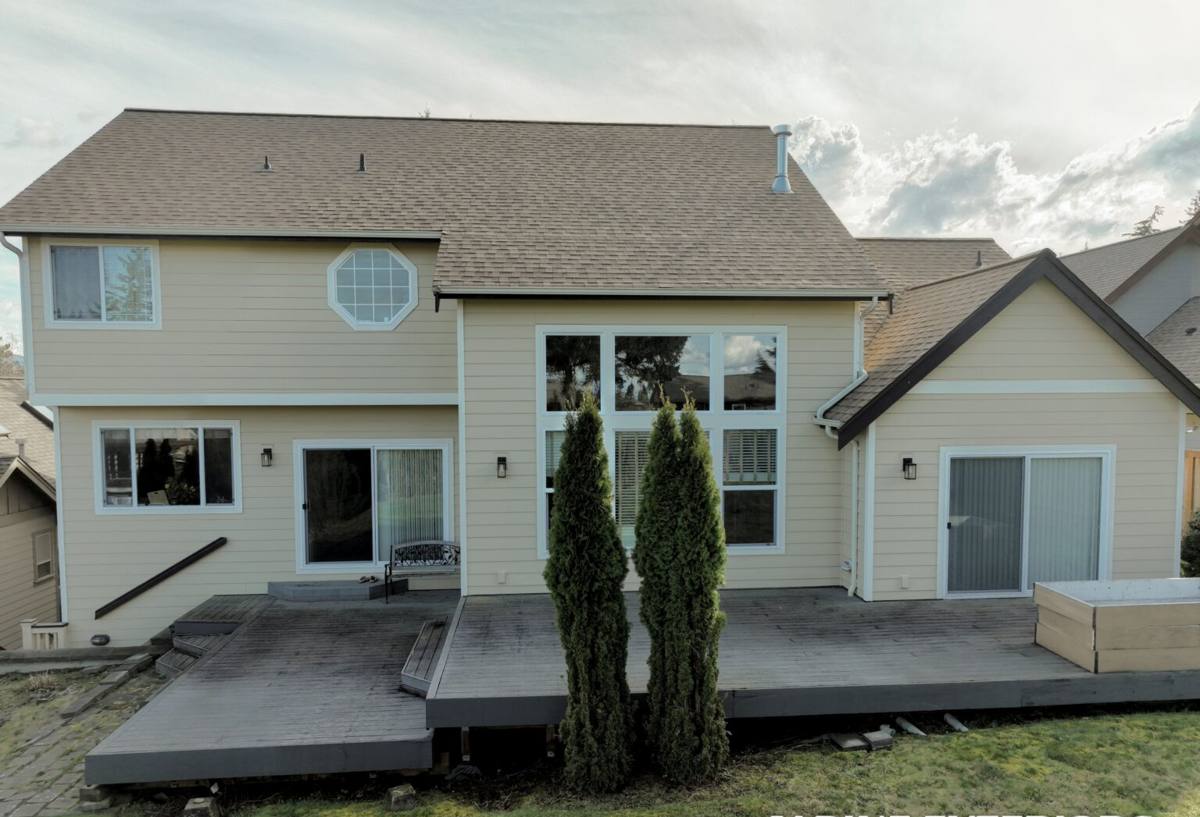
Signs Your Deck Needs Replacement, Not Repair
Not every tired-looking deck needs a full tear-off. But in a marine environment, problems that look cosmetic often point to something structural underneath. Here's what we actually check before recommending replacement over repair:
- Soft, spongy, or spring-y decking boards, especially near the house or at board ends
- Rust streaks bleeding out from screw heads or joist hangers
- Visible corrosion or pitting on any exposed metal hardware
- Gaps opening up at the ledger board where the deck meets the house
- Persistent moss or black staining that comes back within weeks of cleaning
- Railing posts that wiggle at the base, which usually means rot at the post-to-frame connection
- A deck more than 15-20 years old that has never had fasteners or flashing upgraded
If we find one or two of these, sometimes targeted repair makes sense. If we find several, especially anything touching the ledger board or main support posts, replacement is almost always the more honest recommendation — patching a structural problem on a deck this exposed just means paying for the same repair again in a season or two.
The Ledger Board Is the Number One Failure Point
On any deck attached to a house, the ledger board — the piece bolted to the house framing that the rest of the deck hangs from — takes the brunt of wind-driven rain in a spot like this. Water gets behind it, sits against the house sheathing, and rots both the ledger and the framing behind it long before the visible deck boards look bad. This is the single most common thing we find hiding behind a deck that "looks fine" from the yard.
Choosing a Decking Material for Salt Air and Moss
There's no universally "best" decking material — there's a best material for this specific climate and how you use the deck. Here's how the common options actually hold up under Sandy Point conditions:
| Material | Moisture/Salt Air Behavior | Moss & Mildew | Realistic Lifespan Here |
|---|---|---|---|
| Pressure-treated lumber | Resists rot with proper sealing; needs re-sealing more often near salt air | Grows moss readily if not cleaned; surface roughens over time | 10-15 years with regular upkeep |
| Cedar | Naturally rot-resistant but softer; end grain absorbs moisture faster in driving rain | Prone to moss and graying without annual cleaning/sealing | 12-18 years with consistent maintenance |
| Composite (e.g. Trex, TimberTech) | Doesn't rot or absorb water into the board itself; performs well in salt air | Moss and algae still grow on the surface and need periodic washing | 25-30 years, backed by manufacturer warranty |
| PVC decking | Fully impervious to moisture; best choice for constant salt spray exposure | Same surface growth as composite, but cleans off easily | 25+ years |
We're upfront with Sandy Point homeowners: wood decking isn't wrong, but it's a higher-maintenance choice this close to the water. If you want the natural wood look and are committed to annual cleaning and sealing, cedar or pressure-treated lumber can work. If you'd rather not be on that maintenance schedule, composite or PVC earns its higher upfront cost back in fewer callbacks and no repainting or re-sealing.
Framing and Structure: What a Correct Rebuild Requires
The decking boards are what you see, but the framing underneath is what determines whether the deck is still standing in fifteen years. A proper replacement here means:
- Ledger flashing that actually directs water away from the house wall, not just a bead of caulk behind the board
- Joist tape or a moisture barrier on top of every joist so water can't sit in the wood grain under the decking
- Proper slope away from the house so water sheds instead of pooling
- Post bases set above grade with a gap or standoff, not posts buried directly in concrete where they'll wick moisture
- Ventilation underneath the deck so trapped humidity has somewhere to go instead of feeding rot and moss year-round
Skipping any one of these doesn't show up on day one. It shows up in year four or five as soft spots, rust bleed, or a ledger board that's rotted from the inside while the surface still looks presentable.
Fasteners, Flashing, and Hardware That Actually Hold Up
This is where salt air separates a deck that lasts from one that doesn't, and it's the detail most often shortcut on lower-bid jobs. Standard galvanized screws and joist hangers are fine well inland, but in a marine environment they can start showing rust streaks within a couple of years. For Sandy Point work, we use stainless steel or heavy hot-dip galvanized fasteners rated for coastal exposure, along with hardware and flashing designed for the same conditions. It costs more upfront than standard hardware. It's also the difference between hardware that's still solid in year twenty and hardware that's staining your decking brown by year three.
The same logic applies to any metal railing brackets, post caps, or structural connectors. If it's exposed to weather on this deck, it needs to be rated for salt air, not just rated for general outdoor use.
Our Deck Replacement Process, Step by Step
Every deck we replace in Sandy Point follows the same general sequence, adjusted for the specific structure and layout:
- On-site assessment — we check the ledger connection, framing condition, post footings, and drainage before quoting anything, since what's underneath often changes the scope
- Full tear-off of the old decking, railings, and any framing that's compromised, hauling debris off site
- Structural inspection of what's left — posts, footings, and framing members that are still sound get reused where it's safe to do so; anything questionable gets replaced rather than patched
- Ledger board reflashing using proper coastal-grade flashing tied into the house's water management, not just caulked over
- Framing rebuild with joist tape, correct spacing, and slope built in for drainage
- Decking and railing installation in the material you've chosen, with fastening patterns that match the manufacturer's coastal-exposure specs when composite or PVC is used
- Final walkthrough covering care instructions specific to the material and this climate
Timelines vary with deck size and whether framing needs full replacement, but most straightforward residential deck replacements in this area run from a few days to about two weeks from tear-off to finished railing.
Permits and Waterfront Considerations
Deck replacement in Whatcom County generally requires a permit once you're rebuilding the structure rather than just swapping boards on existing framing, and waterfront or near-shoreline properties can carry additional review depending on setback and shoreline management rules. We handle the permit application and inspection scheduling as part of the job so you're not the one tracking down county requirements. If your property is close enough to the water that shoreline setback rules could apply, we flag that during the initial assessment rather than after the tear-off has started.
If your home sits within a private road or gated community, as parts of Sandy Point do, we also coordinate access, parking, and any community notification ahead of time so the job doesn't stall on logistics that have nothing to do with the actual carpentry.
Maintenance That Protects Your Investment
Whatever material you choose, a little regular maintenance goes a long way in this climate:
| Task | Wood Decking | Composite/PVC Decking |
|---|---|---|
| Surface cleaning | 1-2x per year, sooner if moss returns quickly | 1-2x per year, simple soap and water |
| Sealing/staining | Every 1-3 years depending on sun and rain exposure | Not needed |
| Hardware check | Annual visual check for rust bleed or loose fasteners | Annual visual check for loose fasteners |
| Under-deck airflow | Keep vegetation and debris clear so air can circulate | Keep vegetation and debris clear so air can circulate |
The single biggest thing you can do, regardless of material, is keep moss and organic debris from building up between boards and in corners. Trapped moisture under moss is what accelerates rot in wood and staining in composite, and it's a much smaller job to hose it off twice a year than to deal with what it causes if it's ignored for five.
Why a Crew That Already Works Sandy Point Matters
A contractor who mostly builds decks inland will often use the same materials and hardware they'd use anywhere else in the region, because that's what works fine in those conditions. On a property exposed to constant salt air and driving rain off the water, that same approach shortens the life of the deck considerably. Working in Sandy Point regularly means we've already seen which fastener grades hold up here, which ledger details actually keep water out, and how fast moss comes back on a given material in this specific microclimate — so we're not guessing or learning on your project.
It also means fewer surprises on timeline and access. We know what waterfront and private-road logistics typically involve in this area, so scheduling and permitting don't turn into extra delays once the job is underway.
Getting Started
If your deck is showing rust streaks, soft spots, persistent moss, or is simply old enough that you're wondering whether it's still safe, we're happy to take a look. We offer free, no-pressure estimates for Sandy Point homeowners — you'll get an honest read on whether repair or full replacement makes sense, along with a clear breakdown of material and cost options, before you decide anything. Fill out the form below to get started.