 Ferndale
 Marietta's Waterfront Climate Is Hard on Decks
Marietta sits close enough to the water that homes here deal with a different set of conditions than a deck ten miles inland in Ferndale proper. Salt-laden air off the bay works on metal fasteners and hardware year-round, not just during storms. Add Whatcom County's long stretch of driving rain each fall and winter, plus a moss season that can run from October well into April, and a deck here ages differently than one in a drier part of the state. None of that means a deck can't last — it means it has to be built and repaired with those specific stresses in mind, not with generic techniques pulled from a climate that doesn't get this much salt air or sustained wet weather.
Most of the deck problems we see in this area aren't the result of bad luck. They're the predictable outcome of standard fasteners, standard flashing details, or standard wood choices meeting a marine environment they weren't specified for. The fix isn't complicated, but it does require knowing which details actually matter here.
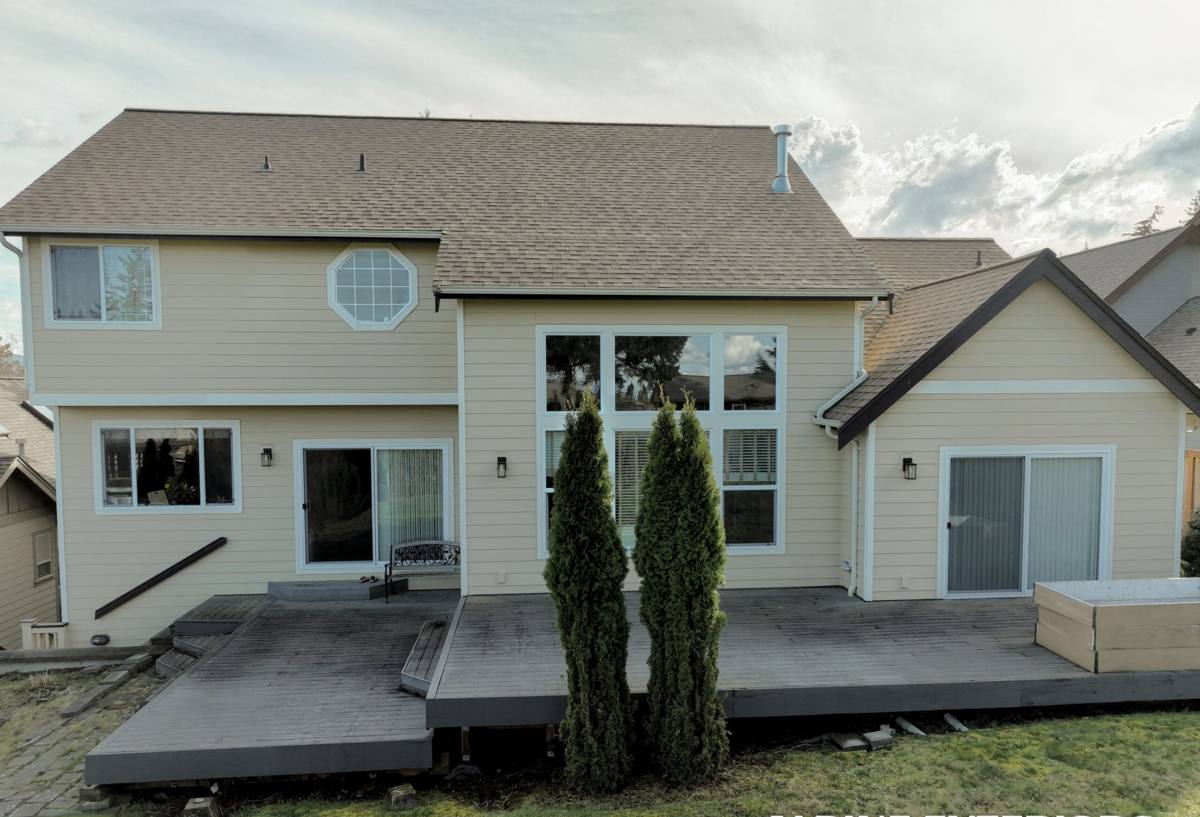
Where Decks in This Area Actually Fail
When we get called out for a "deck repair" in Marietta, the visible problem — a soft board, a wobbly rail — is almost never the whole story. The real damage is usually one layer down, at a connection point that's been quietly failing for a while.
Ledger Board and Flashing
The ledger board — where the deck attaches to the house — is the single most common failure point on any deck, and it's especially vulnerable here. If the flashing behind it was installed poorly, or wasn't installed at all, driving rain gets pushed sideways by wind and works its way behind the board. That moisture has nowhere to go, so it sits against the house framing and the ledger itself. By the time you see staining or a soft spot at that seam, there's usually been active rot for a season or more.
Fasteners and Hardware
Standard zinc-coated screws and joist hangers corrode faster near salt air than most homeowners expect. You'll often see this before you see any wood damage: rust streaks bleeding down a deck board from the screw head, or a hanger that's gone soft and flaky at the edges. Corroded fasteners lose holding strength gradually and invisibly — the board can look fine while the connection underneath it is compromised.
Posts, Footings, and Ground Contact
Posts that sit in or near standing water, or that were never properly isolated from concrete footings, absorb moisture from the ground up. Combined with moss and organic buildup at the base — which holds moisture against the wood far longer than open air would — this is where we most often find rot that homeowners had no idea existed until a post started to feel spongy underfoot.
Repair or Rebuild? How We Decide
Not every deck problem calls for a full rebuild, and not every soft board can be safely patched. The decision comes down to how much of the structure is affected and where.
| Situation | Typical Approach | Why |
|---|---|---|
| One or two isolated soft boards, structure sound | Board-level repair | Localized damage that hasn't spread to framing |
| Ledger board rot or missing/failed flashing | Ledger and flashing rebuild | This connection carries structural load; patching around it isn't safe |
| Corroded hangers or fasteners with sound wood | Hardware replacement | Wood is fine — the metal is the failure point |
| Rot at multiple posts or footings | Full or partial rebuild | Foundation-level damage compromises the whole structure |
| Surface graying, moss, minor cupping | Cleaning, sealing, or resurfacing | Cosmetic and preventable — not yet structural |
We won't recommend a full rebuild when a targeted repair will genuinely hold up, and we won't patch a connection that's carrying structural load if it's already compromised. The goal is matching the fix to the actual extent of the damage.
Decking Material Considerations for This Climate
Material choice matters more here than in drier parts of the state, especially for the boards and hardware that see the most weather exposure.
Pressure-Treated Wood
Still the most common decking material, and a reasonable choice as long as end cuts are sealed, fasteners are corrosion-rated, and the boards get airflow underneath. Left unsealed at cut ends, it takes on moisture fast in this rainfall pattern.
Cedar
Naturally rot-resistant and a good look, but it's a softer wood that needs more consistent maintenance — cleaning and refinishing on a regular cycle — to keep moss and mildew from taking hold, especially on the shaded side of a house.
Composite Decking
Composite holds up well against rot since there's no wood fiber to break down, and it doesn't need staining. The trade-off is that some composite products can develop surface mold or algae in a shaded, damp environment just like wood does, and it costs more up front. It's a strong option for full deck replacements; it's not always the right call for a partial repair where matching an existing wood deck is the priority.
For fasteners and hardware on any material, our standard in this area is stainless steel or heavy hot-dip galvanized — not the lighter coated hardware that's fine inland but corrodes noticeably faster this close to salt air.
Our Deck Repair Process
- Full structural inspection — we check the ledger connection, flashing, joists, posts, footings, and railing before we look at surface boards, since that's where hidden failures live.
- Moisture and rot mapping — probing suspect areas to find the actual boundary of damage, not just the visible soft spot.
- Honest scope and options — we tell you plainly whether you're looking at a board repair, a hardware swap, or something more structural, and why.
- Repair or rebuild — using corrosion-rated fasteners and hardware throughout, and correcting any flashing or drainage issue that caused the original damage so it doesn't come back.
- Finish and seal — sealing cut ends and exposed wood so the repair holds up through the next wet season, not just through the next dry month.
Signs Your Marietta Deck Needs Attention Now
A few minutes of your own inspection can catch problems while they're still cheap to fix. Look for:
- Soft or spongy spots when you press on deck boards, especially near the house
- Rust streaks running down from screw heads or along metal brackets
- Persistent moss or dark green buildup that doesn't dry out between rains
- Gaps, cracking, or discoloration where the deck meets the house siding
- A railing or post that flexes or wobbles more than it used to
- Standing water that doesn't drain off the deck surface within an hour or two after rain stops
- Visible daylight or gaps at the flashing where the ledger meets the wall
Any one of these on its own might be minor. Two or more together, especially near the ledger or a support post, is worth a professional look before the next wet season sets in.
Permits, Codes, and Guardrail Safety
Structural repairs — anything touching the ledger connection, footings, or load-bearing framing — can fall under permit requirements depending on the scope of work, even when the original deck was built without one. Guardrail height, baluster spacing, and stair rail requirements are also code items, not just style choices, and older decks in this area were sometimes built before current spacing standards were common. Part of doing a repair correctly is flagging where a rebuild is also a chance to bring an out-of-code rail or stair up to current safety standards, rather than repairing it back to the way it was.
Why a Ferndale-Based Crew That Knows Marietta Matters
A contractor who mostly works drier, inland jobs will often spec the same materials and fasteners they'd use anywhere else — and that's exactly how decks in salt-air conditions end up needing repair again a few years later. Working regularly in Ferndale and the communities around it, including Marietta, means we already know which details need upgrading for this specific exposure: the hardware grade, the flashing detail, the drainage slope. That's not a marketing point, it's just what happens when a crew sees the same climate and the same failure patterns repeatedly instead of once.
Being local also means we're not driving a long distance for a follow-up check or a small adjustment after the repair, which matters when you're dealing with a structure people walk on.
Get an Honest Look at Your Deck
If your deck in Marietta or elsewhere around Ferndale has soft spots, corroded hardware, or just doesn't feel as solid as it used to, we're happy to come take a look and tell you plainly what's going on and what it would take to fix it right. The estimate is free, there's no pressure, and you'll get a straight answer about repair versus rebuild before any work starts — just fill out the form below.