 Ferndale
 Building Decks for Marietta's Particular Climate
Marietta sits low and close to the water on the edge of Ferndale, and that setting shapes what a deck out here actually has to survive. It isn't just Pacific Northwest rain — it's salt-laden air moving in off the water, moisture that lingers in shaded, low-lying yards long after a storm has passed, and a moss and algae season that can stretch for most of the year in the right conditions. A deck built to a generic spec sheet, without accounting for those three things together, tends to show its age fast: rust bleeding from fasteners, boards that stay damp and soft underfoot, railings that go slick with algae by November.
We've built and repaired decks throughout Whatcom County long enough to know that "coastal Pacific Northwest" isn't one climate — it's several, and Marietta's combination of salt exposure and low, wet ground is its own case. This page walks through what that means for materials, framing, and upkeep, and how we approach a deck project for a Marietta property specifically.
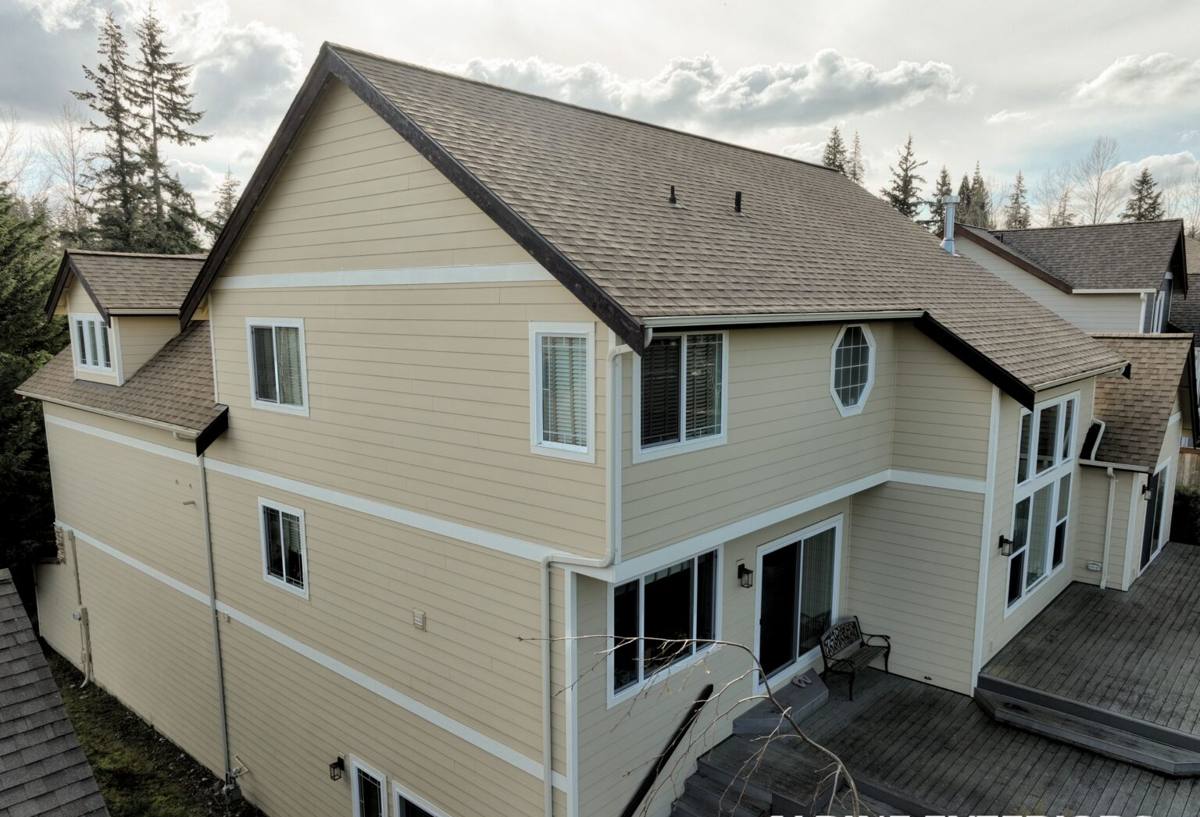
What Salt Air and Driving Rain Do to a Deck Over Time
Salt air accelerates corrosion on anything metal — fasteners, brackets, railing hardware — well beyond what you'd see a few miles inland. Standard galvanized screws and nails can start showing rust streaks within a couple of seasons in a salt-exposed yard, and once a fastener starts corroding, it weakens the connection it's holding, not just the finish. Driving rain compounds the problem by keeping wood surfaces wet longer, which is exactly the condition rot fungi and corrosion both need to get going.
The practical upshot: the hardware and fasteners matter as much as the decking material itself, and in a lot of cases more. A beautiful cedar deck built with the wrong screws will fail at the connections long before the boards themselves give out.
Where Rot Starts First
On decks we've inspected or rebuilt in this area, the failure points are consistent:
- Ledger board connections where the deck meets the house, if flashing wasn't done correctly
- Post bases sitting in standing water or wet mulch instead of on proper footings
- Board ends and cut edges that were never sealed after installation
- Joist tops under the decking, especially where boards were laid tight with no drainage gap
- Fastener heads and brackets exposed directly to weather without a protective coating rated for it
Footings and Framing for Low, Wet Ground
A lot of Marietta lots sit low relative to the water table, and yards can stay soggy well after the rain stops. That matters most at the footing stage, before a single deck board goes down. Footings need to be sized and set below frost depth and clear of standing water, with concrete piers that keep the wood framing off wet soil entirely. Post bases should sit on top of the concrete with a metal standoff, never buried in it or resting directly on grade.
Framing lumber should be rated for ground contact where it's within a few inches of soil or in a persistently damp crawlspace, even if it technically isn't touching dirt. We'd rather over-spec a joist or post base than have a homeowner call us in five years about soft framing hidden under decking that still looks fine on top.
Drainage around the footings matters too. If water pools against a post base after every rain, that base is going to fail faster no matter how good the concrete work was. Grading and gravel around footings, and keeping gutters and downspouts from dumping straight onto the deck's foundation, are simple things that add years to a structure.
Choosing a Decking Material That Fits This Climate
There's no single "best" decking material — there's the material that fits your budget, how much upkeep you want to do, and how exposed your specific lot is to salt air and shade. Here's how the common options actually perform in a Marietta setting:
| Material | Upfront Cost | Maintenance | How It Handles Salt Air & Moisture |
|---|---|---|---|
| Pressure-treated fir/hem-fir | Lowest | Needs re-sealing every 1–2 years | Fine if properly sealed and gapped; end cuts must be treated on-site |
| Cedar | Mid | Sealing/staining every 1–2 years to hold color and resist moisture | Naturally rot- and insect-resistant, but softer — needs consistent upkeep near salt spray |
| Composite (capped) | Highest | Occasional washing, no sealing or staining | Handles moisture and salt exposure with the least upkeep; won't rot or splinter |
| Composite (uncapped) | Mid-high | Low, but more prone to surface staining/mold in constant damp | Better than wood, but capped composite outperforms it in shaded, wet spots |
For a deck that gets regular salt exposure and stays shaded part of the day — common on lower Marietta lots — we usually steer homeowners toward either a well-maintained cedar deck if they want the natural look and don't mind the upkeep, or capped composite if low maintenance is the priority. We're straightforward about the trade-off: composite costs more up front, but you're not out there re-sealing it every year, which matters a lot in a climate where that maintenance window is short and often rainy.
Moss, Algae, and Keeping a Deck Safe Underfoot
Whatcom County's moss season isn't a minor cosmetic issue on a deck — it's a safety issue. Moss and algae hold moisture against the board surface, which speeds up wood breakdown underneath, and a mossy or algae-slicked deck gets genuinely slippery, especially on stairs. Shaded decks and north-facing spots are the worst offenders, and a lot of Marietta properties have tree cover or fence lines that keep parts of the deck out of direct sun for most of the day.
Board spacing and airflow underneath the deck make a real difference here. Decking laid with proper gaps and joists set to allow air movement below dries out faster between rains, which slows moss growth considerably compared to a deck built tight to the ground with no ventilation. We also build in enough slope on wood decking — a small drainage pitch away from the house — so water doesn't pool and sit on the surface.
Railings, Fasteners, and Hardware That Won't Let You Down
This is the part of a deck build that's easy to skip past, but in a salt-air environment it's often the difference between a deck that lasts and one that needs hardware replaced in a few years. We use stainless steel or coated fasteners rated for coastal/high-corrosion exposure rather than standard galvanized hardware, and we use structural connectors — joist hangers, post caps, hurricane ties where called for — that carry the same rating. Railing posts and their connections get the same treatment, since a railing failure is a safety issue, not just a maintenance one.
It costs more to build this way than to use whatever fasteners are cheapest at the yard. We think that's the right trade for a deck meant to hold up in this specific environment, and we'll walk you through exactly what hardware we're using and why.
Permits and Site Considerations Near the Water
Depending on where a lot sits in Marietta relative to the water and any critical areas, deck projects can involve additional review beyond a standard building permit — setback requirements, shoreline or critical-area rules, or drainage considerations tied to low-lying ground. We don't guess on this: we check with Whatcom County and the applicable local jurisdiction for your specific parcel before finalizing a design, and we handle the permit process as part of the job rather than leaving it for the homeowner to sort out.
How We Approach a Marietta Deck Project
Our process for a deck build or rebuild in this area is straightforward:
- On-site visit to look at the actual lot — drainage, sun exposure, soil condition, and how close the deck will be to salt spray or standing moisture
- Honest conversation about material options and what each one will actually cost you in upkeep over 10–15 years, not just up front
- A design that accounts for footing placement, ledger flashing, and drainage before we talk about board style or railing look
- Permit handling with the appropriate jurisdiction, including any shoreline or critical-area review your parcel might need
- Construction using corrosion-rated fasteners and hardware throughout, not just at the visible connections
- A walkthrough at the end covering how to maintain the specific materials we used, so the deck actually reaches its expected lifespan
We already work in Marietta and the surrounding Ferndale area regularly, which means we're not guessing at how a given lot behaves through a wet Whatcom County winter — we've seen it, and we build accordingly.
Keeping a New or Existing Deck in Good Shape
Whatever material you choose, a little seasonal attention goes a long way in this climate. A basic yearly routine:
- Sweep debris off the deck regularly through fall — trapped leaves hold moisture against boards
- Wash down moss and algae buildup before it gets established, especially on shaded sections and stairs
- Check railing and post connections once a year for movement or rust staining around fasteners
- Reseal or re-stain wood decking on schedule — don't wait until it looks obviously weathered
- Confirm gutters and downspouts aren't draining onto the deck or its footings
- Look underneath the deck occasionally for soft spots, standing water, or fastener corrosion out of sight
If you're planning a new deck in Marietta, or you've got one that's showing its age faster than it should, we're happy to take a look and give you a straight assessment. Reach out for a free, no-pressure estimate using the form below — we'll walk the site with you and talk through what actually makes sense for your lot and budget.