 Ferndale
 Storm Damage in Custer Looks Different Than Storm Damage Inland
Custer sits close enough to Bellingham Bay and the Strait of Georgia that every roof out here deals with a combination most inland Whatcom County homes never see: salt-laden wind, long stretches of driving rain, and a moss season that can run eight or nine months out of the year. A roof that would hold up fine in a drier, calmer climate can develop real problems here after just one or two hard blows off the water. When we talk about "storm damage roof repair" in Custer, we're not just talking about a single dramatic wind event. We're talking about cumulative damage that a storm exposes or finishes off — damage that was often already building underneath moss, trapped moisture, or a flashing detail that never quite sealed right.
That distinction matters because it changes how a repair should be diagnosed. A roofer who only looks at what a storm did in the last 48 hours will miss the slow damage that made the roof vulnerable in the first place. A correct repair addresses both.
What Actually Causes Storm Damage on Custer Roofs
Wind Off the Water
Custer's exposure to open water means wind gusts often arrive with less obstruction than they would further inland. Wind doesn't need to be a named storm to do damage — it needs the right angle and enough sustained speed to work under a shingle tab or ridge cap edge. Once wind gets a lever under one shingle, it starts a chain reaction, lifting neighboring shingles and exposing the underlayment underneath.
Driving Rain and Wind-Driven Water
Rain that comes in sideways behaves differently than rain that falls straight down. It finds its way under lifted shingles, around flashing that's slightly short, and into nail penetrations that have backed out over time. This is why storm damage often shows up as an interior leak days after the wind has died down — water worked its way in gradually rather than pouring through an obvious hole.
Moss and Trapped Moisture
Whatcom County's damp, mild climate is close to ideal for moss growth, and Custer's tree cover and salt-air humidity make it worse. Moss holds water against the roof surface long after a storm has passed, which softens shingles, accelerates granule loss, and rots decking from the top down. When a storm hits a roof that already has moss buildup, the damage is almost always worse than it would be on a clean roof, because the moss has already weakened the materials underneath it.
Debris Impact
Falling branches and wind-blown debris are a normal part of storms in a wooded area like Custer. Impact damage can crack shingles, dent flashing, or knock granules loose in a way that isn't always visible from the ground.
How to Tell If You Actually Have Storm Damage
Not every homeowner needs to get on a ladder after a storm, and we don't recommend it. But there are signs worth watching for from the ground or from inside the attic:
- Shingles or shingle pieces in the yard or gutters after wind
- Visible lifted or curled shingle edges, especially near roof edges and ridges
- New or worsening water stains on interior ceilings or walls
- Granules collecting in gutters or at downspout outlets
- Daylight visible through the roof deck from inside the attic
- Soft or spongy spots when walking near the eaves (a sign of trapped moisture, not a fresh storm hit)
- Flashing that looks bent, separated, or pulled away from a chimney, vent, or wall
If you see any of these, the roof needs a look before the next storm system comes through — Whatcom County rarely gives a long dry gap between fronts, so a small opening can become a bigger one fast.
What a Correct Storm Damage Repair Actually Involves
A repair that's done right isn't just "replace the shingles that are missing." It's a sequence, and skipping steps is how the same section of roof ends up leaking again next winter.
1. Full-Slope Inspection, Not Just the Obvious Spot
Wind damage rarely stays contained to one shingle. We check the whole slope the wind hit, plus ridge caps, valleys, and any penetrations (vents, chimneys, skylights) on that plane, because those details fail before flat shingle field usually does.
2. Decking Assessment
If water got underneath the roofing material, the decking underneath may be soft, delaminated, or rotted — especially if moss had already been holding moisture there before the storm. Replacing shingles over damaged decking just hides the problem for a season.
3. Underlayment and Flashing Repair
Underlayment that's been exposed to weather even briefly usually needs replacing, not reuse. Flashing around chimneys, walls, and vents gets checked for proper lap and seal — this is one of the most common places storm damage repairs fail when they're done in a hurry.
4. Matching Materials
We match the replacement shingles and components to what's already on the roof as closely as possible — color, style, and where possible, manufacturer — so the repair blends in rather than becoming a visible patch. On older roofs where an exact match isn't available, we'll tell you honestly what your options are rather than guessing.
5. Final Weatherproofing Check
Before we call a repair finished, we check that every seam, nail, and flashing edge on the repaired section is sealed against the kind of driving, wind-blown rain this area actually gets — not just a light straight-down rain test.
Our Process, Start to Finish
- Call or request an estimate. Tell us what you saw or what happened during the storm.
- On-site inspection. We look at the whole roof, not just the reported problem area, and check the attic from inside where accessible.
- Written explanation and estimate. You get a plain description of what's damaged, what's causing it, and what it costs to fix — no pressure to upsell into a full replacement if a repair is the honest answer.
- Repair scheduling. We work around weather windows — in this climate, that sometimes means moving fast between fronts rather than waiting for a perfect stretch.
- Repair and cleanup. Materials matched, flashing and decking addressed as needed, site cleaned of debris and old materials.
- Documentation. If you're filing an insurance claim, we provide photos and a written scope that supports it.
Repair or Replace? How We Help You Decide
Storm damage doesn't always mean a full new roof, and it doesn't always mean a simple patch either. The right call depends on the roof's age, how widespread the damage is, and what condition the rest of the roof is in.
| Factor | Leans Toward Repair | Leans Toward Replacement |
|---|---|---|
| Roof age | Under 12–15 years | Nearing or past expected lifespan |
| Extent of damage | Isolated to one slope or area | Spread across multiple slopes |
| Decking condition | Solid, no rot found | Widespread soft spots or rot |
| Moss/moisture history | Minimal prior buildup | Long-term moss damage already present |
| Material availability | Matching shingles still available | Discontinued or badly weathered mismatch |
We'll walk you through where your roof falls on this before recommending either option — and if a repair is the honest answer, that's what we'll quote.
Insurance Claims and Storm Damage
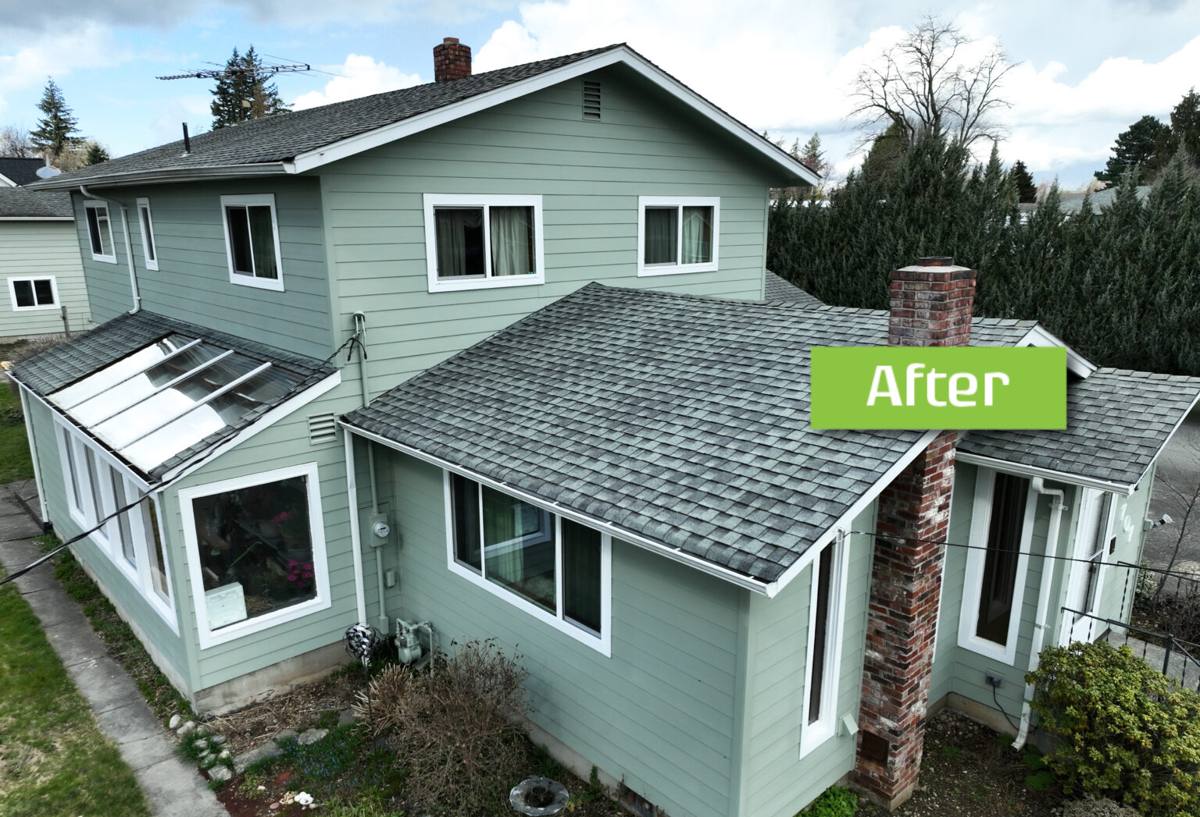
Many storm repairs in this area are at least partially covered by homeowners insurance, particularly when there's a documented wind event. What insurers look for is a clear before-and-after picture and a scope of work that ties the damage to the storm date. We provide photo documentation and a written repair scope that homeowners can submit with a claim. We're not a public adjuster and we don't negotiate your policy for you, but we make sure the paperwork on the roofing side is solid, which is usually where claims get held up.
Preventing the Next Round of Damage
A repair fixes what the storm did. It doesn't fix the conditions that made the roof vulnerable in the first place. For Custer homes specifically, that usually comes down to two things:
Moss Management
Keeping moss cleared and treated reduces trapped moisture, which is the single biggest factor that turns a minor wind event into a real repair. If moss has been an ongoing issue, we'll flag it as part of the repair rather than ignore it.
Ventilation and Salt Air Exposure
Metal flashing and fasteners near the coast corrode faster if ventilation is poor and moisture sits against them longer than it should. Good attic ventilation isn't just about temperature — in a salt-air, high-moisture area like this, it's part of what keeps metal components from failing early.
Why Hiring a Crew That Already Works Custer Matters
A roofer unfamiliar with this stretch of Whatcom County can misdiagnose damage that looks unusual if you don't see it regularly — mistaking long-term moss rot for storm damage, or missing salt-air corrosion on flashing because it's not something they deal with inland. We work on roofs in Custer and the surrounding Ferndale area regularly enough to know what normal wear looks like here versus what a storm actually caused, which means a more accurate diagnosis and a repair that's built for the conditions your roof will keep facing, not generic conditions from somewhere drier and calmer.
If a recent storm left you with missing shingles, a new leak, or just some peace of mind you'd like restored, we're glad to take a look. Request a free, no-pressure estimate using the form below and we'll get back to you with a straight answer about what your roof needs.