 Ferndale
 Why Decks Near Cordata Wear Out Faster Than Homeowners Expect
If you own a home in or around the Cordata area near Ferndale, you already know the weather doesn't do decks any favors. Whatcom County sits close enough to the water that salt-laden air reaches inland further than most homeowners realize, and it settles into wood grain, fastener heads, and any gap in a finish. Add in months of driving rain that never quite lets a deck fully dry out, followed by a long stretch of low sun angles and shade that keeps moss and algae established well into the year, and you have a climate that's genuinely tougher on exterior wood structures than most of the country deals with.
A deck built without that climate in mind might look fine for a couple of years. Then the ledger board starts trapping moisture against the house, fastener heads streak and corrode, and the deck boards cup or develop soft spots faster than the original installer probably promised. None of that means decks don't work here — it means they need to be built and replaced with this specific climate as the starting assumption, not an afterthought.
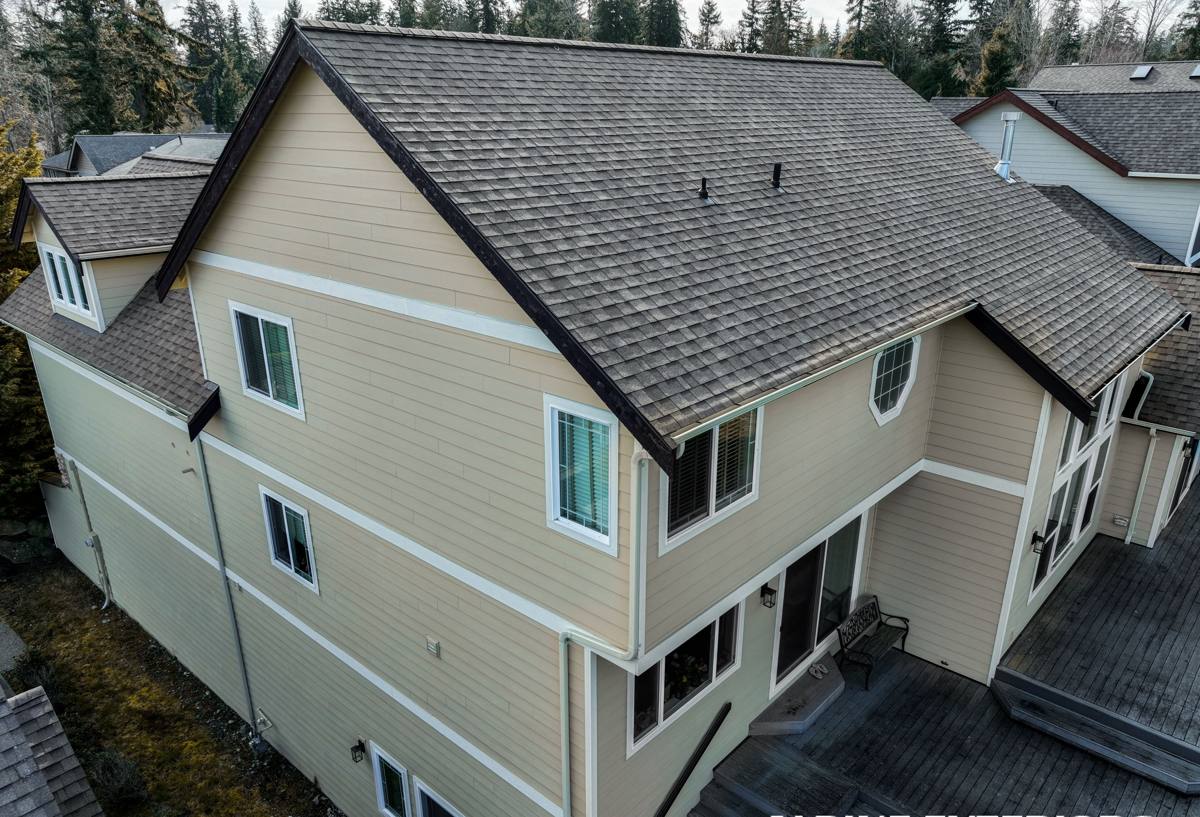
Signs a Deck Needs Replacement, Not Just Repair
Not every tired-looking deck needs to come out. Sometimes a few boards, a re-fastening pass, or a new coat of finish buys several more years. But there's a point where patching stops making sense — where the money and effort of another repair is better spent on a full rebuild. Here's what we look for when we're deciding which side of that line a deck is on:
- Soft, spongy, or discolored spots in the decking boards, especially near the house or in shaded corners
- Visible rot or splitting at the ledger board where the deck attaches to the house
- Wobble or movement in the railing posts when pushed by hand
- Rust streaks running from fastener heads or structural hardware
- Persistent moss or algae growth that comes back within weeks of cleaning
- Gaps opening up between boards from repeated wet/dry cycling
- A structure that was never properly flashed where it meets the house, regardless of age
If you're seeing two or more of these, especially the ledger board issue, it's usually more cost-effective — and safer — to replace than to keep chasing repairs on a structure that's fighting the same moisture problem year after year.
What a Correct Deck Replacement Actually Involves
Structural Framing and the Ledger Board
The single most important part of any deck replacement is the connection between the deck and the house — the ledger board. This is also the part that fails most often in this climate, because driving rain pushes water sideways against the house, and if that connection isn't flashed correctly, water gets behind the siding and into the rim joist over time. A proper replacement means new flashing integrated with the house's water-shedding layers, not just caulk over the old connection. We also check and typically replace the structural fasteners here — proper lag bolts or through-bolts, not deck screws, which aren't rated for this load.
Footings and Posts
Post footings need to sit below frost depth and bear on undisturbed soil, and given how saturated ground can stay for extended stretches of the year, we pay close attention to drainage around footings so they're not sitting in standing water for weeks at a time. Posts themselves get set with a gap or standoff from the concrete rather than buried directly in it, which cuts down on the wicking that rots post bases early.
Decking Material
This is where most homeowners have real choices, and where climate-driven trade-offs matter most. We'll walk through the honest pros and cons of each option for your specific project rather than pushing whatever's easiest to install.
| Material | Upfront Cost | Maintenance | Moisture & Moss Resistance |
|---|---|---|---|
| Pressure-treated wood | Lowest | Annual cleaning and periodic re-sealing | Fair — needs consistent upkeep to resist moss and staining |
| Cedar | Moderate | Regular sealing to hold color and resist checking | Naturally decay-resistant but still needs finish maintenance here |
| Composite decking | Higher | Occasional washing, no sealing | Good — resists rot, but surface can still host moss if not cleaned |
| Capped/PVC decking | Highest | Minimal — washing only | Best — fully sealed surface sheds moisture and cleans up easiest |
There's no universally "right" answer here — it depends on your budget, how much upkeep you want to do, and how long you plan to stay in the home. What matters is picking a material knowing how it actually behaves in a wet, moss-prone climate rather than going by looks alone.
Our Process for a Cordata-Area Deck Replacement
1. On-Site Assessment
We start by actually getting under the deck and checking the ledger connection, footings, and framing condition — not just eyeballing the surface boards. This tells us whether we're dealing with a straightforward rebuild or whether there's hidden moisture damage to the house structure that needs to be addressed first.
2. Design and Material Selection
We talk through decking material, railing style, and any layout changes you want, and we're upfront about how each choice holds up locally — including where a cheaper material will cost you more in maintenance over time.
3. Permitting
Deck replacements of most sizes require a building permit in Whatcom County jurisdictions, and inspections typically cover footings and framing before decking goes down. We handle this as part of the job so you're not the one tracking down inspection windows.
4. Demolition and Rebuild
Old decking, framing, and any compromised ledger material come out, and we rebuild from the connection point out — new or repaired flashing, correct fastener hardware, footings checked or replaced as needed, then framing and decking installed to current code requirements.
5. Final Walkthrough
Before we consider the job done, we walk the deck with you, check railing stability, board spacing, and finish quality, and answer any questions about maintenance going forward.
Local Building Considerations Around Ferndale
Whatcom County building requirements around railing height, guard spacing, and stair geometry apply regardless of neighborhood, and they've been updated over the years — a deck built to code twenty years ago in the Cordata area may not meet current guard or attachment requirements today. Part of what a replacement does, correctly, is bring the structure current, not just swap out worn boards on an outdated frame. We also factor in site-specific drainage: yards on grade with poor runoff need extra attention at footings and post bases so water isn't sitting against the structure through the wetter months.
Maintenance That Actually Extends the Life of a New Deck
A correctly built deck still needs some seasonal attention in this climate — no material here is entirely maintenance-free. A simple annual routine goes a long way:
- Sweep debris and standing leaves off the surface regularly, especially in fall and winter
- Clean moss and algae early with a deck-safe cleaner before it establishes a foothold
- Check and clear drainage gaps between boards so water isn't pooling
- Re-seal wood decking on the schedule recommended for that product, not "when it looks bad"
- Inspect railings and stair connections once a year for movement
Skipping this doesn't cause immediate failure, but it's exactly how a well-built deck ends up needing premature repair — the same driving rain and moss pressure that wears down an old deck will do the same to a new one without upkeep.
Why It Matters to Hire a Crew That Already Works This Area
A deck built to a generic national spec can hold up fine in a dry climate and still underperform here. Crews who regularly work Ferndale and the surrounding Cordata area know which ledger flashing details actually stop water intrusion in this rainfall pattern, which decking materials are worth the added cost given how much moss pressure a shaded yard gets, and what local permitting actually requires before a project starts — not after an inspector flags it. That familiarity isn't about a trade secret; it's just the difference between a crew that's fixed the same climate-driven failures on other decks nearby and one that's guessing.
Cost is naturally a factor in any deck decision. Depending on size, material, and site conditions, a full deck replacement in this area commonly falls somewhere in the low-to-mid five-figure range, with pressure-treated builds toward the lower end and capped composite or larger, multi-level decks toward the higher end. The only way to get a real number is a site visit — anything quoted without seeing the structure and the ledger connection is a guess.
If your deck near Cordata or elsewhere in the Ferndale area is showing its age, we're happy to take a look and give you a straight assessment — repair or replace — along with a free, no-pressure estimate. There's a form below to get started.