 Ferndale
 Why Semiahmoo's Coastal Exposure Changes the Decking Equation
Semiahmoo sits close enough to the water that homes there deal with a different set of conditions than a deck built further inland around Ferndale. Salt-laden air moves in off the water and settles on everything — railings, fasteners, the underside of boards, the framing you never see once the decking goes down. Add in wind-driven rain that hits at an angle instead of falling straight down, and a deck here takes on moisture from directions a standard installation manual doesn't always plan for.
None of this means a deck can't hold up in Semiahmoo. It means the material choice, the hardware, and the way the substructure is built all need to account for salt exposure and sustained dampness, not just rain volume. That's the difference between a deck that looks fine for a couple of years and one that's still solid a decade in.
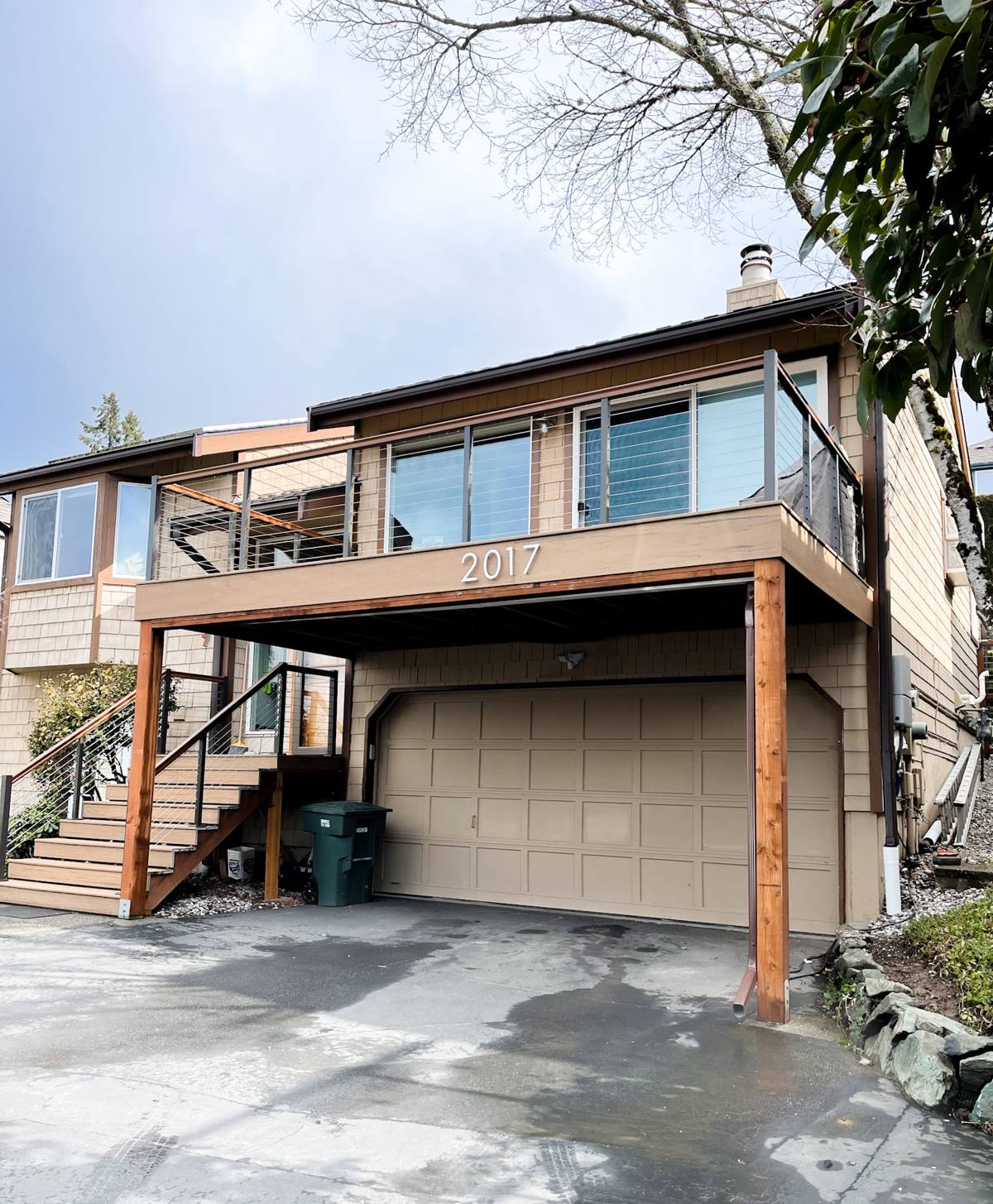
What Salt Air, Rain, and Moss Actually Do to a Deck
Salt air is corrosive to exposed metal — screws, joist hangers, brackets, and railing hardware all take the brunt of it over time. Once a fastener starts corroding, it can stain the decking around it, weaken its grip, or fail outright, and by the time you notice the stain the damage underneath may already be started.
Whatcom County's driving rain adds a second problem: water finding its way into end grain, fastener holes, and any gap where boards weren't spaced correctly. On a solid-wood deck, that moisture cycle is what drives rot. On composite decking, it's less about rot and more about trapped moisture underneath the boards, where poor airflow lets mildew and algae take hold even if the board surface itself is holding up fine.
Then there's moss. The long moss season here isn't just a roof problem. Moss and algae will colonize any shaded, damp deck surface — especially north-facing decks or ones tucked under trees — and a board with the wrong surface texture or a substructure with no airflow underneath will green up faster and stay slick longer than one built correctly.
Signs a Deck Isn't Handling the Climate Well
- Rust streaks bleeding out from screw heads or hidden fastener lines
- Persistent green or black film in shaded areas that comes back within weeks of cleaning
- Boards that feel spongy or hollow-sounding near the edges, especially close to the house
- Visible sagging or bounce between joists, which usually points to spacing or hanger issues
- Musty smell coming from underneath the deck, a sign airflow underneath is inadequate
Composite Decking vs. Other Materials for This Environment
We get asked fairly often why composite makes sense for a Semiahmoo property specifically, so here's the honest comparison based on how each material actually behaves in salt air and constant damp.
| Material | Salt air behavior | Moss/algae resistance | Maintenance burden |
|---|---|---|---|
| Pressure-treated wood | Fasteners corrode faster; wood itself weathers but doesn't rust | Absorbs moisture, feeds growth without regular sealing | Annual cleaning, periodic staining/sealing |
| Cedar | Naturally rot-resistant but still needs protected fasteners | Better than treated pine but still needs upkeep | Regular oiling or sealing to hold color and resist growth |
| Composite (capped) | Board material itself doesn't corrode; hardware still needs to be rated for it | Textured, low-absorption surface sheds moisture faster | Occasional washing, no staining or sealing |
| Composite (uncapped) | Better than wood, but the exposed core can still take on moisture over time | More prone to surface staining than fully capped boards | More cleaning attention on shaded sections |
Capped composite generally holds up best in this specific climate because the outer shell resists moisture absorption at the board level, which matters more here than in a drier part of the state. That said, composite is only as good as the substructure and hardware underneath it — a great board on a poorly built frame will still have problems.
What a Correct Composite Deck Install Involves Here
Framing and Ledger Attachment
Where the deck attaches to the house is the single most important connection on the project, and it's also where water intrusion causes the most expensive damage if it's done wrong. Proper flashing at the ledger board, correctly sized and spaced fasteners, and a slight gap or flashing detail to keep water from tracking behind the siding are non-negotiable, especially with the amount of driving rain this area sees.
Fasteners and Hardware for Salt Air
Standard galvanized hardware doesn't hold up well long-term this close to saltwater. We use stainless steel or coated fasteners rated for coastal exposure on joist hangers, structural screws, and railing hardware. It costs a bit more up front, but replacing a rusted-out ledger connection five years from now costs a lot more than that difference.
Drainage and Ventilation Underneath
Composite boards need airflow underneath to dry out between rain events. That means correct joist spacing, keeping the deck surface far enough off grade, and making sure nothing — landscaping, skirting, stored items — blocks airflow around the perimeter. This is the detail that most affects how fast moss and mildew show up on the underside and edges of the boards.
Choosing the Right Composite Board for a Semiahmoo Property
Not every composite board is built the same way, and the right choice depends on how exposed the deck is to sun, shade, and salt spray.
- Capped vs. uncapped: fully capped boards (protective shell on all four sides) handle constant damp and salt exposure better than boards capped only on the top and sides
- Surface texture: a textured, low-sheen surface sheds standing moisture better and stays less slick when moss or algae start to form
- Color: darker boards run hotter in direct sun, but on a shaded, damp Semiahmoo lot, sun exposure is often less of a concern than moisture — color choice here comes down more to preference than performance
- Board profile: grooved-edge boards with hidden fasteners reduce the number of exposed screw heads on the surface, which means fewer spots for rust staining to start
Our Process for Semiahmoo Composite Decking Projects
- On-site walkthrough to check drainage, sun/shade exposure, existing framing condition, and how the deck ties into the house
- Straight talk about board options and hardware suited to the specific spot on the property, not a one-size answer for every yard
- Written estimate that spells out material, fastener, and labor costs so there are no surprises later
- Demo of the old deck (if replacing one) with attention to what condition the ledger and framing are actually in underneath
- Framing correction or rebuild where needed, with coastal-rated hardware throughout
- Composite decking installation with proper spacing, hidden fastening where the product allows, and finished edge and stair details
- Final walkthrough so you know what maintenance, if any, the specific board you chose actually needs
Maintenance Checklist for Whatcom County Conditions
Composite decking is lower-maintenance than wood, but "low-maintenance" doesn't mean "no-maintenance" in a climate like this one.
- Sweep off debris regularly, especially fallen leaves and needles that trap moisture against the board surface
- Wash the deck with a mild soap and water at least once or twice a year, more often on shaded sections
- Check underneath periodically for blocked airflow — overgrown landscaping or stored items against the skirting
- Inspect visible fasteners and railing hardware once a year for early rust staining
- Address moss or algae as soon as it appears rather than waiting until it's established and slick
- Confirm gutters and downspouts near the deck aren't dumping extra water onto or under it
Cost Factors for a Composite Deck in This Area
| Factor | Why it moves the price |
|---|---|
| Board tier (capped vs. uncapped) | Fully capped, coastal-grade boards cost more per square foot but need less attention over time |
| Existing framing condition | A deck going over sound, code-compliant framing costs less than one needing a rebuild from the ledger down |
| Hardware specification | Coastal-rated stainless or coated fasteners cost more than standard galvanized hardware, but hold up far longer here |
| Deck height and access | Elevated decks with stairs, railings, or difficult site access take more labor than a simple ground-level build |
| Ledger and flashing work | Proper flashing at the house connection adds cost but is the single best insurance against water damage to the house itself |
We'll always give you a broad, honest range up front based on your specific site rather than a number pulled from a generic price list — every yard in Semiahmoo has slightly different drainage, access, and framing conditions that affect the real cost.
Why a Crew That Already Works Semiahmoo Matters
A contractor who's already built decks in this specific stretch of Whatcom County has seen how salt air and driving rain actually play out over a few years, not just on install day. That means knowing which hardware holds up, which board profiles handle constant shade well, and where drainage tends to be a problem on this type of lot. It also means we're not guessing at flashing details or fastener specs — we're building to what this coastline actually demands, informed by decks we've already put in nearby and followed up on.
Ferndale Siding is a local crew, not a call center dispatching a subcontractor from out of the area. When you call us about a Semiahmoo composite deck project, you're talking to people who understand the moss season, the salt exposure, and the rain patterns because we deal with the same conditions on every job we run in this part of the county.
If you're weighing a new composite deck or considering replacing an aging wood deck near Semiahmoo, we're happy to walk the site with you and put together a straightforward, no-pressure estimate — just fill out the form below to get started.