 Ferndale
 Board & Batten Siding in Kendall's Wooded, Wet Corner of Whatcom County
Kendall sits inland along the Nooksack River corridor, in the shadow of the Mount Baker foothills, and that setting shapes what siding actually needs to do here. Heavy tree cover keeps roads and roofs shaded for much of the year, moisture lingers longer than it does out on open ground, and the driving rain that rolls through Whatcom County in the fall and winter finds its way into every seam and gap it can reach. Board and batten is one of the best-looking siding profiles for homes in this setting — the vertical lines read as clean and modern or classic farmhouse depending on the trim details, and it holds up visually against a backdrop of evergreens and river bottomland better than most horizontal lap patterns.
But board and batten is also one of the least forgiving siding styles to install poorly. The battens create dozens of extra seams compared to a lap profile, and every one of those seams is a place water can get behind the cladding if the fastening, flashing, or gapping is wrong. On a home in Kendall, where damp air sits under the tree canopy and moss finds a foothold on anything that stays wet, a sloppy board and batten job doesn't just look bad in a few years — it starts trapping moisture against the wall assembly. We install this profile often enough in the area to know exactly where it goes wrong, and we build every job to avoid those failure points from the start.
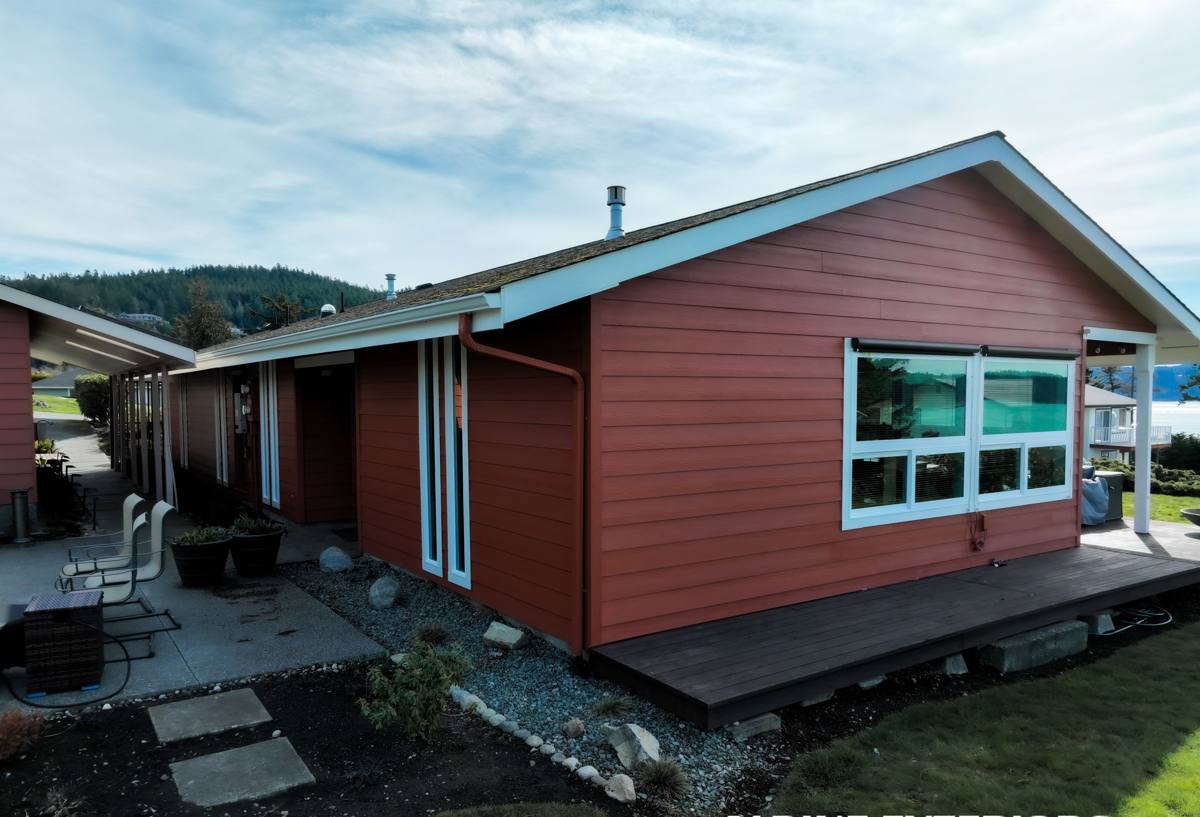
What Kendall's Climate Actually Does to a Wall
Three things matter most for siding in this part of Whatcom County, and they compound each other:
- Driving rain. Storms coming off the Pacific push rain sideways as often as straight down, and homes on more exposed lots or with taller walls take it directly on the siding face, not just the top edges.
- Extended shade and moisture retention. Kendall's tree cover is heavier than you'll find on more open lots closer to town, so walls and north- or east-facing elevations can stay damp for days after a storm passes, especially in the shoulder seasons.
- A long moss and algae season. Cool, wet, shaded conditions are exactly what moss wants. Once it establishes on a siding surface, it holds moisture against the substrate and accelerates whatever is already going wrong underneath.
Occasional marine air pushing in from the Strait of Georgia and Bellingham Bay adds a mild salt component to the regional weather pattern as well, which is one more reason not to leave any wood-based siding material unprotected on the fasteners or cut edges. None of these factors are unusual for this part of Washington — but together they mean a board and batten installation in Kendall has to be built with drainage and material stability in mind from day one, not patched later.
Why We Only Install James Hardie Fiber Cement
This is a decision we made as a company, not a sales pitch we adjust by job. We do not install vinyl, LP SmartSide, primed spruce, cedar, or other fiber cement brands like Cemplank or Allura. On a profile like board and batten, where the material has to hold a crisp, straight vertical line and survive constant wetting and drying cycles, the differences between products stop being cosmetic.
James Hardie fiber cement is engineered specifically for exposure like Whatcom County gets. It doesn't rot, it isn't a food source for moss and mildew the way untreated wood is, and it holds paint and factory finish far longer than wood-based or engineered-wood alternatives. Hardie's HZ5 product line is formulated for cold, wet Pacific Northwest climates specifically, which matters on a home that spends a good part of the year in damp shade.
ColorPlus Factory Finish
Most of our board and batten installations use Hardie's ColorPlus finish — a baked-on, factory-applied color coat that's more UV- and moisture-stable than field-applied paint, backed by its own finish warranty. For a profile with this many exposed edges and seams, having a factory-cured finish on every board before it ever goes up the wall is a real advantage, not a marketing detail.
Non-Combustible Material
Fiber cement doesn't contribute fuel to a fire the way wood-based sidings do. That's a meaningful consideration anywhere in Whatcom County given regional wildfire risk in dry summer stretches, and it's one more reason board and batten in Hardie holds its value differently than the same profile in cedar or engineered wood.
What a Correct Board & Batten Installation Involves
Board and batten looks simple from the curb — vertical panels, vertical strips covering the seams — but the assembly behind it determines whether it lasts fifteen years or fifty. On every Kendall job, our crew works through the same non-negotiables:
- A properly lapped weather-resistant barrier behind the entire wall assembly, with all penetrations flashed before any siding goes up.
- Rainscreen furring strips or an approved drainage gap where wall conditions call for it, so any moisture that does get behind the cladding has somewhere to go instead of sitting against the sheathing.
- Correct panel-to-batten spacing and fastening pattern per Hardie's engineering specs — not a generalized "vinyl siding" fastening approach, which is one of the most common mistakes we see on redo jobs.
- Stainless or hot-dip galvanized fasteners rated for fiber cement, sized and spaced to allow for the material's natural expansion and contraction.
- Batten placement that actually covers the panel seam fully in all conditions, not just when the boards are perfectly dry and at rest.
- Flashing and proper clearance at every window, door, roofline, and deck ledger — the highest-risk water entry points on any home.
- A minimum clearance gap at grade and at any hard-surface transitions, so the bottom edge of the siding is never sitting in standing water or buried mulch.
Skip any one of those steps and the wall can look right for a year or two before problems start showing up as staining, moss growth, or soft spots at the base of the panels.
Board & Batten Compared to Other Options Homeowners Consider
Homeowners in Kendall often ask how board and batten in Hardie stacks up against other siding choices for a similar look. Here's how we walk clients through it honestly:
| Material | Moisture Behavior in Wet Shade | Maintenance | Longevity |
|---|---|---|---|
| James Hardie fiber cement | Does not rot or absorb water like wood; engineered for PNW exposure | Occasional wash; factory finish holds color | Decades with correct install and upkeep |
| Cedar board & batten | Absorbs moisture, prone to moss and rot in shaded, damp spots | Regular refinishing, moss treatment, caulking | Shorter lifespan without diligent upkeep |
| LP SmartSide / engineered wood | Better than raw cedar but still wood-based and moisture-sensitive at cut edges | Edge sealing and finish maintenance needed | Moderate; dependent on installation quality |
| Vinyl board & batten | Doesn't rot, but seams and panels can warp or gap over time | Low, but limited repair options if damaged | Moderate; appearance and rigidity degrade with UV exposure |
We're not going to tell you cedar or engineered wood is a bad product across the board — cedar has real appeal and a long history in this region. But for a Kendall property sitting under tree cover with a long wet season, we've made the call that fiber cement is the material we're willing to warranty our workmanship on. That's why it's the only thing we install.
Our Process, Start to Finish
Every board and batten project follows the same sequence, whether it's a single accent wall or a full re-side:
- On-site assessment. We look at wall exposure, existing moisture damage, tree cover, and drainage conditions specific to the lot — not a generic estimate pulled from square footage alone.
- Tear-off and sheathing check. We remove the existing siding and inspect the sheathing underneath for rot or water damage before anything new goes on. Problems found here get addressed, not covered up.
- Weather barrier and drainage plane. House wrap, flashing, and furring go in per spec before a single board is hung.
- Panel and batten installation. Hardie panels and battens go up to engineering spec, with careful attention to fastening, spacing, and every window, door, and roofline detail.
- Caulking, touch-up, and final walkthrough. We finish seams where required, confirm clearances, and walk the job with the homeowner before calling it done.
What Board & Batten Costs in Kendall
Pricing depends on wall square footage, the amount of existing damage or sheathing repair needed, trim complexity, and access on the lot — Kendall's more rural, wooded properties sometimes add setup time compared to an in-town lot. In broad terms, board and batten in James Hardie fiber cement runs in a similar range to other quality fiber cement profiles, with the batten strips adding modest material and labor cost over a plain lap siding job because of the extra fastening and trim work involved. We'll always give you an itemized number specific to your home rather than a rough per-square-foot guess, because the condition of what's under your current siding matters as much as the size of the wall.
Why It Matters That We Already Work in Kendall
A crew that's only worked subdivisions closer to Bellingham or Ferndale proper doesn't always account for the differences a wooded, river-corridor property like Kendall presents — deeper shade, longer drying times, and sometimes rougher site access. We've built and repaired siding on homes throughout this part of Whatcom County, and that means we're not guessing at furring depth or drainage detailing when we bid a job here. We know what this climate does to a wall over ten years, not just what it looks like on installation day.
If you're planning a board and batten project for your Kendall home, we're happy to walk the property, look at what's there now, and give you a straightforward, no-pressure estimate — just fill out the form below to get started.