 Ferndale
 Roofing Near the Water Isn't the Same Job as Roofing Inland
Blaine sits right up against the Salish Sea, close to the Canadian border, and that location shapes everything about how a roof ages there. Homes a few miles inland in Ferndale deal with plenty of rain too, but properties closer to the water take a different kind of beating: salt-laden air, wind-driven rain that gets pushed sideways instead of falling straight down, and a moss and algae season that runs longer than most homeowners expect. An asphalt shingle roof installed the same way you'd install one in a dry inland climate will not perform the same way here. It needs different attention to flashing, underlayment, ventilation, and material choice from day one.
We're a Ferndale-based crew, and Blaine falls inside the area we regularly work in Whatcom County. That matters more than it sounds like it should — a roofer who mostly works dry, sheltered lots and only occasionally gets a call near the water tends to build the same way everywhere. A crew that's on this coastline routinely builds in the extra protection as a habit, not an afterthought.
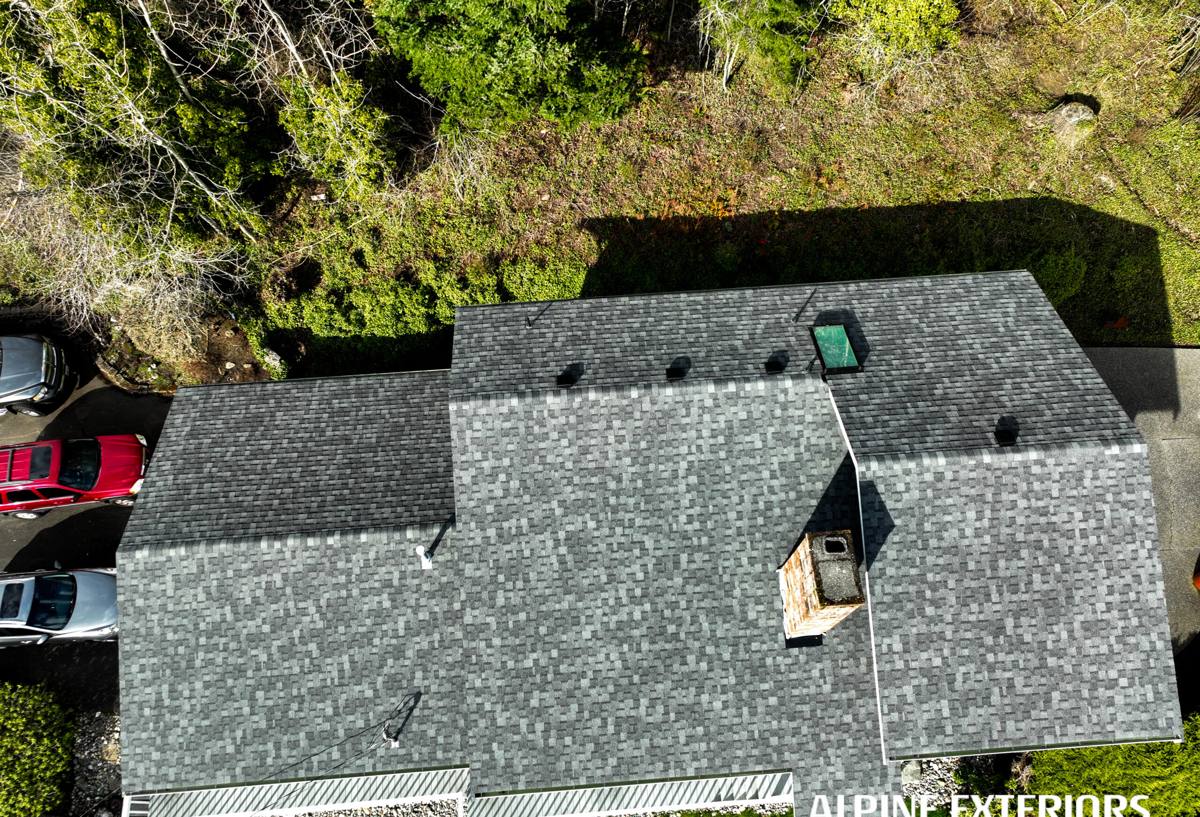
What Salt Air and Coastal Wind Actually Do to a Roof
Salt air doesn't rot asphalt shingles the way it corrodes metal, but it accelerates wear on everything metal attached to the roof — flashing, fasteners, vent housings, gutter hardware. Combine that with near-constant onshore wind and you get two compounding problems: metal components that corrode faster than the shingles around them, and wind-driven rain that finds any gap in flashing or underlayment that a calmer climate would never expose.
This is why we pay close attention to fastener and flashing material near Blaine specifically, and why we don't treat "it's just asphalt shingles" as a simple, low-risk job. The shingles are only as good as the metal and underlayment working with them.
Wind-Driven Rain Changes the Failure Points
In a typical dry climate, roof leaks tend to start at obvious damage — a cracked shingle, a missing tab. Near the water, leaks more often start where wind pushes rain uphill or sideways: under shingle tabs that aren't sealed down tight, around chimney and wall flashing, and at valleys where two roof planes meet. A roof built for this area needs more attention at those transition points than a standard install checklist would call for.
Moss and Algae: The Long, Wet Season Whatcom County Deals With
Western Washington's moss season isn't a two-month nuisance — on shaded, north-facing, or tree-covered roofs it can be a near year-round condition. Moss holds moisture against the shingle surface, works itself under tabs and around nail heads, and over time lifts shingles enough to let water in underneath. Left unchecked, it shortens the life of an otherwise sound roof by years.
Algae is a separate but related issue — the dark streaking you see on older roofs is usually blue-green algae feeding on limestone filler in the shingles, not dirt. It's mostly cosmetic, but it's also a sign that a roof surface stays damp longer than it should, which is the same condition that lets moss take hold. Both problems are manageable with the right shingle choice and a basic maintenance routine, which we cover below.
What a Correctly Installed Asphalt Shingle Roof Includes
"Asphalt shingle roof" covers a wide range of actual build quality. A correct install for this climate is a system, not just shingles nailed to plywood. Here's what should be underneath and around the shingles themselves.
Underlayment and Water Barrier
Synthetic underlayment across the full roof deck, with self-adhering ice-and-water barrier at the vulnerable spots — eaves, valleys, and around every penetration (chimneys, vent pipes, skylights). Those are the areas where wind-driven rain and moss moisture are most likely to find a path down through the deck. This isn't optional extra protection for a coastal property; it's the baseline we build to.
Flashing
Step flashing at walls and chimneys, proper valley flashing (metal or high-quality woven, depending on the roof design), and drip edge at eaves and rakes. Given the corrosive effect of salt air, we pay attention to flashing and fastener material quality near Blaine specifically rather than defaulting to whatever is cheapest.
Ventilation
Balanced intake (soffit vents) and exhaust (ridge vent) keep the attic space dry and temperature-stable. Poor ventilation traps moisture under the deck, which shortens shingle life from underneath — a problem that has nothing to do with the shingle quality itself and everything to do with how the roof was designed to breathe.
Fastening and Sealing
Correct nail placement (not staples, not over- or under-driven nails) and full tab sealing along coastal-exposure roofs. Wind uplift resistance depends almost entirely on this step being done correctly — it's cheap to do right during install and expensive to fix after a windstorm has already pulled shingles loose.
Choosing the Right Shingle for This Climate
Not every shingle line is a good fit for a wind- and moss-exposed coastal property. The table below breaks down the main tiers homeowners choose between, in plain terms.
| Shingle Type | Wind Rating | Algae Resistance | Typical Lifespan | Best Fit |
|---|---|---|---|---|
| 3-tab (economy) | Lower | Standard, no added protection | Shorter end of the range | Budget-driven projects on more sheltered lots |
| Architectural (laminated) | Higher, better in gusty exposure | Often available with algae-resistant granules | Mid-to-long range | Most Blaine-area homes — our usual recommendation |
| Premium/designer | Highest available in asphalt | Algae-resistant standard | Long end of the range | Homes prioritizing curb appeal and maximum wind/moss resistance |
For most properties near Blaine, we steer homeowners toward architectural shingles with algae-resistant granules rather than 3-tab. The price difference is real, but so is the difference in how the roof holds up to wind gusts off the water and how long it stays clean-looking before algae streaking sets in. We'll always give you honest pricing across tiers rather than pushing the most expensive option — the right choice depends on your budget, how exposed the roof is, and how long you plan to be in the home.
Our Process, Start to Finish
- On-site inspection. We look at the existing roof, deck condition, ventilation, and how exposed the roof is to wind and moisture before quoting anything.
- Written estimate. Clear scope, material tier options, and pricing — no vague allowances.
- Tear-off and deck check. Old roofing comes off and we inspect the deck for soft spots or rot before anything new goes down, common on older roofs that have had moss sitting on them for years.
- Underlayment and flashing install. Full synthetic underlayment, ice-and-water barrier at vulnerable areas, new flashing where needed.
- Shingle install. Correct fastening pattern, full tab sealing, proper starter strip and ridge cap.
- Ventilation check. Confirm intake and exhaust are balanced for the attic space.
- Site cleanup and walk-through. Magnetic sweep for nails, debris hauled off, and a final walk-through so you know what was done and why.
Maintenance That Actually Extends Roof Life
A well-built roof still needs upkeep in this climate — moss and debris don't stop being a problem just because the shingles are new. A simple annual routine goes a long way:
- Clear moss and organic debris from the roof surface, especially on shaded or north-facing slopes, before it has time to establish.
- Keep gutters clear so water isn't backing up under the shingle edge during heavy, wind-driven rain.
- Trim back tree limbs that keep sections of the roof shaded and damp longer than the rest.
- Have flashing and sealant checked periodically, especially around chimneys and vent penetrations, since these are the first places a coastal roof tends to show wear.
- Consider zinc or copper strips near the ridge on moss-prone roofs — rain washing over them helps inhibit regrowth over time.
Signs a Blaine-Area Roof Needs Attention
Because wind-driven rain and moss create failure points that aren't always visible from the ground, it's worth knowing what to actually look for:
- Granules collecting in gutters or at downspout outlets in noticeably larger amounts than before
- Shingle tabs that look lifted or curled, especially on the side of the roof facing prevailing wind
- Visible moss growth, particularly in shaded areas or along the north slope
- Dark streaking across the roof surface (algae, not just dirt)
- Any staining on interior ceilings or in the attic near penetrations or valleys
- Missing or visibly damaged flashing around chimneys, vents, or where the roof meets a wall
Any one of these on its own isn't necessarily an emergency, but they're worth having looked at before the next storm season rather than after a leak shows up inside the house.
Why It Matters That We Already Work in Blaine
A roofing crew that treats Blaine as just another stop learns the same lessons over and over — which flashing details matter most here, how much moss buildup is normal versus a red flag, which shingle lines actually hold up to the wind exposure along this stretch of coastline. We build those lessons into every estimate and every install because we're already working properties in this area on a regular basis, not learning the local conditions on your roof for the first time.
That also means straightforward logistics — we're not routing a crew a long distance for a warranty callback or a follow-up moss treatment, and we're familiar with the permitting and inspection expectations in Whatcom County. None of that replaces good workmanship, but it does mean fewer surprises for you as the homeowner.
Get a Straightforward Estimate
If your roof is showing any of the signs above, or you just want an honest read on how many years it has left, we're happy to take a look. There's no cost and no pressure to sign anything — just a clear picture of where things stand and what your options are. Use the form below to request a free estimate.