 Ferndale
 Why Birch Bay's Waterfront Climate Is Hard on Roofs
Birch Bay sits right on the water, and that changes what a roof has to put up with compared to homes even a few miles inland in Ferndale or the rest of Whatcom County. Salt-laden air off the bay accelerates corrosion on anything with exposed steel fasteners or unprotected metal edges. Wind-driven rain off the water doesn't fall straight down — it gets pushed sideways under shingle tabs and around poorly flashed penetrations, which is where most storm-related leaks actually start. And the long gray stretch from fall through spring keeps roofs damp for months at a time, which is exactly what moss and algae need to take hold.
None of this is unique to one street or subdivision in Birch Bay — it's the nature of a marine-exposed roof in this part of Washington. But it does mean a roofing system that performs fine in a drier, more sheltered part of the county can fall short here. Metal roofing, installed correctly for this specific exposure, holds up to all three of these stresses better than most alternatives — which is why we get asked about it so often by Birch Bay homeowners.
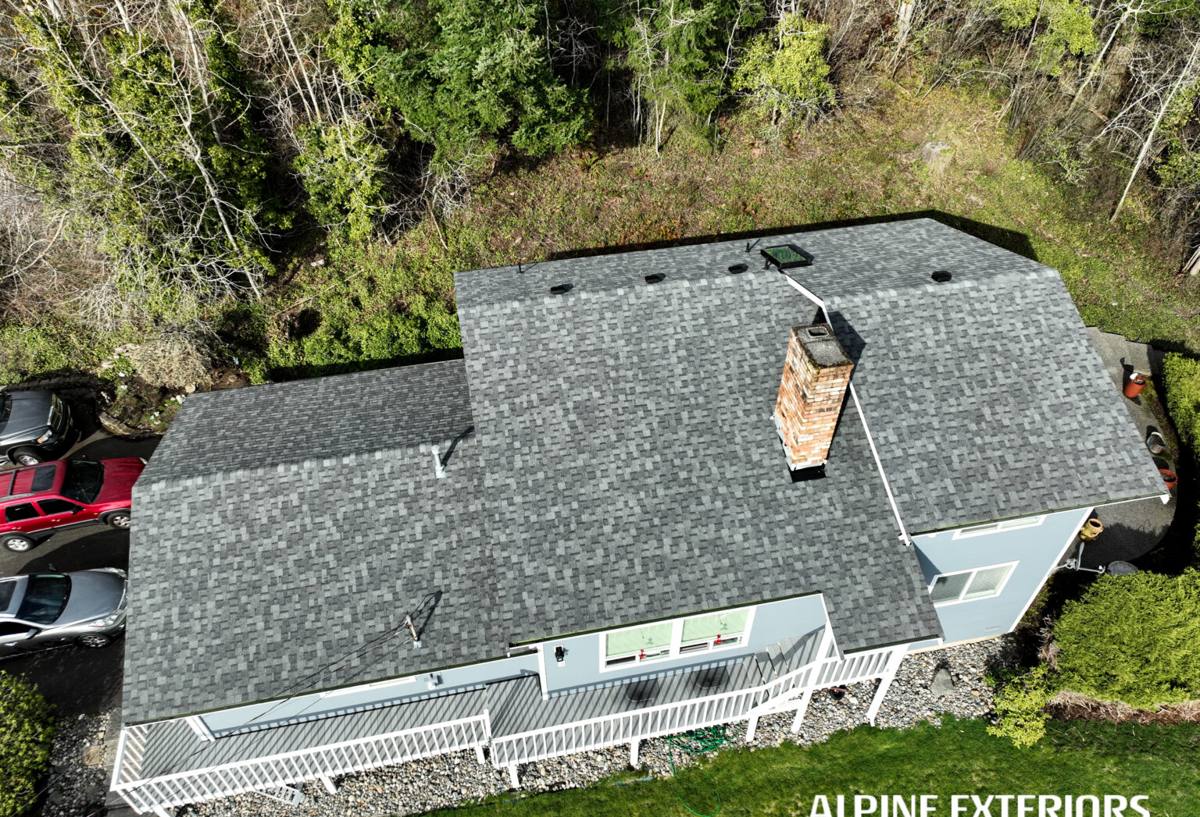
What Metal Roofing Actually Solves Here
The appeal of metal roofing in a coastal microclimate like Birch Bay isn't just curb appeal — it addresses the specific failure points that show up on this waterfront stretch of the county.
- Salt air resistance: The right coating system resists corrosion far longer than exposed fasteners or bare metal flashing that gets left unprotected on older roofs.
- Wind-driven rain performance: A properly seamed metal panel sheds water even when rain is hitting the roof at an angle instead of straight down, which is common with bay winds.
- Moss and algae resistance: Metal doesn't give moss the same foothold that asphalt granules or wood shakes do, so the long damp season here does less damage over time.
- Wind uplift: Standing seam and properly fastened panel systems are rated for sustained wind loads that matter on an open, water-facing lot.
- Long service life: A correctly installed metal roof is typically a once-in-a-generation investment rather than something you're re-doing every 15–20 years.
What metal roofing does not solve on its own is a poor installation. The material is only as good as the flashing details, fastening method, and underlayment underneath it — which is where a lot of the value of hiring an experienced local crew actually comes in.
Choosing the Right Metal System for a Bay-Facing Home
Not all metal roofing is the same, and the right choice depends on the home's exposure, roof pitch, and how close it sits to the water. We walk homeowners through the real trade-offs rather than pushing one product.
| System | Best For | Trade-offs |
|---|---|---|
| Standing seam (concealed fastener) | Homes with direct bay exposure or higher wind loads | Higher upfront cost; best long-term performance and lowest maintenance |
| Exposed-fastener panel | Outbuildings, shops, or budget-conscious projects set back from direct exposure | Fasteners need periodic inspection and eventual re-torquing or replacement; more failure points over time |
| Metal shingle/shake profiles | Homeowners who want a traditional look with metal's durability | More seams and overlaps than standing seam, so flashing detail work matters even more |
For most homes directly exposed to bay winds and salt spray, we steer people toward standing seam with a marine-grade coating. It's not that exposed-fastener systems are bad products — it's that every exposed fastener is a future maintenance point, and on a roof that's hard to get back up on every year, minimizing those points is the more honest long-term choice.
Coating and Coastal-Grade Considerations
The coating matters as much as the base metal. A coating rated for coastal or marine exposure resists salt-air corrosion and UV fading far longer than a standard-grade finish. We also pay attention to the metal gauge — thinner panels flex more in wind and are more prone to oil-canning, which shows up as visible waviness on the roof plane, especially noticeable on a home that gets viewed from the water side.
What a Correct Installation Actually Involves
The panels themselves get the attention, but the layers underneath them and the details around penetrations are what actually determine whether the roof performs in a driving rain event.
Underlayment
We use a high-temperature, self-adhering synthetic underlayment as a secondary water barrier under the metal, not just standard felt. On a bay-exposed roof, this layer is what protects the deck if wind-driven rain ever gets past the panel laps.
Flashing and Penetrations
Chimneys, vents, and valleys are where most leaks originate on any roof, metal or not. Flashing has to be formed and layered correctly — not just caulked — because sealant breaks down and metal expansion and contraction with temperature swings will eventually pull a poorly detailed seal apart.
Fastening Method
On standing seam, concealed clips allow the panel to expand and contract with temperature changes without stressing the fasteners. This is one of the biggest differences between a roof that lasts decades without issue and one that develops fastener backout or panel oil-canning within a few years.
Ventilation
A metal roof needs proper ridge and intake ventilation just like any other system. Trapped moisture in the attic space works against everything the metal roof is doing on the outside, and in a humid coastal climate that trapped moisture doesn't dry out quickly.
Our Process for a Birch Bay Metal Roof
- On-site assessment: We look at the roof's exposure — how directly it faces the bay, current pitch, existing decking condition, and any problem areas from past leaks or moss buildup.
- System recommendation: Based on exposure and budget, we recommend a panel type, gauge, and coating — explaining the trade-offs rather than defaulting to the most expensive option.
- Written estimate: A clear breakdown of materials, tear-off (if needed), flashing work, and labor, so there are no surprise line items later.
- Tear-off and deck inspection: Old roofing comes off and the deck gets checked for rot or soft spots before anything new goes down — this is often where hidden moisture damage from years of moss and trapped water shows up.
- Underlayment and flashing installation: The water-management layer goes in first and gets done right, since it's the part nobody sees once the job is finished.
- Panel installation: Panels are installed with attention to expansion allowance, seam alignment, and proper fastening for the system chosen.
- Final walkthrough: We go over the finished roof with the homeowner, including what basic maintenance to expect going forward.
Maintenance Through Moss Season
One of the real advantages of metal roofing in Whatcom County's long wet season is how little ongoing maintenance it needs compared to shingle or wood roofing — but "little" isn't "none."
- Keep gutters and valleys clear of fir needles and debris so water doesn't pool against panel seams.
- Do a visual check after major windstorms for lifted flashing or debris impact, especially after a bay storm event.
- Trim back overhanging branches that hold moisture against the roof surface and shade out sun that would otherwise dry the roof.
- Have flashing and sealant points inspected every few years, even though the panels themselves need little attention.
- Avoid pressure washing directly at panel seams — it can force water past laps that are designed to shed water flowing downward, not blasted sideways.
What Drives Cost on a Birch Bay Metal Roof
| Factor | Why It Matters |
|---|---|
| Panel system chosen | Standing seam costs more upfront than exposed-fastener panels but has fewer long-term maintenance points |
| Roof pitch and complexity | More valleys, dormers, and penetrations mean more flashing labor |
| Tear-off vs. overlay | Removing old roofing and inspecting the deck adds cost but avoids covering hidden rot or moisture damage |
| Coating grade | Marine-grade coatings cost more but hold up longer against salt air than standard finishes |
| Access and site conditions | Waterfront lots with steep grades or limited access can add to labor time |
We give homeowners a real range during the on-site visit rather than a number over the phone, because pitch, current roof condition, and access genuinely change the cost on a bay-facing home.
Why Hiring a Crew That Already Works Birch Bay Matters
Metal roofing done wrong doesn't usually fail on day one — it fails two or three winters in, when a flashing detail that looked fine in dry weather can't hold up to a real wind-driven rain event off the bay. A crew that's already worked roofs in this specific stretch of Whatcom County has already seen where those failures tend to start on bay-exposed homes, and builds around them from the first day of the job rather than learning the hard way.
We're based in Ferndale and have worked roofs across Whatcom County, including the bay-facing exposure that makes Birch Bay different from more sheltered inland lots. That's not a sales pitch — it's the practical reason the flashing details and coating choices on this page matter more here than they would on a roof a few miles from the water.
If you're weighing a metal roof for a Birch Bay home, we're happy to come take a look and walk you through what your specific roof needs — no pressure, no obligation. Fill out the form below for a free estimate.