 Ferndale
 Why Board & Batten Suits Birch Bay
Board & batten has been a fixture of Pacific Northwest waterfront architecture for a long time, and it's easy to see why it keeps showing up on homes along the Birch Bay shoreline and the streets that run inland from it. The vertical lines read as clean and coastal without looking dressed up, it pairs naturally with the cottage and craftsman styles common in this part of Whatcom County, and it works equally well as a full exterior treatment or as an accent on gables and entry walls over horizontal lap siding. The look is straightforward. Getting a board & batten system to actually perform for twenty-plus years in a spot that sits this close to open water is the harder part, and it's where a lot of installations — regardless of material — fall short.
A Different Climate Load Than Ferndale's Inland Streets
Birch Bay faces the Strait of Georgia directly, and that changes the maintenance math compared to siding installed a few miles inland in Ferndale proper. Homes here take on salt-laden air, wind-driven rain that hits siding at an angle instead of falling straight down, and long stretches of damp, low-light winter weather that keep exterior surfaces wet longer than they'd stay in a drier climate. None of that is unique to board & batten — it affects every siding style in this area — but board & batten's vertical seams and exposed battens give water and salt more edges and joints to work into if the material and the installation aren't built for it.
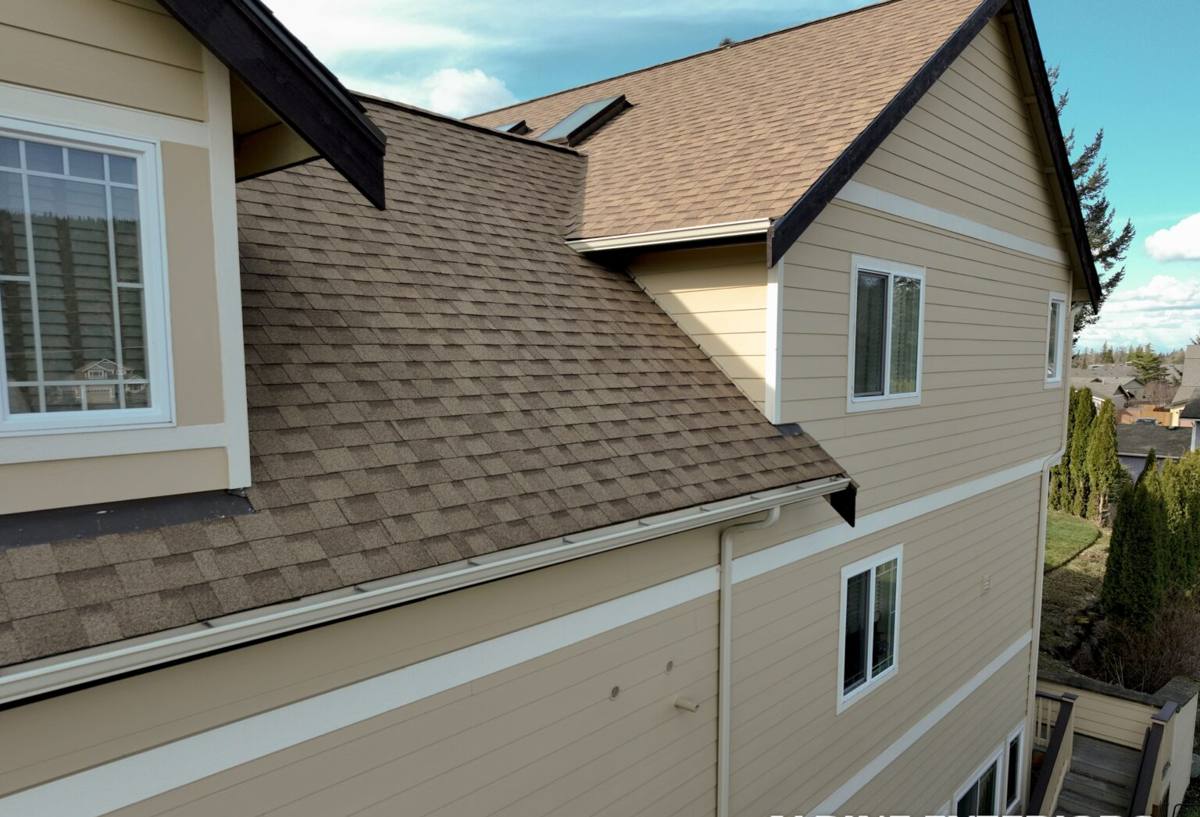
What Salt Air, Driving Rain, and Moss Season Actually Do
It's worth being specific about the three things that wear down siding on the Birch Bay waterfront and along the bluff, because each one attacks a different weak point.
- Salt air corrodes exposed metal fasteners and flashing over time, and it accelerates the breakdown of paint films and low-grade caulking, which is why homes closer to the water tend to need repainting more often than homes set back from it.
- Driving rain off the strait doesn't just wet the face of the siding — it gets pushed sideways and upward under laps, around battens, and into any gap where caulk has cracked or a fastener has backed out. Once moisture gets behind the siding, it's the drainage plane and the substrate underneath that determine whether the wall dries out or stays damp.
- Moss season in Whatcom County runs long, roughly from fall through spring, and north-facing or shaded walls near mature trees hold onto that moisture for weeks at a time. Moss and algae staining aren't just cosmetic — sustained dampness against a siding surface is what eventually leads to rot, delamination, or paint failure, depending on the material.
What a Correct Board & Batten System Is Made Of
Board & batten on a James Hardie home isn't individual boards nailed up one at a time the way it was done traditionally. It's typically HardiePanel vertical siding — large fiber cement panels — with HardieTrim boards installed over the seams to create the batten lines. That distinction matters for performance: fewer seams than true board-on-board construction means fewer places for water to find a way in, while the finished look still reads as authentic board & batten from the street.
Fiber cement isn't the only material this style comes in, and it's worth being honest about how the alternatives compare in a climate like this one.
| Material | Salt Air / Moisture Resistance | Maintenance | Realistic Lifespan Here |
|---|---|---|---|
| James Hardie fiber cement | Non-combustible, dimensionally stable, doesn't absorb moisture the way wood does | Occasional wash; ColorPlus finish means no repainting on a normal cycle | Decades, when installed to spec with proper flashing and fasteners |
| Real wood (cedar/pine board & batten) | Swells and shrinks with moisture; battens are a common point of cupping and gapping | Repainting or restaining every few years, more often on salt-exposed walls | Shorter without vigilant upkeep; rot risk rises with age and moisture cycling |
| Engineered wood (LP SmartSide and similar) | Wood-based core is sensitive to sustained moisture exposure at cut edges and joints | Requires attentive caulk and paint maintenance, especially at battens | Depends heavily on installation quality and how well edges stay sealed |
| Vinyl board & batten | Won't rot, but becomes brittle and can warp with heat and UV over time | Low, but color fades and can't be repainted to match | Moderate; appearance often gives out before the material fails outright |
We install James Hardie exclusively, and this is a big part of why: fiber cement doesn't carry the same moisture-driven failure modes as wood or wood-based products, it's non-combustible, and the ColorPlus factory finish is baked on rather than field-applied, which holds up better against UV and salt exposure than a site-applied paint job. James Hardie also engineers its HardieZone products by climate — the HZ5 line is built for the wetter, milder conditions typical of Western Washington rather than for a dry interior climate, which is a real difference in a house this close to the water.
What a Correct Installation Involves
The material is only half the equation. A board & batten job that's going to hold up in Birch Bay's conditions needs to get the assembly right, not just the panel choice.
The Drainage Plane
Behind the siding, there needs to be a weather-resistant barrier and a drainage gap — commonly a rainscreen furring strip system — so that any moisture that does get past the surface can drain and the wall can dry out instead of staying wet against the sheathing. This matters more on a wind-driven-rain coast than it does a few miles inland, because more water is being pushed at the wall in the first place.
Fasteners and Flashing
Salt air corrodes the wrong fastener over time. Corrosion-resistant fasteners — stainless steel or hot-dip galvanized, per manufacturer spec — matter more here than on an inland job, and so does proper flashing at every window, door, and roofline intersection where water naturally concentrates. Battens need to be fastened and sealed correctly at their edges, since that seam is the most exposed point in the whole system.
Fastener Pattern and Panel Spacing
James Hardie specifies fastener spacing and edge clearance for a reason — get it wrong and panels can crack, cup, or work loose over time, especially with the wind loads a waterfront property sees. Battens need consistent, correct spacing both for the finished look and because uneven spacing creates uneven drainage behind the panel.
Ground Clearance and Moss Prevention
Siding installed too close to grade, decking, or landscaping stays wetter longer and gives moss and algae a head start. Proper clearance, plus keeping the wall assembly able to dry, does more to slow moss growth over the long run than any surface treatment applied after the fact.
How the Job Runs
- Inspection and assessment — we look at the existing siding, sheathing condition, and any problem areas (chronic moss staining, soft spots, failed caulk joints) before recommending a scope of work.
- Tear-off and substrate check — old siding comes off and we check the sheathing underneath for hidden moisture damage, which is common on older homes near the water.
- Weather-resistant barrier and drainage plane — house wrap or building paper goes on correctly lapped, followed by a rainscreen gap so the wall can drain and dry.
- Panel and batten installation — HardiePanel vertical siding goes up first, followed by HardieTrim battens at the seams, fastened per James Hardie's specifications for this exposure.
- Flashing and sealant detailing — windows, doors, and all penetrations get flashed and sealed before trim goes on around them.
- Final trim, caulk, and cleanup — corner boards, fascia trim, and touch-up are completed, and the site is cleaned up.
What to Expect for Maintenance
A properly installed James Hardie board & batten system is genuinely low-maintenance compared to wood or engineered wood alternatives, but "low-maintenance" isn't "no-maintenance" on a property this exposed. Plan on rinsing the siding periodically to keep salt residue and organic buildup from accumulating, especially on north- and west-facing walls that stay shaded or catch the worst of the weather off the strait. Check caulk joints at trim and penetrations every year or two, since caulk is the one component in the system that wears out faster than the siding itself. Beyond that, ColorPlus-finished Hardie siding doesn't need repainting on the schedule that wood or field-painted products do.
Signs Your Current Siding Is Already Losing the Fight
If you're considering a switch to board & batten, or wondering whether your existing siding needs attention first, these are the signs worth taking seriously in a Birch Bay microclimate:
- Black or green staining that returns quickly after washing, especially on shaded or north-facing walls
- Cupping, warping, or visible gaps at board and batten seams
- Soft spots or spongy areas when pressed, particularly near the bottom courses or around windows
- Paint or finish that's peeling or chalking well ahead of a normal repaint cycle
- Rust streaking from fasteners, or fasteners that have visibly backed out or popped
- Caulk joints at battens or trim that have cracked, shrunk, or pulled away
Why It Matters to Hire a Crew That Already Works Birch Bay
Installation specs don't change from neighborhood to neighborhood, but judgment does. A crew that regularly works properties along the Birch Bay waterfront and the rest of Whatcom County's coastline knows which walls on a given lot take the brunt of the wind and rain, where moss tends to establish first based on tree cover and sun exposure, and how much more attention fastener and flashing details need on a direct-water-exposure job versus a similar house set back from the shoreline. That's the kind of thing you only really learn by doing the work in this specific environment repeatedly, not from a spec sheet.
If you're weighing board & batten for a home in Birch Bay, we're happy to take a look and walk you through what a correct installation would involve on your specific property — no pressure, no obligation. Fill out the form below to get started.